
Hand, Heart & Nature’s Pulse
Craft begins with the hand, but lives through the people, places and knowledge carried with it. From Indian rug weaving to glass and textile practices, this panel brings together Maina Devi, Kyou-Hong Lee and Wanbing Huang, all finalists of the LOEWE Foundation Craft Prize 2023, to consider how making connects material, memory, community and nature.
Joined by Sheila Loewe, President of the LOEWE Foundation, Nand Kishore Chaudhary of Jaipur Rugs Foundation and Adriana Marina of Hecho por Nosotros, the conversation traces the human relationships that keep craft alive, and how tradition continues to change with the world around it.
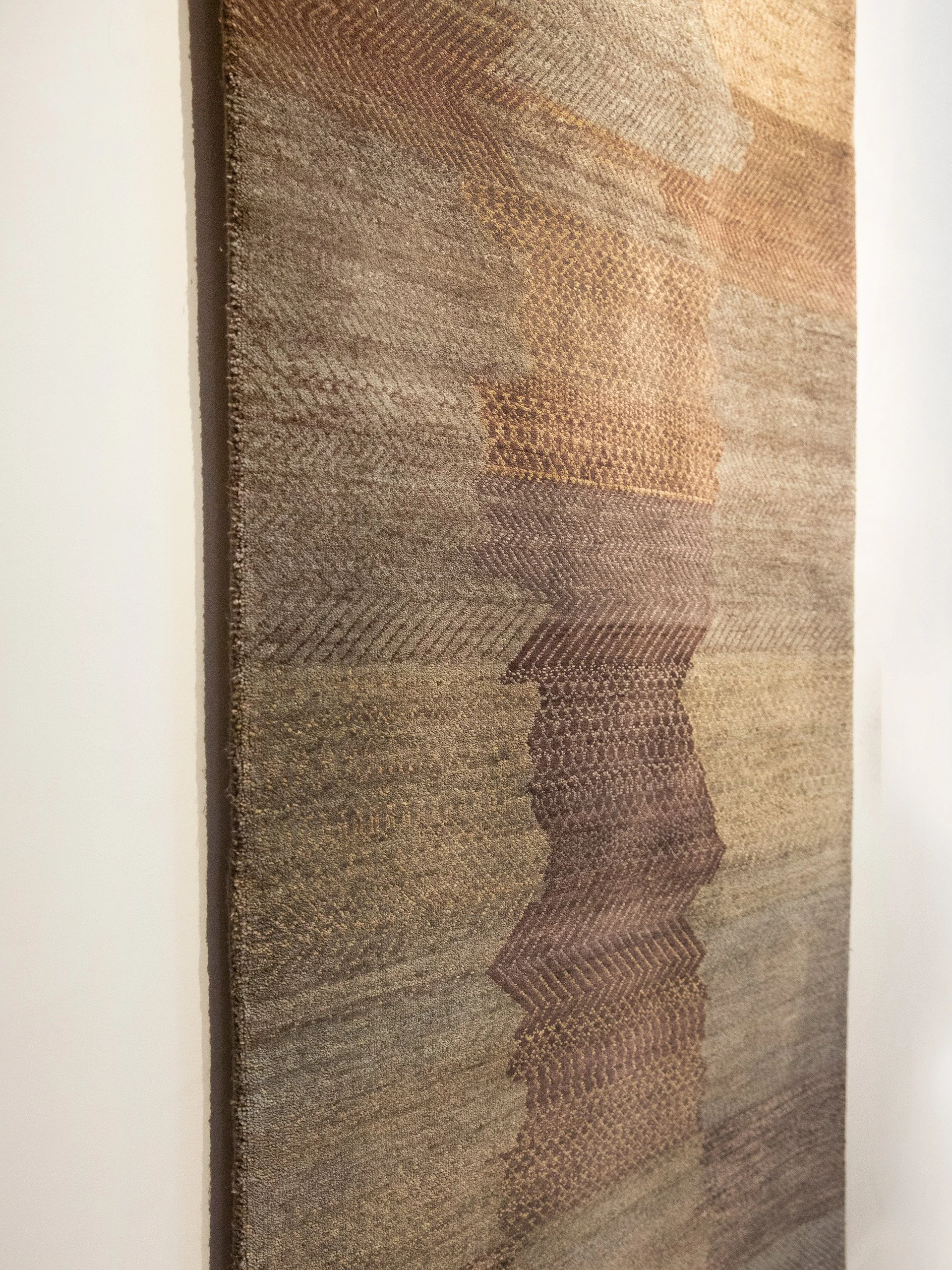
Lehrata Khet by Maina Devi. © Jaipur Rugs
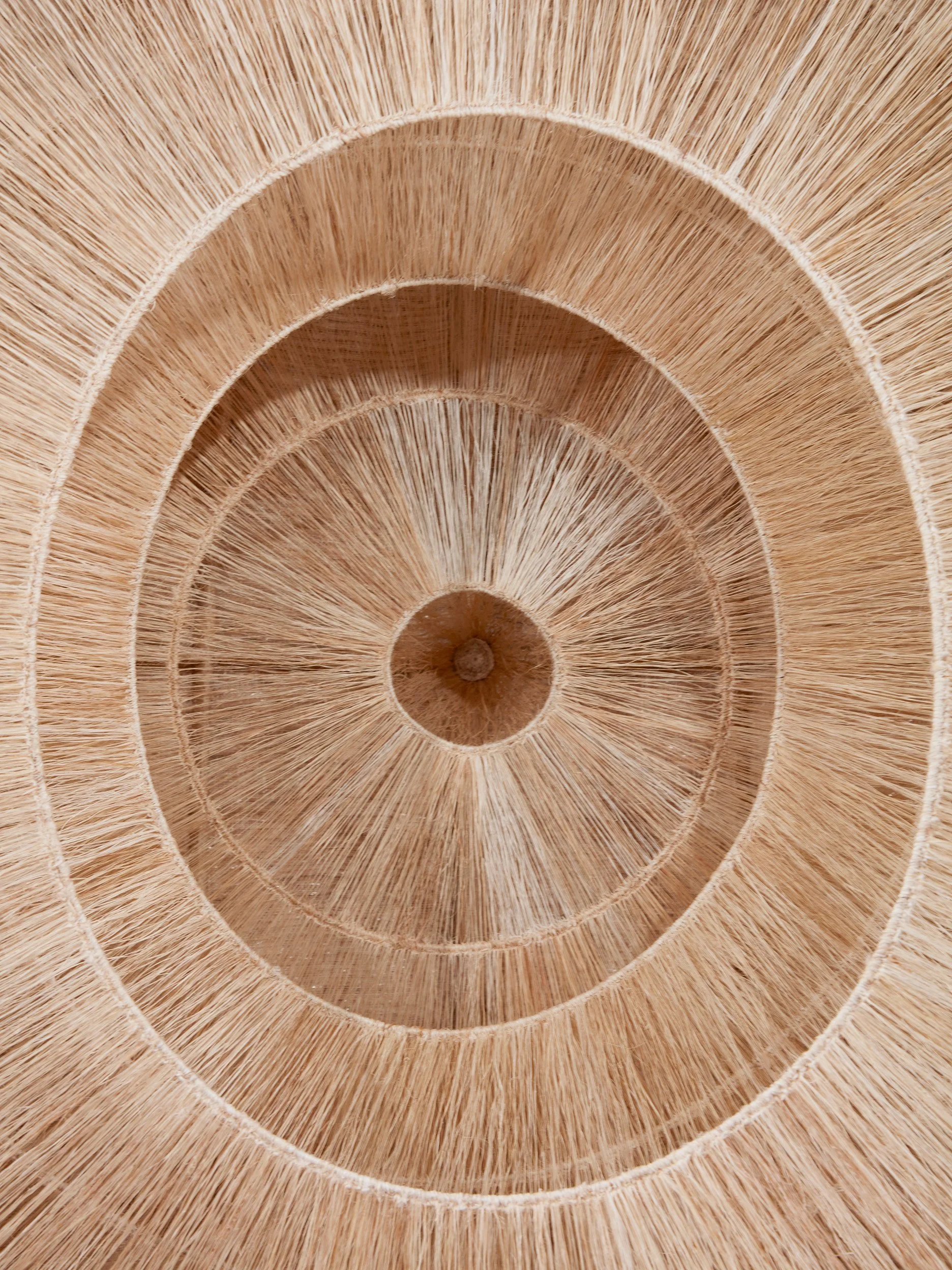
Detail of The Entrophy Reduction of Hundun. © Wanbing Huang Art studio
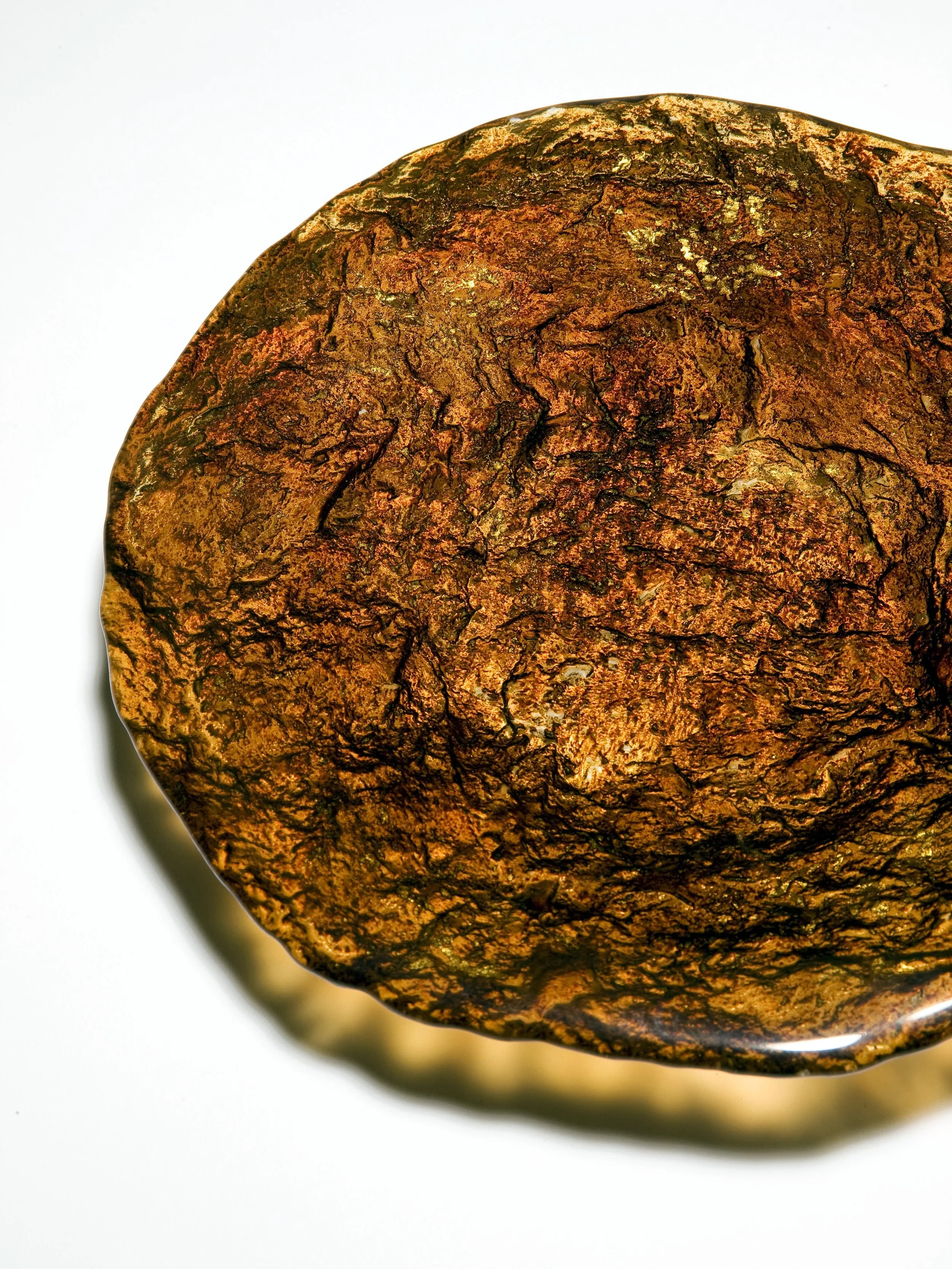
CL221023 by Kyou-Hong Lee. © Soluna Craft
What the Heart Desires
Thread by thread, line by line, each meticulously handcrafted rug plays a pivotal role in determining the future trajectory of rural Indian artisans. Beyond its broad influence, the rug captivates global audiences with its ancient artistry and profound cultural heritage. Integral to this art form is the unique touch of individual creativity, which adds immeasurable value and distinction to every piece.
Maina Devi: My voyage into the rug-weaving world began at the tender age of nine. Our village may be small, with about 300 houses, but it boasts a diverse community where some are devoted to farming while others, like myself, passionately engage in carpet weaving.
The tradition of carpet-making in India spans an incredible 2,400 years, dating back to a time when skilled craftsmen embarked on a journey to create masterpieces that would withstand the test of time. The story of this technique is steeped in cultural exchange. It is said that the art of hand-knotting was introduced to India from Persia, hence earning the name “Persian Hand-knotting.” This artistic tradition traveled through the annals of history, finding its way into the heart of India, where it took root and flourished.
What truly sets this technique apart is the artistry involved in its creation. Every pattern, every design, is meticulously woven knot by knot, line by line, with unwavering attention to detail. When you flip the carpet over, you’ll discover a hidden world of craftsmanship on its back. The individual knots, often uneven in appearance, form a beautiful mirror image of the pattern visible on the front. This imperfection, rather than detracting from the beauty, adds a touch of humanity and uniqueness to each carpet.
Nand Kishore Chaudhary: Founded in 2004, the Jaipur Rugs Foundation has been dedicated to the upliftment of rural artisans in India. Preserving traditional crafts and helping local artisans is vital as it keeps our culture alive and empowers communities.
Women artisans play a key role in the Jaipur Rugs Foundation. I have immense gratitude for women in nature; they provide generously to those around them and have amazing management skills. By acknowledging their strength and contributions, the foundation not only promotes gender equality but also taps into women’s inherent qualities to create positive changes within families and communities. This approach fosters empowerment while embracing the innate strengths that women bring to both professional and societal spheres.
With government and policymakers’ involvement, we can make an even bigger difference. They can create policies that protect artisans’ rights, offer training, and support market access. This boosts artisans’ income and skills, benefiting the whole community. With their help, we can ensure our heritage continues and artisans thrive in modern times.
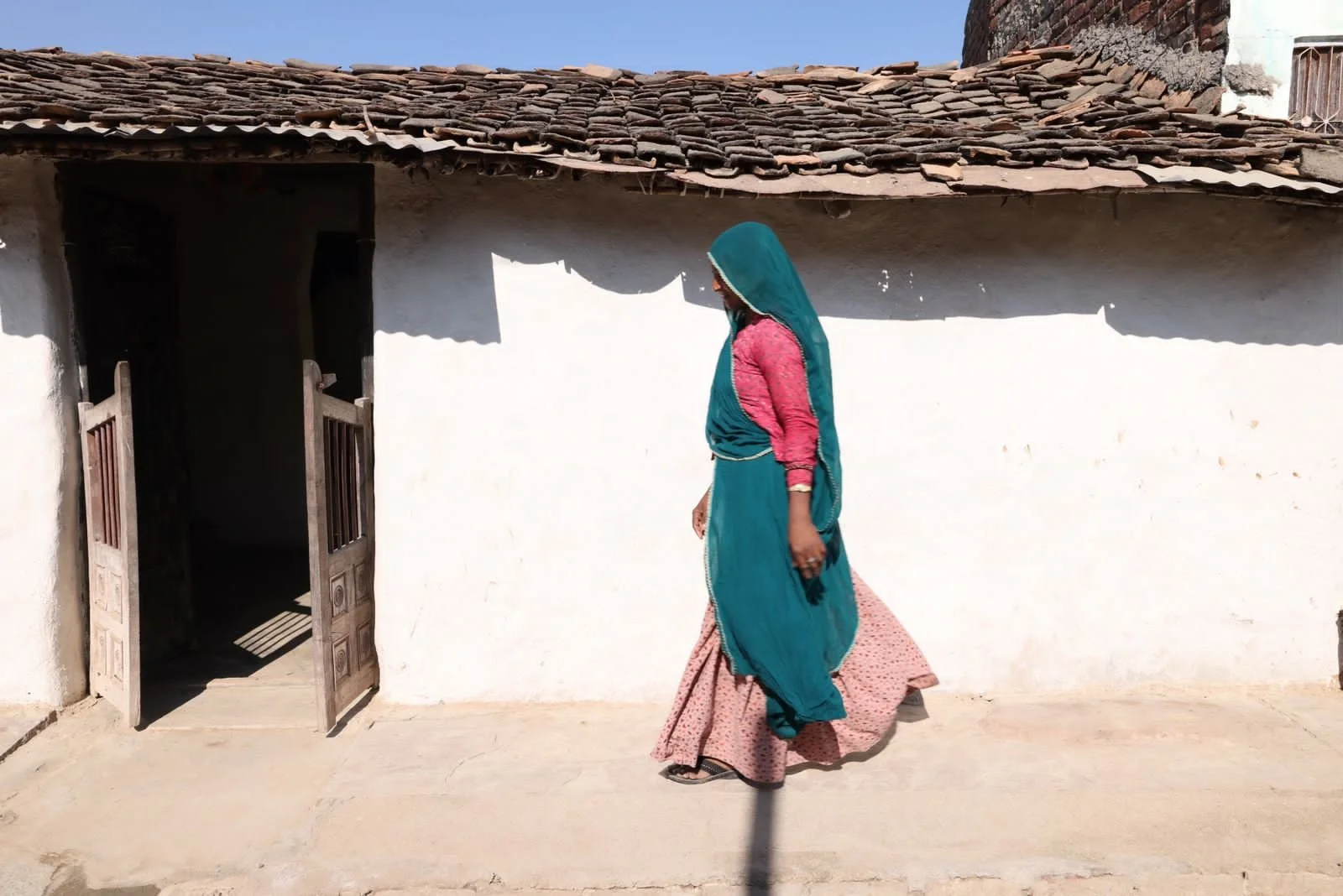
Maina Devi walking on her village porch. © Jaipur Rugs
Maina Devi: When I embarked on my journey as a rug weaver, I encountered countless hurdles, and there were moments when giving up crossed my mind. The most difficult challenge was dealing with a contractor who undervalued my hard work. However, my entire outlook shifted when the opportunity to work with Jaipur Rugs presented itself. Suddenly, my efforts felt appreciated, and my artistry was acknowledged. Creating a rug inspired by my passions, dreams, and surroundings was invigorating! I hesitated initially, unsure of my capabilities, but as I began weaving my first Manchaha, a newfound love for my craft emerged. The encouragement and freedom for self-expression fueled my motivation, transforming obstacles into stepping stones along my creative path. The impact of Manchaha has been bold and active, pushing me to exceed my expectations.
Nand Kishore Chaudhary: One day, my daughter Kavita visited the village and was astounded by the artisans’ incredible creativity. She said, “Papa, they’re more creative than any designer in the world!” This sparked her vision for “Manchaha,” meaning ‘what the heart desires,’ where artisans could freely create. Today, Manchaha products lead Jaipur Rugs sales. Kavita’s realization unlocked artisans’ talents, affirming that inspiration from local artisans can outshine global trends.
Maina Devi: I have a son who is currently studying in Delhi, and as a parent, I envision a bright future for him. I am delighted to say that I have indeed shared the knowledge and techniques of weaving with him, hoping that he will cherish this art form as much as I do. Growing up in a village where carpet weaving is part of our cultural fabric, my son has been exposed to the craft from a young age. It brings immense joy to my heart knowing that he shares my appreciation for craftsmanship and recognizes the cultural importance of preserving our heritage. I am confident that he will approach this skill with the same enthusiasm and dedication that I did when I first began my journey as a weaver.
Nand Kishore Chaudhary: The Jaipur Rugs Foundation achieves its “philosophy of totality” by synergizing Entrepreneurship Development and Social Development. We make sure our business helps people and the environment. The Jaipur Rugs Foundation works with rural and marginalized communities by fostering trust through consistent engagement, understanding their unique needs, and tailoring programs accordingly. We provide skill development, fair wages, and access to markets, empowering locals. The continuity of both culture and craftsmanship as well as our collaborative approach help bridge gaps, build strong relationships, and create lasting positive impacts.
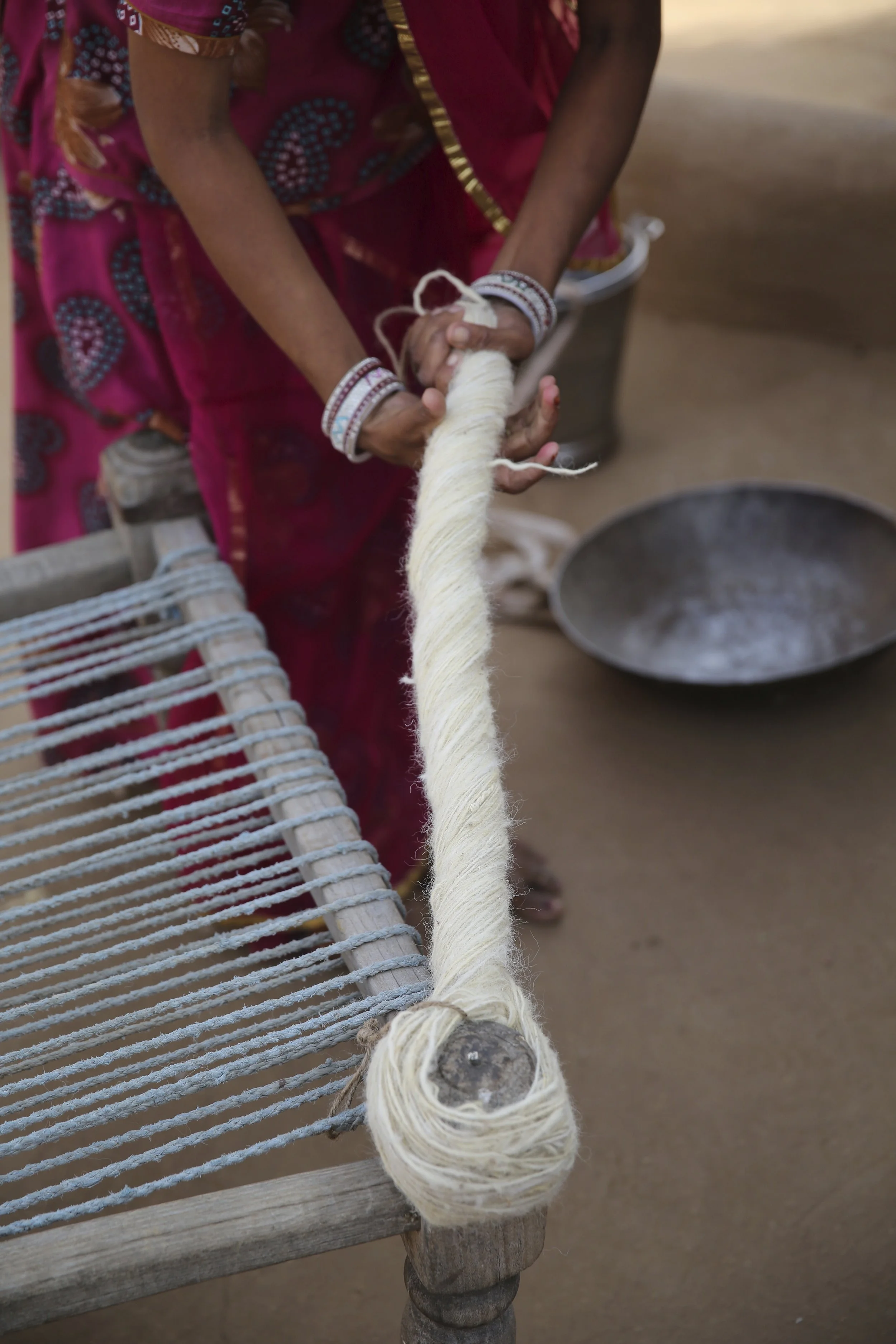
Maina Devi captured weaving on the loom. © Jaipur Rugs
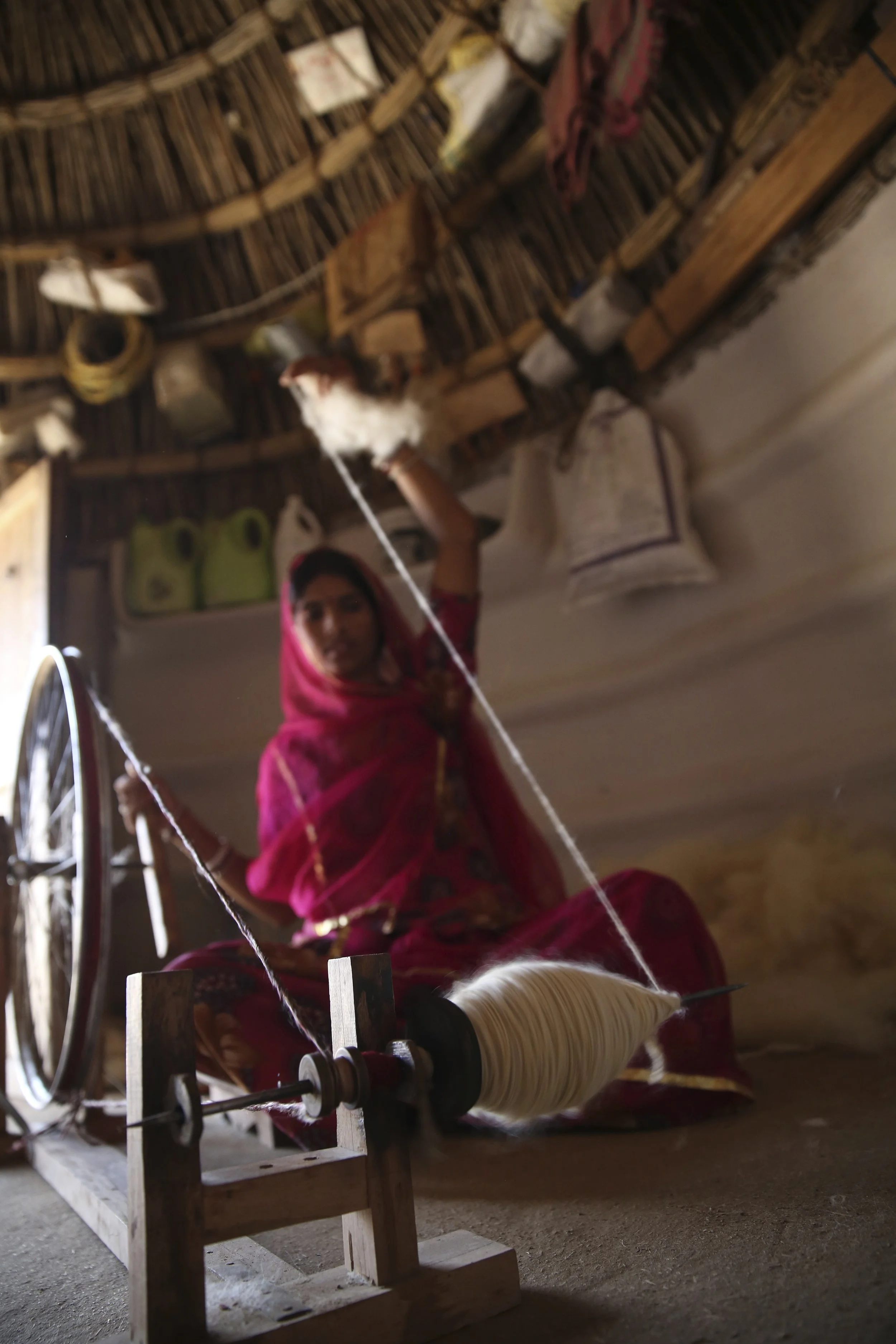
Maina Devi captured weaving on the loom. © Jaipur Rugs
Craftsmanship Itself Is Sustainable
Craftsmanship and the arts are instrumental in advancing cultural sustainability. As we meld time-honored traditions with contemporary methodologies, it becomes evident that the distinction between art and artisan is often subtle and nuanced. Through this integration, we rejuvenate age-old practices, thereby refining and enriching the modern human experience.
Sheila Loewe: We are LOEWE’s cultural foundation, and since Jonathan Anderson’s arrival in 2013, supporting culture has also become one of the brand’s most important endeavors. In addition to being the driving force behind the creation of the LOEWE FOUNDATION Craft Prize, Jonathan has an incredibly deep understanding of what craft and art represent and an extraordinary vision of their importance in contemporary culture.
The Foundation’s initial mission was to support those cultural fields that might need it the most —such as poetry and dance—and to share that support with society. Today we continue with causes in need of support and expand our fields of action with projects such as the LOEWE FOUNDATION / Studio Voltaire Award, a residency program for underrepresented artists.
In 2021, we created The Room, a digital platform showcasing more than 1,700 works of contemporary craft made by the artists nominated for the Prize since it was first launched. It is also a place to discover and collect pieces that might be for sale. We offer all finalists a way to gain exposure through our social media platforms, and in addition, each year, we film Studio Tours, where we delve into the lives and practices of the artists. Finally, some of those finalist pieces become part of LOEWE’s art collection, which is exhibited at different CASA LOEWE stores around the world.
Kyou-Hong Lee: I have been working as a glass artist since 1998. This year is my 25th year, and I started as a stained-glass artist, and now I have been working on a wide range of works. Recently, I am also working on large-scale architectural glass projects.
In terms of the inspiration for my work, I am interested in figures of memory based on the flow of perception that I perceive. like mortar and stone water basin or the ironing stone on the porch…Those objects remind me of my childhood, which has warm memories…In other words, it visualizes the state that “consciousness sometimes goes against time at the speed of light.”
Sheila Loewe: Craft Prize 2023 expert panel reviews almost 3,000 submissions that we receive each year, focusing on concept and technique. The jury, which is responsible for choosing the winner, goes a step further and looks for works that transmit a strong message about where craftsmanship is headed. There is no clear distinction between artists and artisans, and we are pleased to see that, often, participants don’t clearly identify as one or the other. They may call themselves artists, designers, makers, or craft specialists.
We are seeing more and more “craft” in contemporary art. The Craft Prize finalists have a very special relationship with the materials they work with and a profound respect for the environment. In many cases, this ends up being somewhat “contagious,” forcing us to focus on what really matters.
Kyou-Hong Lee: Crafts are thought to have important cultural values regardless of the era. Craft implies the function to be used, but the meaning is greater in modern craft represented by traditional crafts or objects. I think that it contains the historicity and identity of the culture, has a theme, and plays a role in connecting tradition and modernity. I am looking at a modern reinterpretation of tradition through the theme, form, and techniques of the work.
I have not been influenced by any particular artist in applying traditional crafts and techniques to my work. However, through the works of many traditional and modern craftsmen or fine artists active, I encountered various experiences, and these experiences were naturally realized through the grafting of tradition and modernity.
Sheila Loewe: Craftsmanship itself is sustainable: it is durable, it doesn’t follow trends, and it is made with the goal of ensuring traditional techniques are passed on from one generation to the next.
I believe sustainability should be present every step of the way. The Craft Prize submissions and finalists are excellent examples of how sustainability can be incorporated into art. There are many artists who work with materials they encounter in their daily lives, so they might use wood from fallen trees while others might create their own tools.
The number of artists who work with recycled materials grows with every edition. Argentinean jeweller Mabel Pena was one of the finalists of this year’s edition, and she used upcycled plastic found in oceans. The year before, the piece presented at the Seoul exhibition by Blast Studio was made using pulp from used coffee cups.
Kyou-Hong Lee: Contemporary craft is an object, and the boundary between craft and art is ambiguous. Sharing it now seems meaningless. Of course, there are crafts that are entirely for the purpose of use, but crafts made as objects are vaguely distinguished from sculpture, and the same is true in their meaning and content. On the contrary, even in art, since the act of making itself is a craft, it is expected that art and craft will always coexist in the midst of endless controversies.
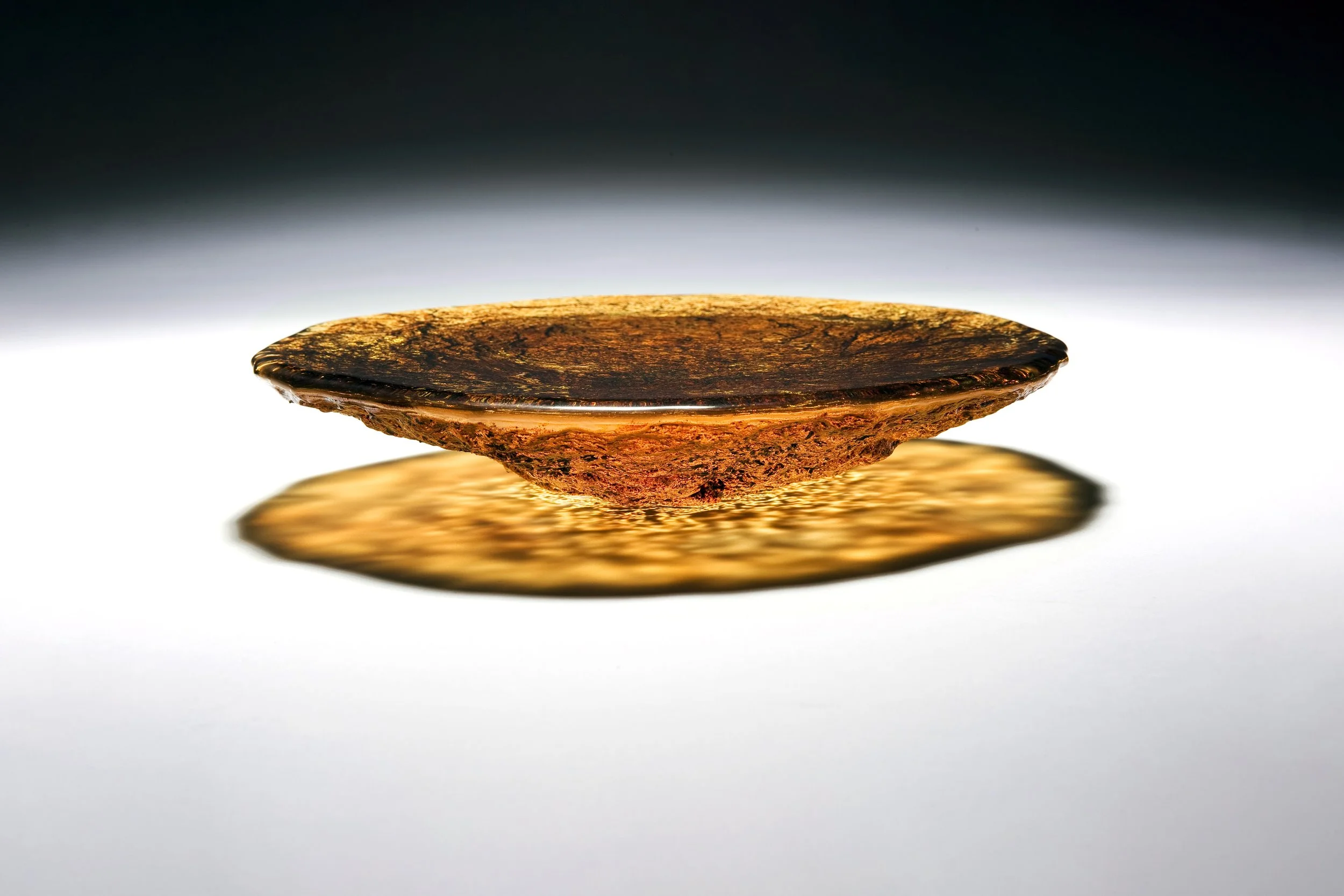
CL221023 by Kyou-Hong Lee. © Soluna Craft.
Centered Around the Laws of Nature
Sustainable living goes beyond techniques—it’s a mindset. It means instinctively heeding nature’s cues, valuing craftsmanship as an artful expression, and recognizing that each person’s awareness plays a crucial role. It’s not just about practices, but perceptions and choices in the tapestry of life.
Adriana Marina: I consider myself fortunate to have been born in Patagonia, and thanks to my grandmother, I understood from a young age that nature would be my teacher in life.
It all started with the work I did as an academic researcher, wherever I went I was always impressed by the challenges artisans face in making a living and simply leading a decent life. Artisans keep knowledge alive and ensure its safeguarding by passing it down from generation to generation. Listening to and responding to their voices translates into cultural richness and the development of healthier connections.
This experience motivated me to create the Hecho por Nosotros in 2008, which is a non-profit NGO with consultative status at the United Nations, participating in the effort to achieve systemic change in the textile and fashion industries and transform them into a force for good and well-being for all. Our goal has always been to showcase the culture, history, and ancestral knowledge of Andean communities in Latin America through their textile products.
Wanbing Huang: My artistic expression has always been rooted in using textiles to convey emotions. Textiles, I believe, can evoke feelings through various senses. I’m deeply fascinated by nature – its spirituality, culture, stories, and materials. I feel a deep connection with them, and I want to express this connection through my artwork.
When creating a piece, I first define the concept of nature and the desired outcome. Next, I conduct field research to understand the background, history, and anything relevant to the artwork. I then choose and study the materials. For example, in an installation, I used Chinese ramie, a material integral to China’s industrial history for nearly 5,000 years. Throughout my process, I constantly explore innovative ways to highlight a material’s true essence.
Adriana Marina: Our creative process thrives on co-creation and collaboration with artisan communities and textile producers. Rather than imposing designs, we work together to ensure their designs find relevance in today’s urban societies. Our model covers the product value chain, emphasizing transparency, traceability, and best practices, from responsible sourcing of fibers to designing enduring, contemporary products and their promotion.
We believe in the power of collaboration between human labor and technology. Our vision is to build a future where sustainable fashion reflects cultural diversity and natural balance. While we see technology as an invaluable tool, it doesn’t overshadow the uniqueness and depth human labor adds to our products. Craftsmanship, with its techniques and ingrained community meanings, has been passed down through generations. Therefore, we promote a vision of sustainable fashion that integrates the work of artisans, values innovation, and collaborates with other disciplines as coexisting but not exclusive dimensions.
Wanbing Huang: Books such as “Yijing” (Book of Changes) and Hetu Luoshu have been foundational in guiding my exploration of Chinese civilization’s origins. These ancient texts, with their rich symbolic representations, inform my artistic concepts. Drawing deeply from traditional Chinese culture and mythology, I connect my artwork to the profound cultural heritage of my roots. With an understanding of the history and characteristics of these materials, I integrate them into my work, blending in the time-honored craftsmanship and techniques passed through generations.
By using traditional materials and techniques, I not only pay homage to past craftsmanship but also ensure the preservation of valuable cultural knowledge and skills that risk being forgotten. This approach serves to honor and uphold the rich traditions of my cultural heritage, standing as a response to today’s digital and mass-produced landscape. The value of handmade and artisanal processes shines through. By employing materials with deep historical and cultural roots, I infuse my creations with both depth and a storied narrative.
Adriana Marina: We see no other way of doing business that is not centered around the laws of nature, that is, holistic and sustainable models. We’ve established a model covering the entire product value chain, emphasizing transparency, traceability, and best practices. This encompasses everything from shearing for the subsequent production of natural fibers, design as an element of creating long-lasting, contemporary, and timeless products, to the marketing of garments, decorative items, and accessories. Likewise, we actively raise awareness among stakeholders – from producers to consumers – promoting a shift towards sustainable production and consumption.
Sustainability is not merely a passing trend, it is a concept that is here to stay and evolve, focusing on the balance between a species and its environment’s resources. Though often associated with big corporations, every individual in our interconnected world holds the power to drive change. By taking small steps and cultivating curiosity about the origins, nature, and impact of our consumption choices, we can make informed decisions that contribute to a sustainable lifestyle.
Wanbing Huang: By tapping into the power of natural materials, which resonate with our primal origins, I aim to touch the very core of our existence. These elements can awaken a collective consciousness, kindling a familiar connection that breaks barriers. Through this, a mutual understanding is forged, linking the observer directly to the art. The importance of intangible cultural heritage and our history is pivotal in understanding sustainability. It’s essential to preserve and hand down through means like exploration and promoting innovations in the cultural heritage sector. By merging tradition and innovation, we aim to sustain the cultural essence ingrained within us.
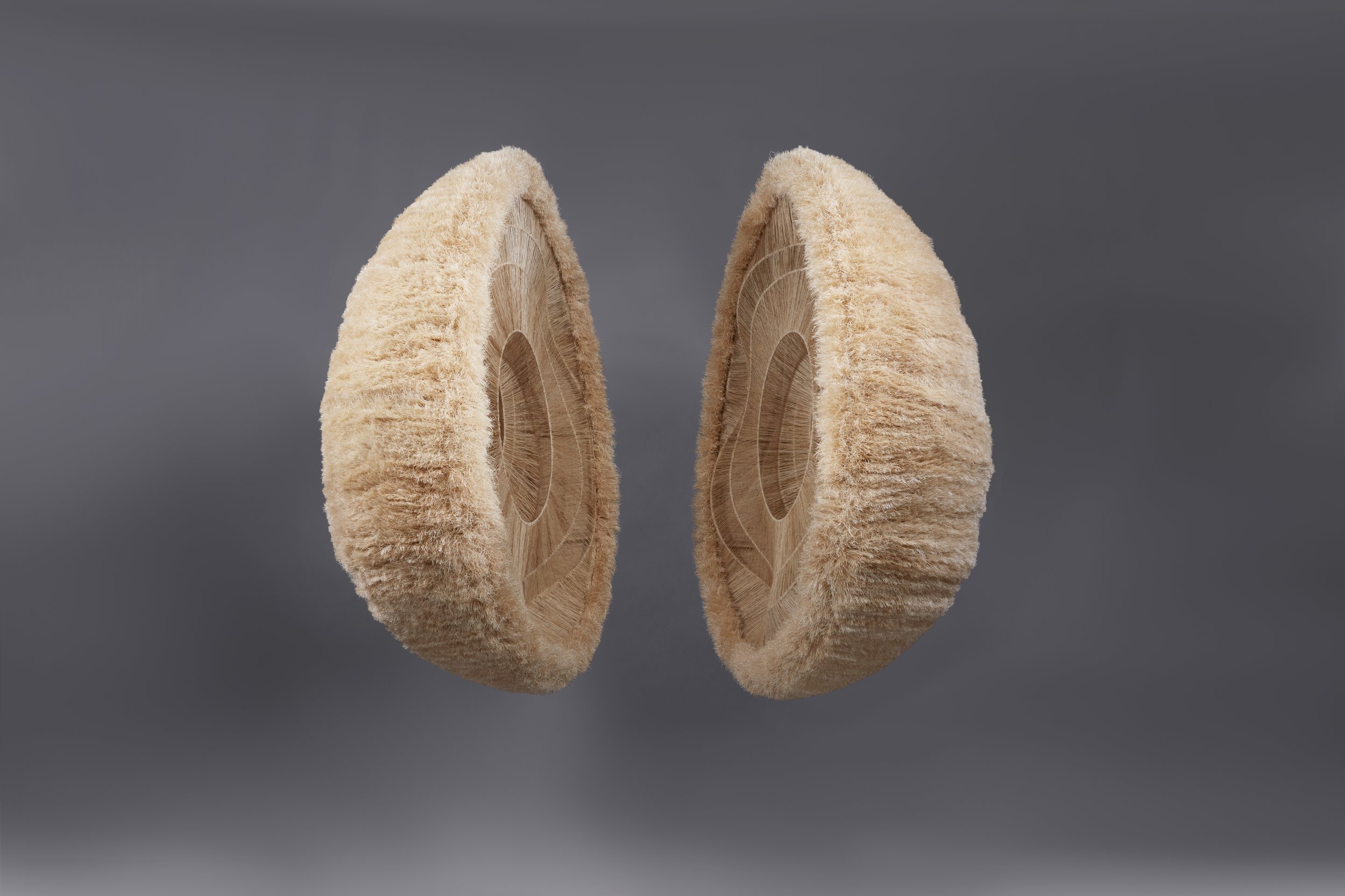
The Entrophy Reduction of Hundun series. © Wanbing Huang Art studio.
In collaboration with LOEWE Foundation.
Interview by Rao Song and Carrie Xu.