
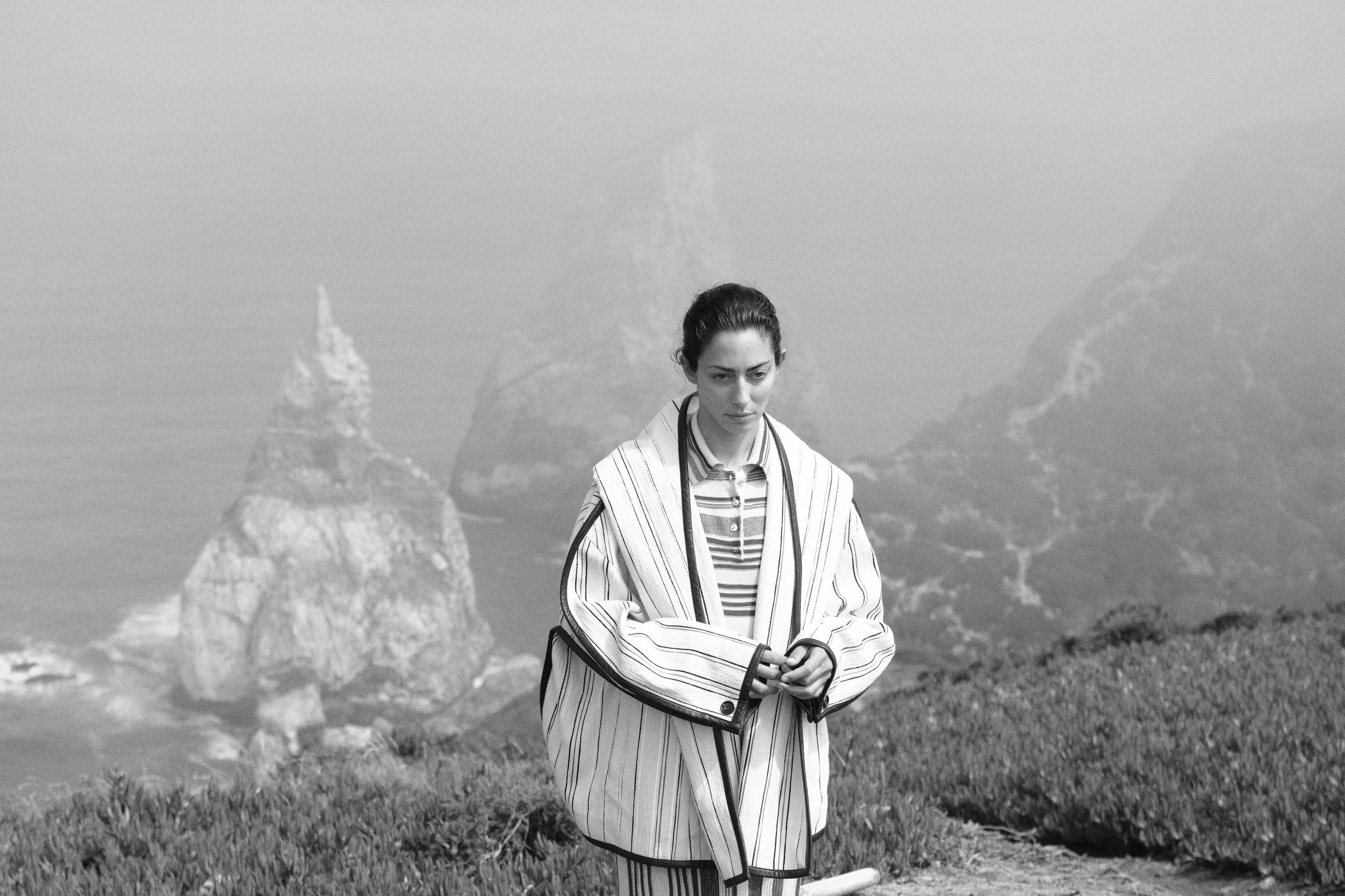
The moment you meet a sojourner, you recognize them. This is certainly true when you get to know Conie Vallese. Unconstrained by labels—whether as a model, sculptor, designer, or muse—your first encounter with her might vary: spotting her in a Bottega Veneta campaign, admiring her delicate works at Milan Design Week in Villa Borsani, or crossing paths with her as she travels the world.
Growing up in Buenos Aires until the age of 23, she was surrounded by her grandmother’s rose garden and indulged in hours of “sobremesa”—the time spent lingering at the table after a meal, chatting with family and friends. This term, lacking a direct English translation, symbolizes the luxurious passage of time in the close company of family. If there’s a texture that could capture how her hometown feels to her, it would be “sedoso pero áspero (silky but rough).”
In her 20s, moving to New York opened another chapter in her life. Over approximately ten years as a New Yorker, she “fell in love a few times” with the city, found a place in Brooklyn she could call home, and far surpassed the career aspirations she held as a little girl in Argentina. Things seemed finally settled in her 30s—until the pandemic hit, confronting her with the realization that she had outgrown New York. The iconic skylines, which made people feel as though they were “living in a movie,” skylines she could gaze at endlessly without fatigue, eventually drove her to leave.
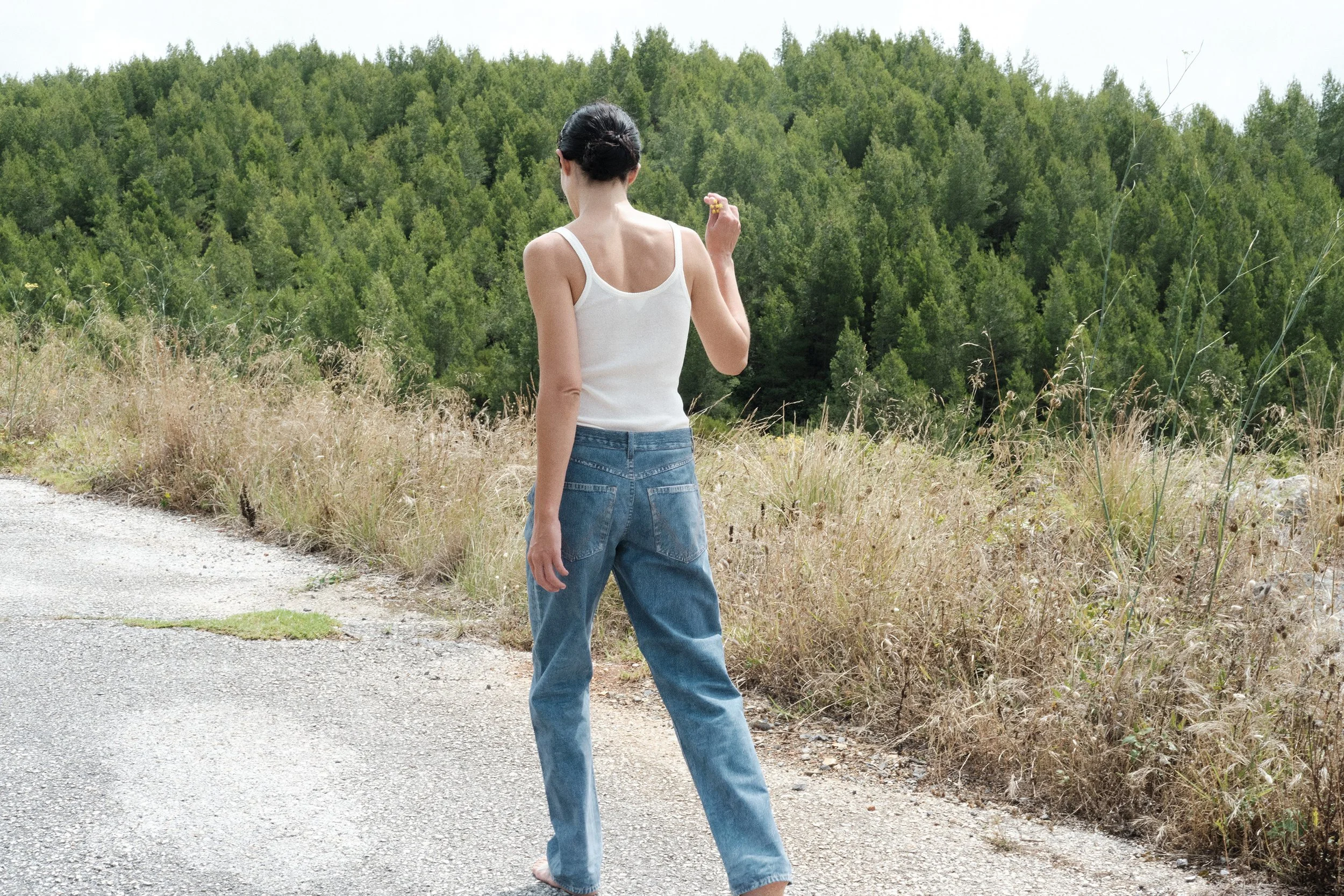
Portugal was her next destination, where she spent three years living in a farm village north of Lisbon. Nearby, Cabo da Roca, a cape in the Lisbon District known for its breathtaking views and dramatic cliffs that plunge into the Atlantic Ocean. It was here, amidst this stunning backdrop, where our photo shoot took place. She would spend hours on the beach, gazing into the ocean, with nature consistently restoring her peace and strength.
Yet, none of this fully captures her current state. With a natural inclination for a nomadic lifestyle from a young age, she has always followed her urge to wander and explore. Moving around the world with just one bag, that’s all she needs for her life, and that’s exactly how she appeared when we met. She shared her current life goal: an album on her phone filled with images of a charming house on an island in Sicily. This secluded place, accessible only by hiking and where groceries must be carried by mules, is constantly enveloped by the sea. She calls this place “feels like home,” a sense of belonging detached from any physical structure or location, a sentiment she’s never truly found anywhere else—not in her childhood rose garden, not by the East River skylines, not by the cliffs of Lisbon, nor with anyone but herself on the island. It may reach a point where she carries nothing but her mind and body, a reminder to her—and us—of how simple and fulfilling life can be.
In one image, she drew a large heart in light blue—the color she associates with her hometown—and a big arrow pointing to a hidden place in the mountains. “People say if you really want something, you should keep it to yourself,” she paused for a moment, her gaze firm and chin slightly lifted, “but I’m not—I’m saying it loud!” Why shouldn’t she be assertive? When asked if this was her dream home, she thought deeply and replied, “I don’t think there should be a dream home. There might be a dream house, but home is not something you can visualize once and for all. It’s not a destination; it’s a journey.”
It is often said that one cannot cross the ocean until they have the courage to lose sight of the shore. Similarly, the journey to find our dream home—where true self and freedom reside—requires immense courage, ultimately leading us to embrace the unknown for the promise of new horizons.
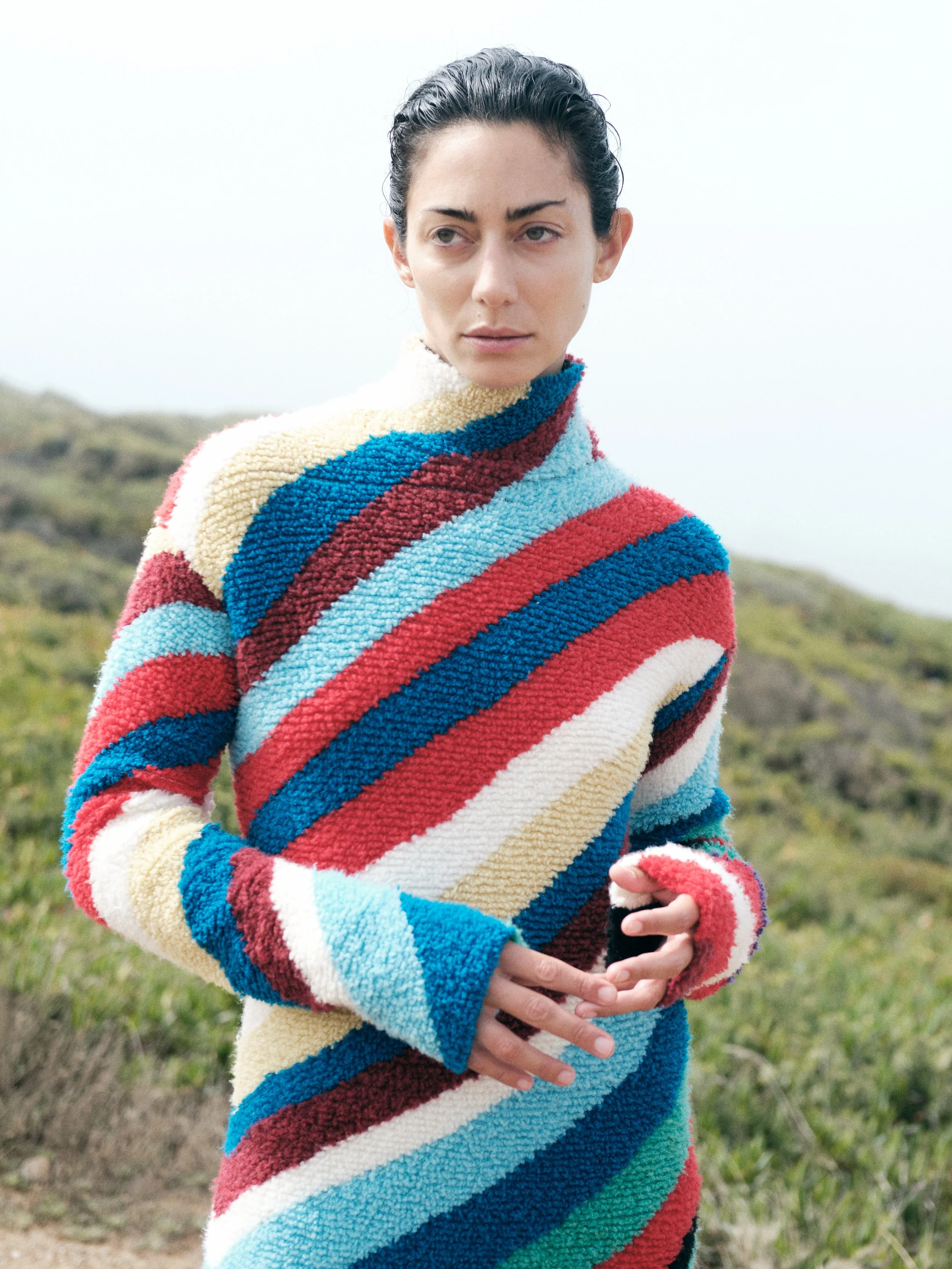
When did you leave your hometown for the larger world? And when was the last time you went back?
Conie Vallese (CV): I left Argentina when I was 23 years old and moved to New York City. Little did I know that this move would completely change my perspective on life, making it hard for me to ever look back. The last time I visited, I traveled to the northern regions of Argentina with my parents. We explored Jujuy and Salta, with their stunning hues of orange, pink, and brown mountains, and the untouchable yet embracing landscapes. These places are among the most breathtaking I have ever seen.
What was it like growing up in Buenos Aires?
CV: Growing up in Buenos Aires was filled with rich and vivid memories, often centered around my grandmothers. I recall spending time in my grandmother’s rose garden, enjoying long hours of “sobremesa” after a leisurely asado lunch on Sundays, and taking siestas under the shade of a tree. Simplicity. These moments with my two grandmothers, who were both wonderful women, are among my most cherished memories.
If you had to choose a color, a texture, and a verb to symbolize your hometown, what would they be?
CV: Light blue, sedoso pero áspero (silky but rough), pulsating.
How long have you been in New York? What was the difference between the New York you knew before you came and the New York you are actually living in?
CV: I have been in New York for over 10 years now. Without a doubt, there was no better city for me to explore in my twenties. My time in New York gave me the capacity and strength to understand beyond anything I knew, breaking the patterns set by my culture and society. The challenges I faced here made me feel capable of surviving and thriving against all odds. I’ve had experiences and met people that could only happen in New York. I fell in love a few times and spent countless hours staring at the skyline without ever getting tired. It’s true, New York often feels like living in a movie. However, as I grow older, the city no longer aligns with my yearning for simplicity and lightness. The city changed, I changed, and the world changed. We are all fortunate for that.
What do you like and dislike the most about New York? Would you agree that the people around you in one place determine the connection you make with the place, or is it the place itself that naturally draws the people who connect to you?
CV: What I like most about New York is its never-ending vibrant energy, which often brings indescribable feelings of joy. However, I dislike how people can become numb to the sad realities that are visible throughout the city. I do agree that people make a place make sense. My friends can make any place magnificent, but it’s a bit of both. Being in a place I have a connection with naturally brings a sense of belonging.
Where have you been in the past 12 months? Any unexpected things or people you’ve met during your current nomadic lifestyle?
CV: Between Europe and New York. Over the past 12 months, I feel I have formed incredible bonds. These friendships have been a source of strength and joy during a time of deep introspection for me. I took a trip to India for the first time with friends, to Jaipur, full of vibrant colors and serene landscapes that opened up an emotional side of me that I hadn’t fully explored before. I found myself deeply moved by the warmth of the people, and the majestic palaces and bustling markets were a feast for the eyes. I had quiet moments of reflection and conversations that truly left a lasting impact. This trip allowed me to see life from a new perspective, leading me to reassess my priorities in ways I hadn’t anticipated. There’s a unique beauty in building connections with others who share similar values and experiences. These are the experiences that enriched my life, providing support, genuine laughs, and exchange. My time in India brought a sense of reality and depth that I never want to ignore, reminding me of the importance of connection and empathy.
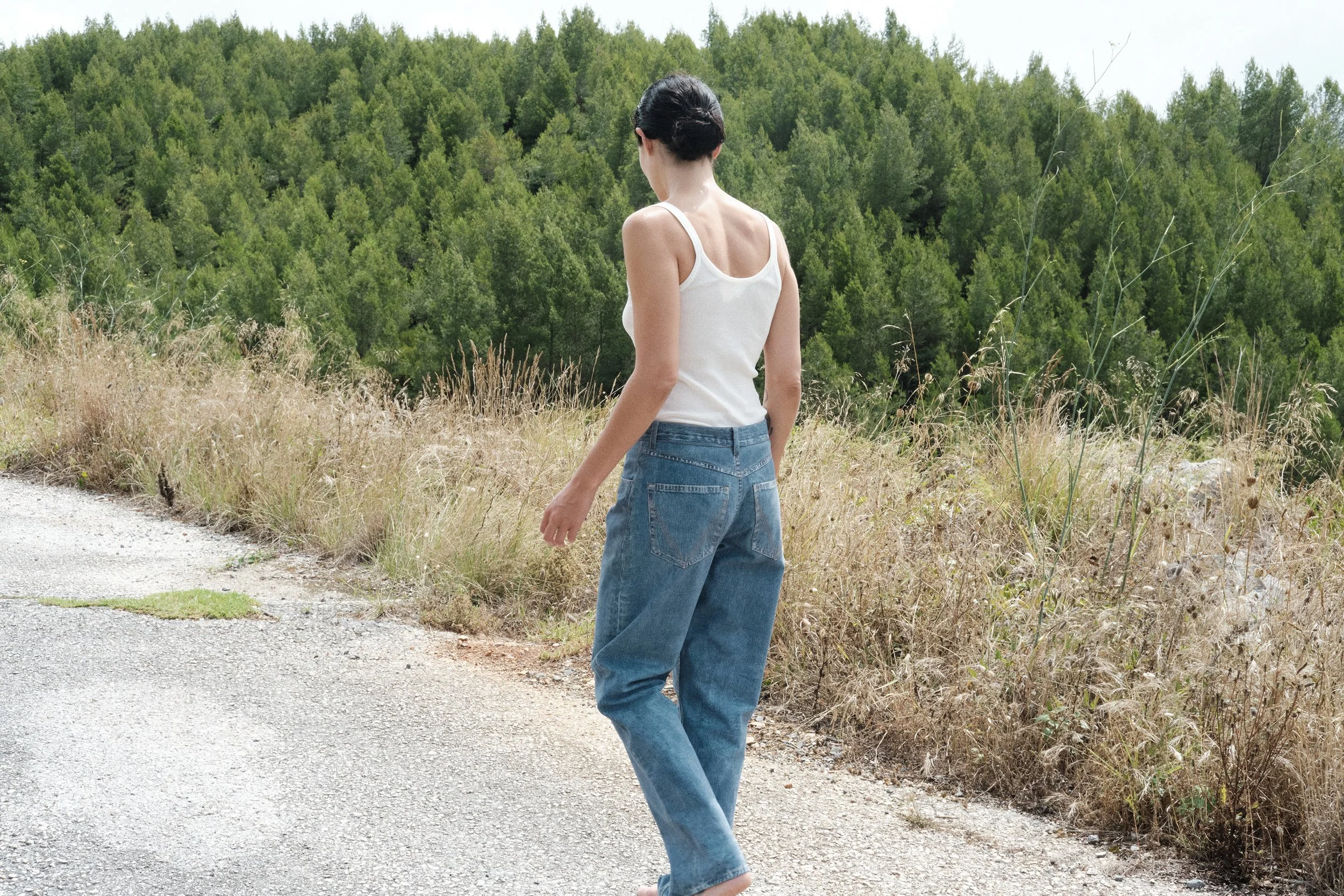
What did you imagine your life would be like when you were a little girl?
CV: I think back to my little self with a lot of tenderness. I had no clue what my future might hold, but from a young age, I often trusted and followed my intuition. I never viewed life as a pre-arranged puzzle or scheme; instead, I found excitement in the uncertainty that came with it. Do we ever really have a choice but to embrace the unknown? This perspective has led me to appreciate the unpredictable, where surprises and challenges shape who I become. After all, how dull would it be if nothing ever challenged us? My current circumstances may not align exactly with what I imagined as a child, but I now see them as a reflection of navigating unexpected twists and turns with resilience, courage, and trust in myself.
What was the moment you realized that there was a control of life that you really wanted to grab with your own hands?
CV: One of the most significant and painful realizations is attempting to control things we have no influence over. Much of the world operates beyond our control. I’ve come to understand that what I can control are the narratives I tell myself, the extent to which I prioritize inner peace, and the positive contributions I can make amidst the chaos. Allowing external circumstances—beyond my control—to unfold as they have to. I navigate life with a sense of detachment, embracing moments when everything aligns harmoniously. In times when life feels overwhelming, I remind myself to accept what is. Letting go of the need to control everything is the work to achieve a sense of calm and contentment.
What has modeling meant to you over the years?
CV: I work as a model in projects where I am invited to be fully myself. I am grateful for that, but it is not a universe that has my full-time attention.
Do you feel content or discontent at the moment?
CV: I feel content with myself. It is a dedicated and hard work practice, but I am committed. As for the world, its current cruelty feels unbearable to me.
Would you describe yourself as optimistic or pessimistic?
CV: Both. I am a fake pessimist.
As an artist who actively consumes art yourself, how does the reflection of other artists’ work incorporate into your own practice?
CV: Engaging with other works stimulates me. I get excited about the works of people I admire. Just witnessing the diverse approaches and minds and what comes out of each individual with their expressions and interpretations of beauty, pain, and other feelings is beautiful and broadens my perspective in my own practice.
When did you create your first artwork? What was it about?
CV: These masterpieces of children making drawings of a house, a family next to it, a tree, and above, a sun, perhaps with a rainbow... That’s the artwork we try to dissect later in life. I believe children are the most beautiful artists because their creativity is unfiltered and genuine.
Does art have a meaning to solve a problem or raise further questions for you?
CV: Perhaps both. It has a unique ability to confront issues and provoke thought, and also challenge perceptions to prompt deeper inquiry. And sometimes there is none of that.
Are you inclined to remember a compliment or a critique longer?
CV: I don’t take anything personally.
What is the most unexpected feedback you’ve ever received about your work?
CV: From anonymous sender recently.
“Here is a stroke at being more eloquent by elaborating how I feel your work is so moving. I like to experience the world with an open mind and to see into the essence of things. Most of your work commences with fluid materials that, through your vision and touch, become part of our reality and express a timeless and subtle feeling of ephemeral beauty, like a caress, being briefly touched by a flower petal or a butterfly wing. Like the minute scent of a blooming gardenia and the taste of a ripe peach. I also sense that there is a gothic, ancestral quality for reverence and appreciation for the brief time we get to be in this world. I mean, you elevate the mundane into a grassy field of fantasy and eternal beauty, be it a chair, a vase, or a fork. Often, after seeing your work, I imagine myself in the space where the objects you create reside, away from the world we all share and experience, and I find a profound sense of harmony, refinement, and nuance that is pervasive in the heartfelt and simple beauty that every organic form possesses. FIN.”
How have your family members influenced your creative journey?
CV: My family has been pivotal in supporting and encouraging me to explore different paths throughout my life. They never imposed their own aspirations on me, which allowed me the freedom to discover and learn on my own. While this independence sometimes meant navigating challenges without much guidance, I deeply appreciate their belief in allowing me to chart my own course. Particularly, my dad’s encouragement to be brave, break boundaries, and reject societal norms about how life should be lived has been instrumental in shaping my creative journey. His wisdom has empowered me to embrace my individuality and pursue my artistic endeavors with passion.
How has your multicultural background initiated your collaboration with other artists or designers?
CV: More and more, I engage in collaborative projects that draw on a fusion of ideas and aesthetics. Collaborations with people I admire encourage exploring new artistic territories together and lead to a beautiful conversation through the process of the work.
How do you choose your medium?
CV: Choosing my medium depends on the particular ideas I want to make tangible. It is important to me to stay open to different materials because it is my curiosity that drives me to explore various mediums and discover new approaches. Each material offers a unique process and experience, which I deeply enjoy.
How does each medium engage with your expression?
CV: Each material engages my expression in unique ways, bringing its own set of challenges and frustrations, of course, but full of beauty. What comes naturally to me is approaching each medium with enthusiasm for the process and a willingness to learn from it.
Why do flowers hold such a significant place in your work? Which part of their nature or attributes makes you return to flowers time and time again, in multiple mediums and expressions?
CV: Flowers hold a significant place in my work due to their inherent beauty. Delicate and ephemeral, their nature embodies fragility and represents a universal language of emotions—loss and renewal. I return to flowers time and time again because they enable me to express different facets of their essence and my own experience without being literal. Their resilience and fragility, and their ability to thrive in diverse environments, inspire me, reminding me of the beauty that persists even in challenging conditions.
How do you maintain the balance between functional and conceptual elements in your practice?
CV: My approach is primarily sculptural. The functionality of my work is not necessarily my biggest concern; the focus is on making my ideas of beauty tangible. Functionality arises from my desire to engage with the work, to touch it, to feel it, and to become an extension of someone’s world. I like my work to be easily approachable, and the conceptual elements mostly come from the evoked feelings after contemplating and completing the work. Sometimes, understanding comes from experiencing the result itself.
What’s your understanding of feminism in your work, or in your favorite artists’ work?
CV: Always the strength in getting ourselves up each time and showing up in the battle that has long suffocated women. Louise Bourgeois is an example of that in her work, with its strength and vulnerability.
Are you a person who enjoys or fears solitude?
CV: I am very comfortable with solitude; I always have been. I appreciate silence, contemplation, and my inner dialogues. Spending time alone has always been important to me. At the same time, the importance of nurturing relationships in a time marked by disposable behaviors and disconnection is just as important. I’ve become more selective about where I invest my energy. I value meaningful connections and cherish moments of genuine conversation. Finding people who accept me for who I am is precious and something I celebrate fully.
Where do you see yourself in 10 or 20 years?
CV: I can dreamscape my future, but at the end of the day, I would rather flow with the uncertainty.
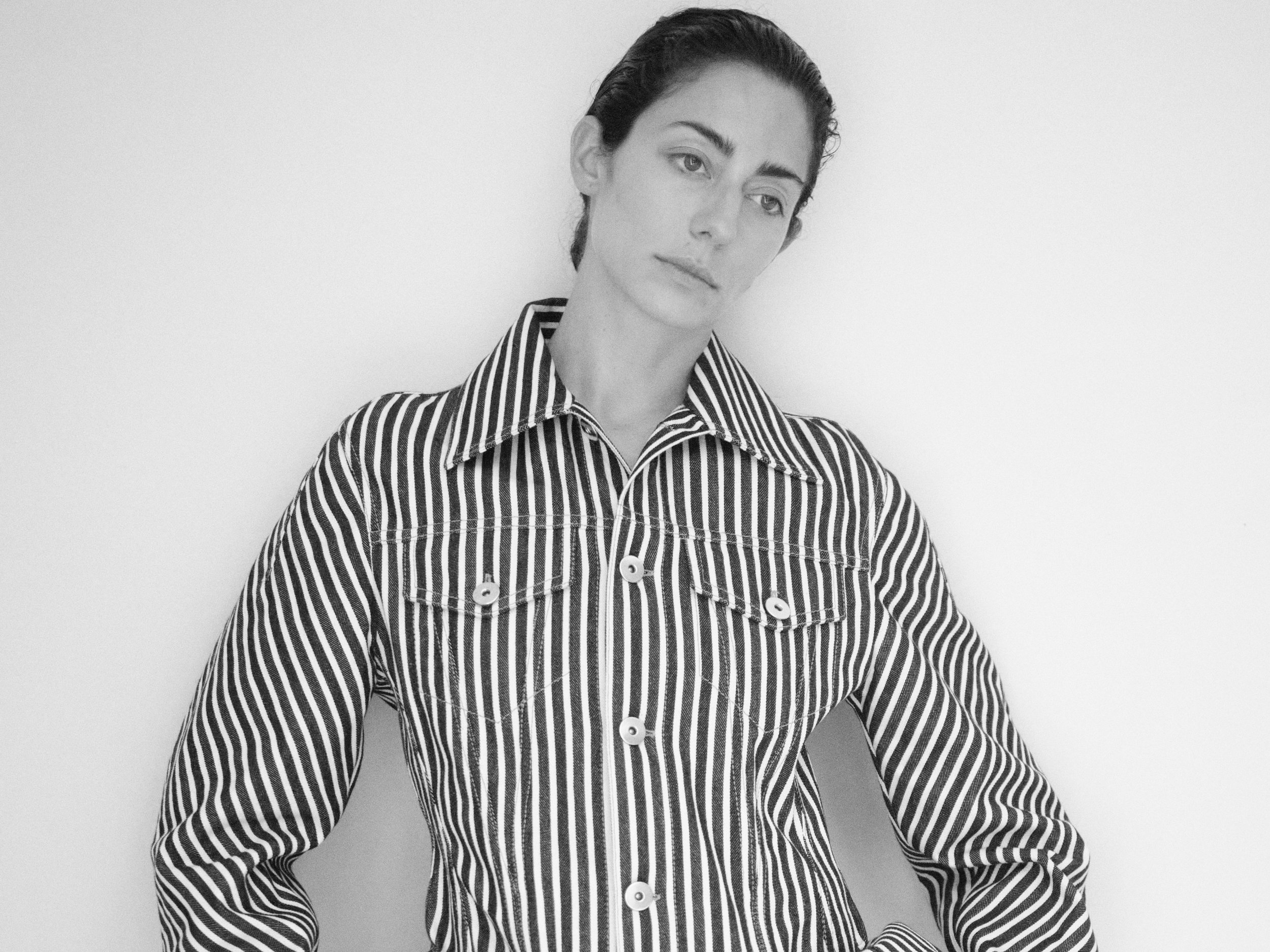
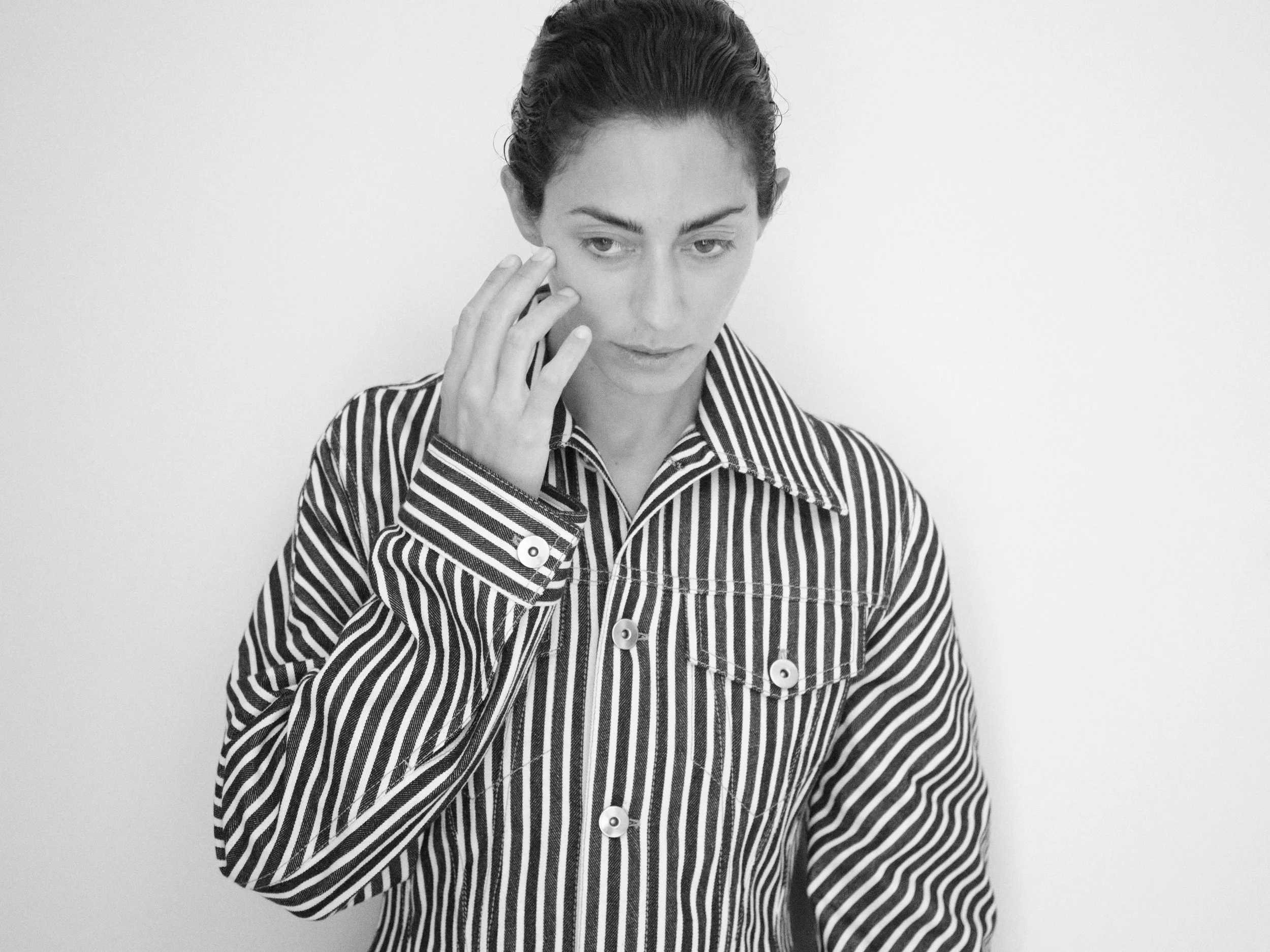
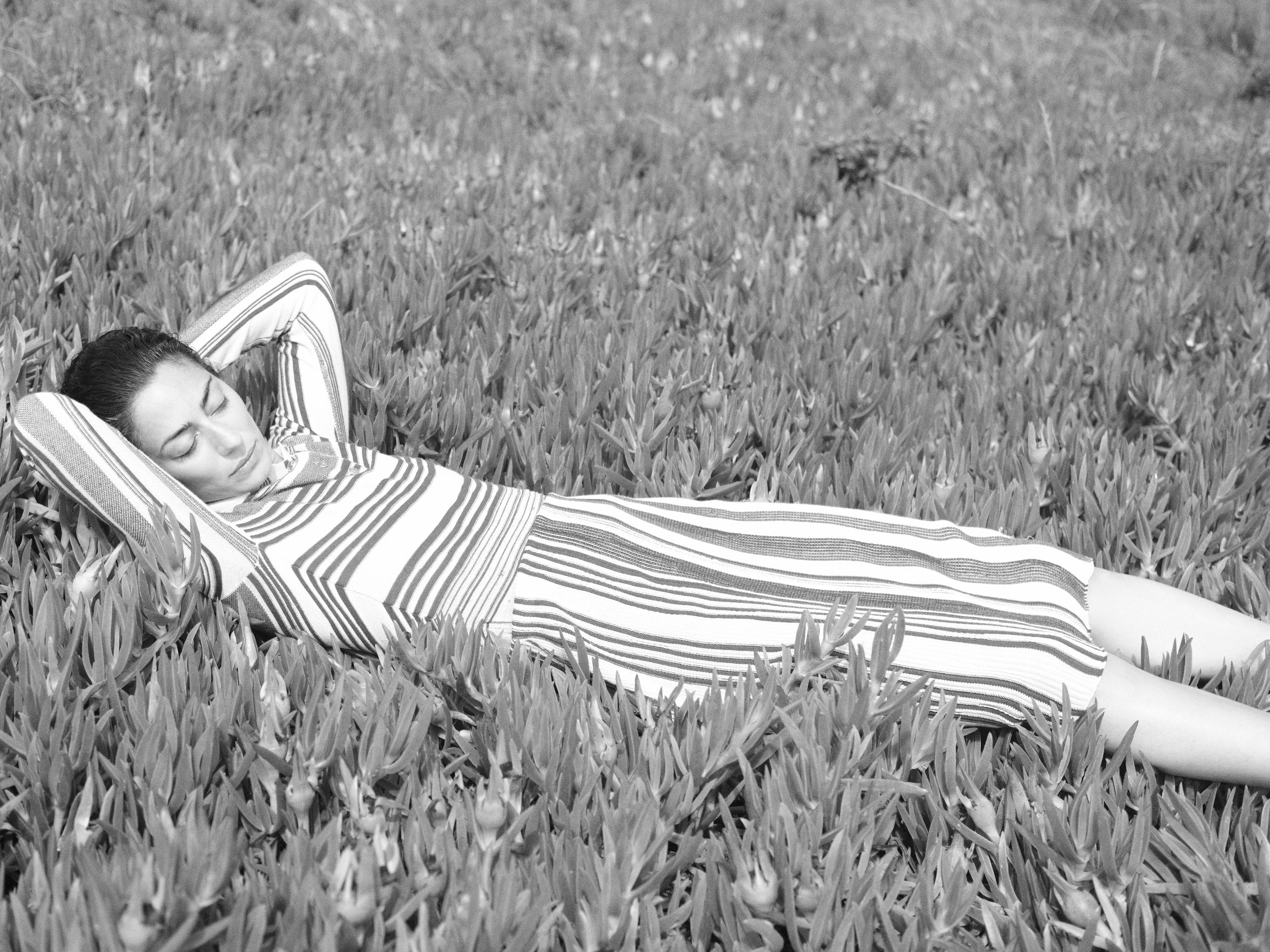
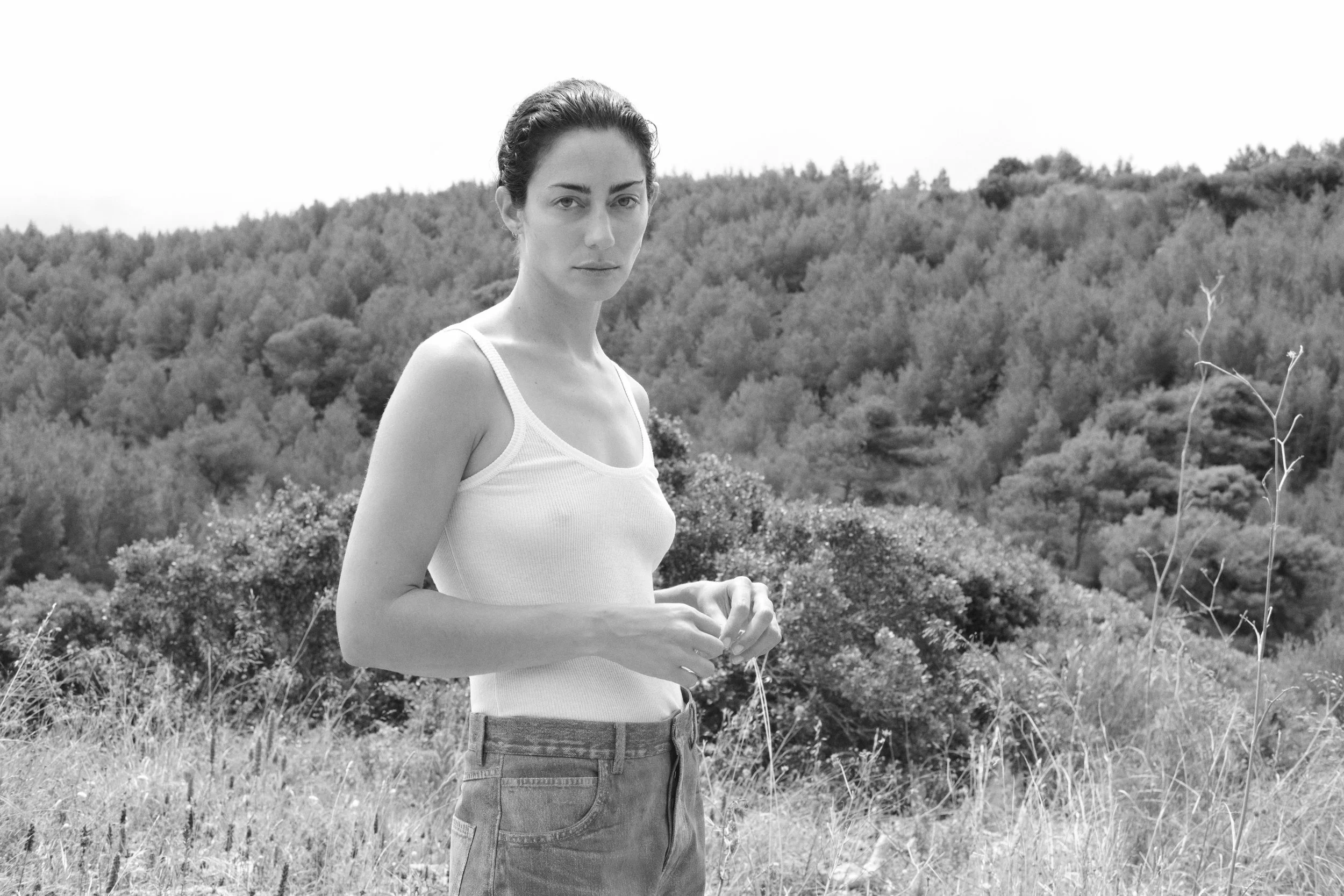
All clothing, BOTTEGA VENETA.
Words & interview Murphy Guo. Photography Ana Roque. Styling Johanna Ankelhed. Makeup Rebecca Muir. Casting Clare Rhodes @Casting By Us. Production Marina Reino.