
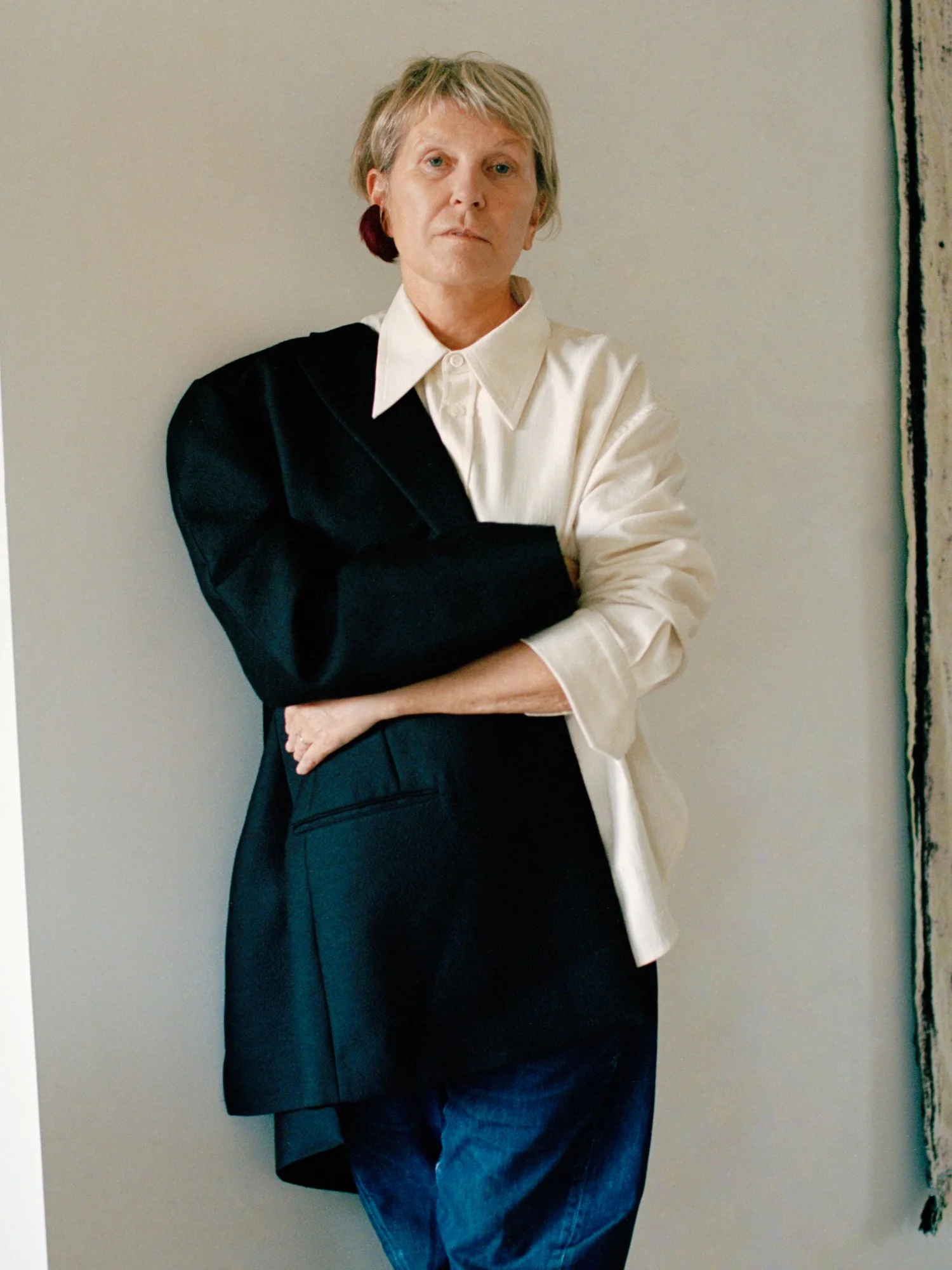
Edith Dekyndt wears a blazer, shirt, and earring by BOTTEGA VENETA, and jeans, artist’s own.
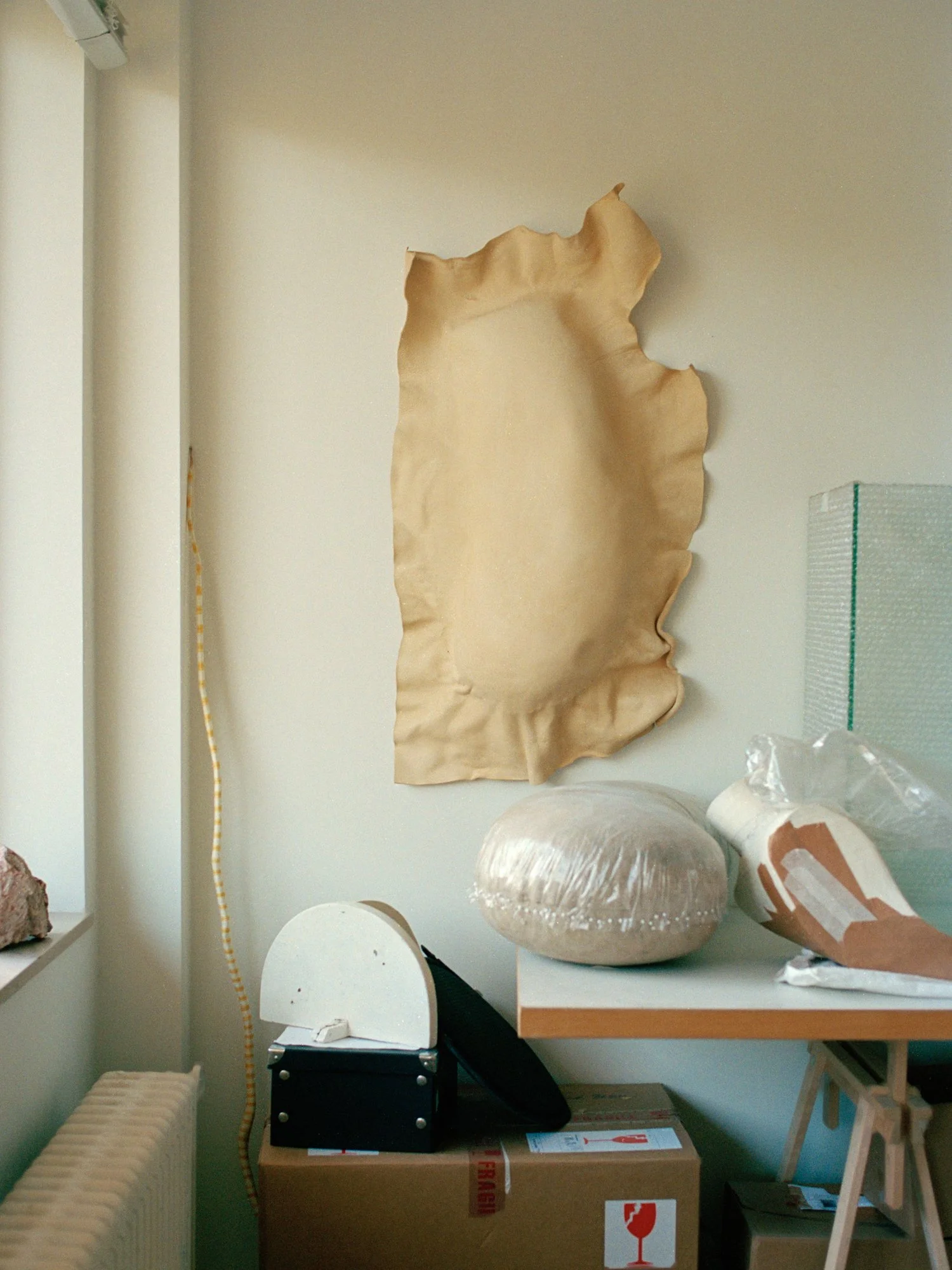
“An island is a world in itself,” says Edith Dekyndt. Its geographical boundaries define a territory, yet the lives, histories and forces that shape it remain in constant exchange with the world at large. For the Belgian artist, islands offer a particular vantage point from which to observe these relationships, revealing the intricate dependencies between landscapes, communities and the material world.
Born in Ypres, Belgium, in 1960, Dekyndt works across sculpture, installation, photography and video. Her practice has long been concerned with the behaviour of matter: what happens to a substance when it encounters water, air, light or time, and what these transformations might tell us about the conditions in which things exist. Observation and experimentation often extend over years, while the resulting works may consist of little more than a surface, a trace or a barely perceptible alteration.
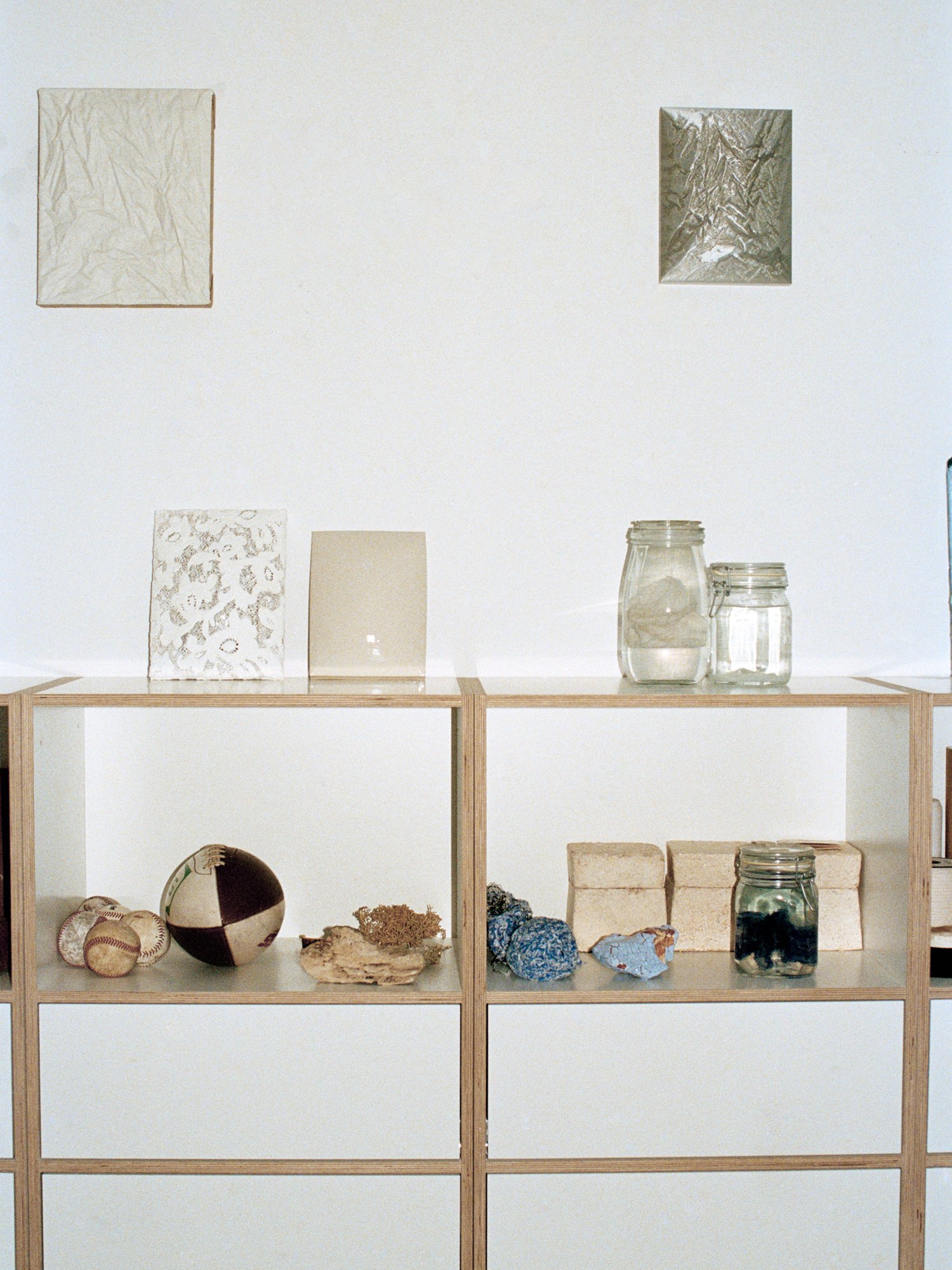
Her studio is a place where objects and substances of different origins coexist, each with its own history of exposure, transformation and possible futures. Matter matters to Dekyndt, but so does everything that happens along the way. “The journey we make with things matters more to me than the final outcome,” she reflects. The apparent simplicity of her work is often what remains after a prolonged process of subtraction.
In Notes on What Is What, her first solo exhibition with Marian Goodman Gallery in New York, Dekyndt brings together materials and experiences from Fogo Island, off the coast of Newfoundland, and Ibiza in the Mediterranean. Their encounter takes place on a third island: Manhattan. Here, amid the density of the city, she recognizes the metallic tones of the North Sea, though the sky seems higher and vast in its expanse. This association finds its way into the gallery, which she imagines as a lagoon, a landscape of horizontal surfaces and reflections. Works originating from two distant islands enter into dialogue on a third, each encounter becoming a canoe that carries something of one place towards the next.
The exhibition borrows its title from Island, Aldous Huxley’s final novel, in which Notes on What Is What is itself a book, a distillation of the wisdom accumulated over a lifetime. Its concern with the immediate experience of the world finds an echo in Dekyndt’s attention to things whose familiarity she quietly unsettles. In conversation with noisé, Dekyndt reflects on the experiences that shape her practice and the moments of heightened awareness that her work invites. In the words of the mynah birds in Huxley’s island:
“Here and now, guys, here and now!”
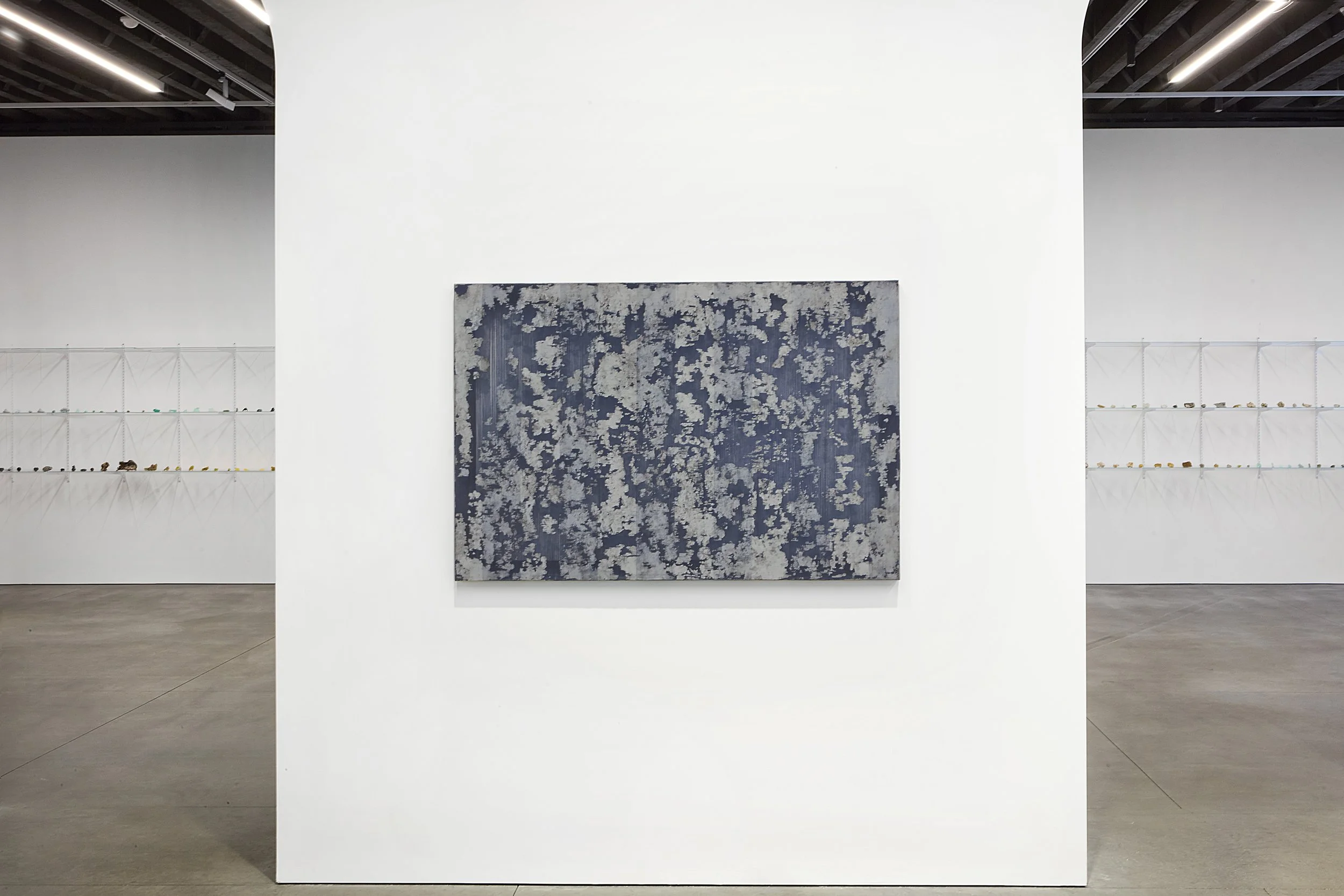

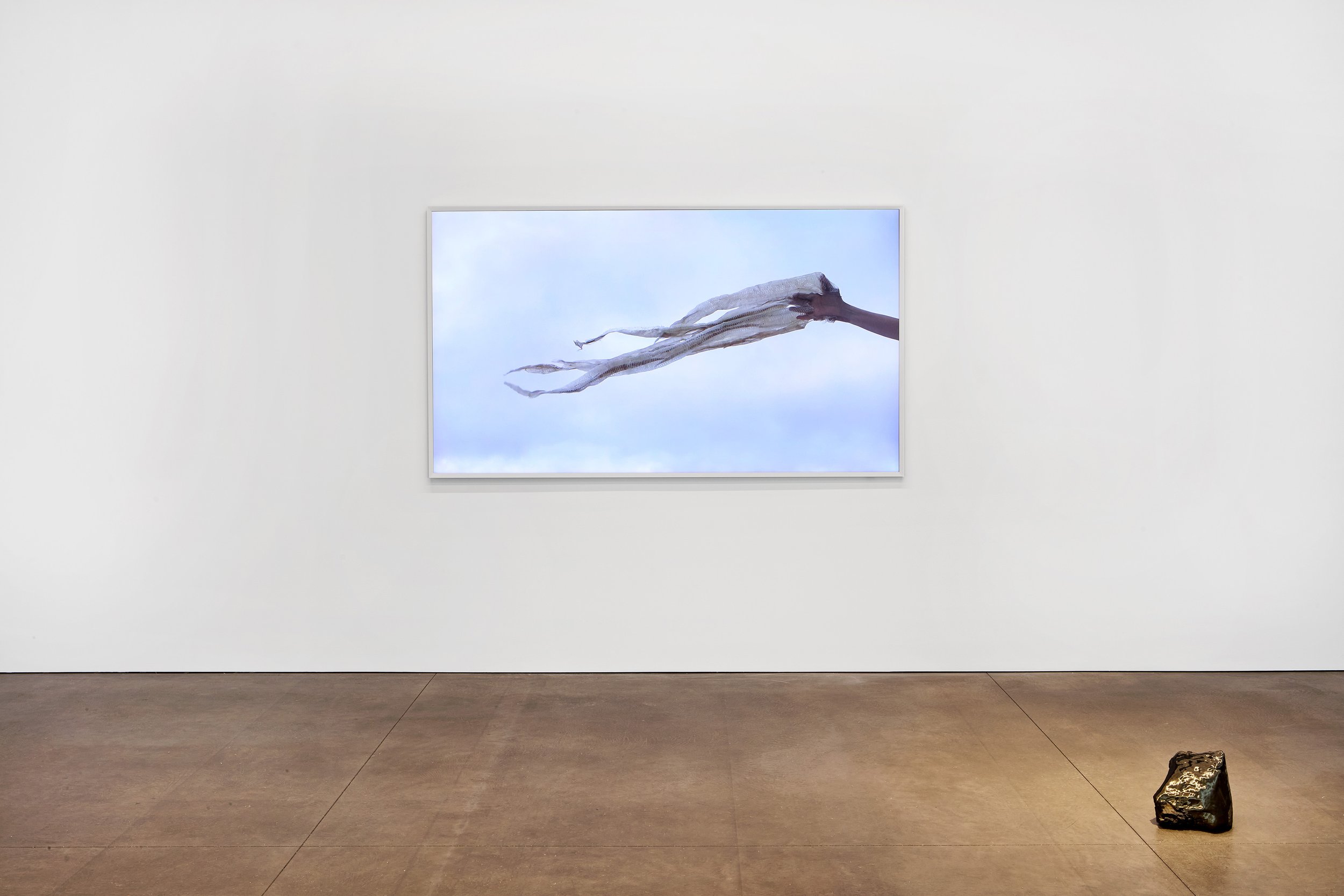
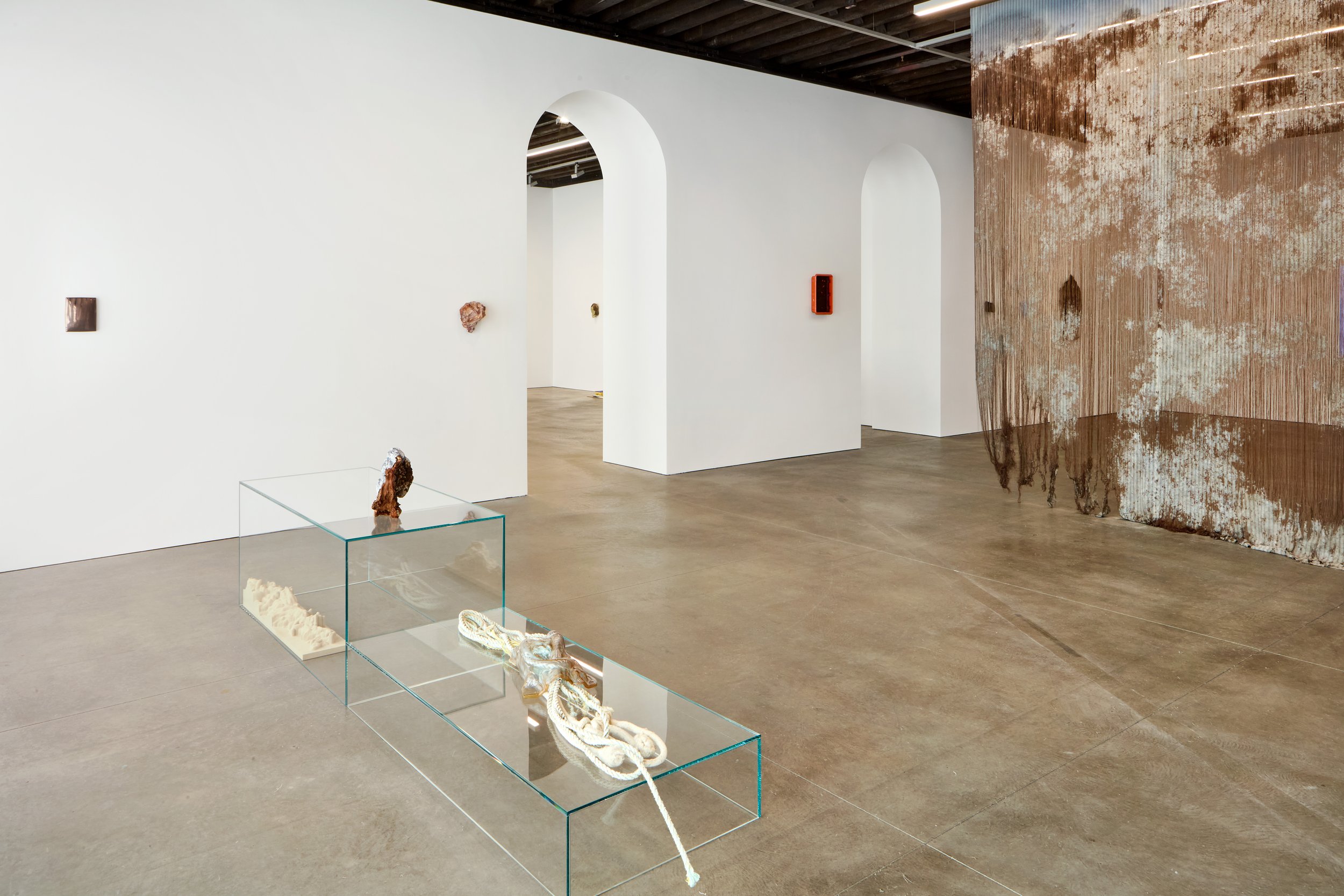
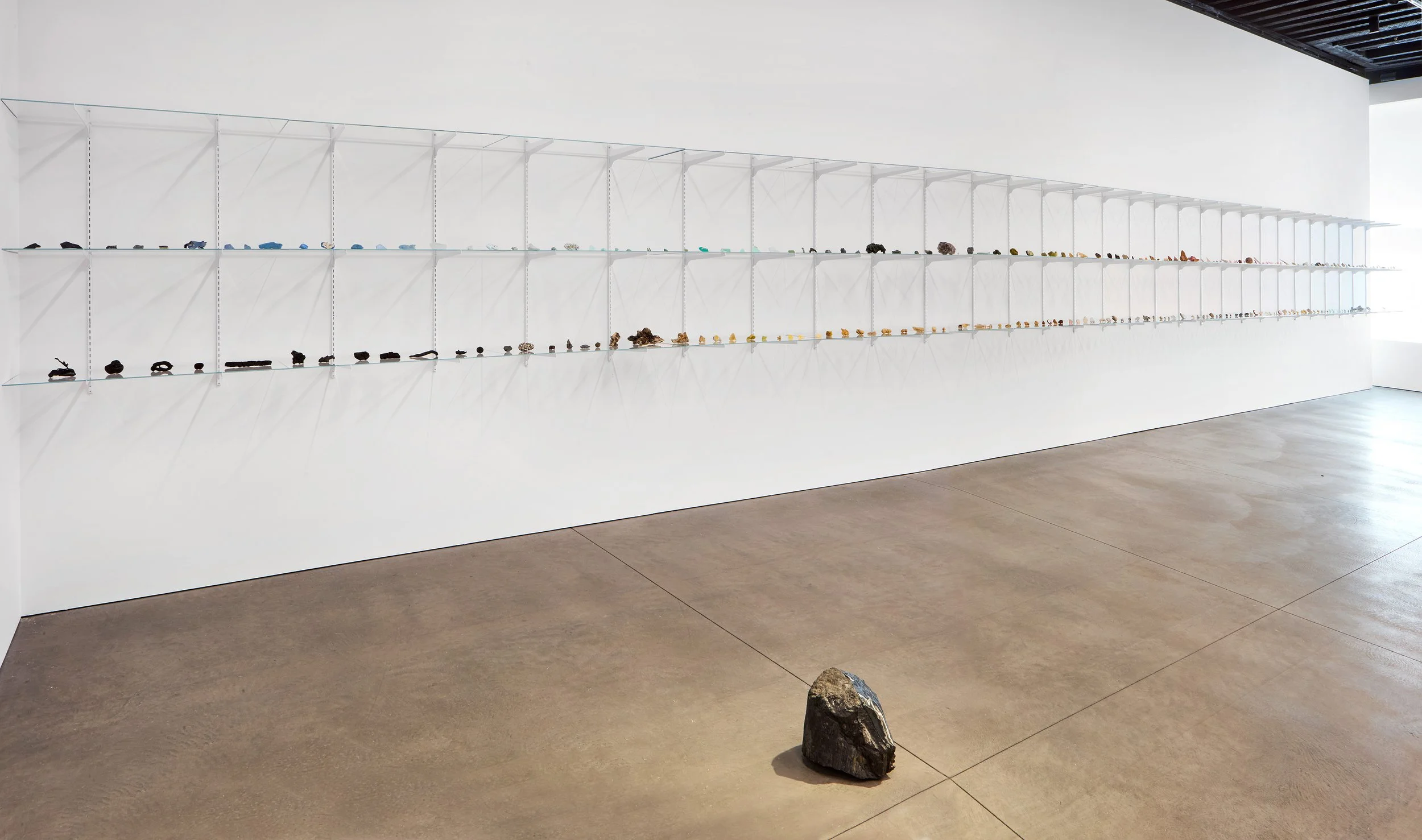
Installation view, Edith Dekyndt, Notes on What is What, Marian Goodman Gallery, New York, 2026. Photo: Alex Yudzon. Courtesy of the artist and Marian Goodman Gallery
Notes on What Is What is your first solo exhibition with Marian Goodman Gallery. At this point in your practice, what did you want this exhibition to make visible?
Edith Dekyndt (ED): A whole series of things comes alive in the body and mind, much as when walking alone through a forest, along a beach or through an unfamiliar city. One allows oneself to be permeated by the space, to open up to it, and then to withdraw into oneself. Something almost animal takes hold. The senses awaken, linger in the interstices, the corners, the voids, becoming attuned to a force, a softness, to presences that are sometimes barely perceptible.
A form of absorption sets in, in which perception precedes understanding. One enters a state of intuition and unease, something sensual, sometimes confused, where contours have yet to emerge and meaning remains open.
Manhattan is an island in the midst of an urban lagoon, where I find the metallic tones of the North Sea, except that on this eastern coast of the United States, the sky is higher, more expansive. The idea was to bring a sense of horizontality into the gallery, to create a landscape of surfaces and reflections, something akin to a lagoon.
What is it about an island that allows you to observe relationships or conditions that might be harder to perceive elsewhere?
ED: An island is a world in itself. Its contours define a boundary, while still allowing beings, narratives and imaginaries to pass through. Perhaps it is this tension that makes island territories so distinctive: on a more contained scale, connections and interdependencies become perceptible, without diminishing the complexity of the living world.
The island then becomes a kind of laboratory, a place from which to observe the transformations and fragile balances that shape worlds.
The aim is not to represent these islands, nor to offer a definitive reading of them, but rather to remain receptive to what passes through them: the visible and invisible forces that connect a landscape to a history, a material to a climate, an object to a form of life.
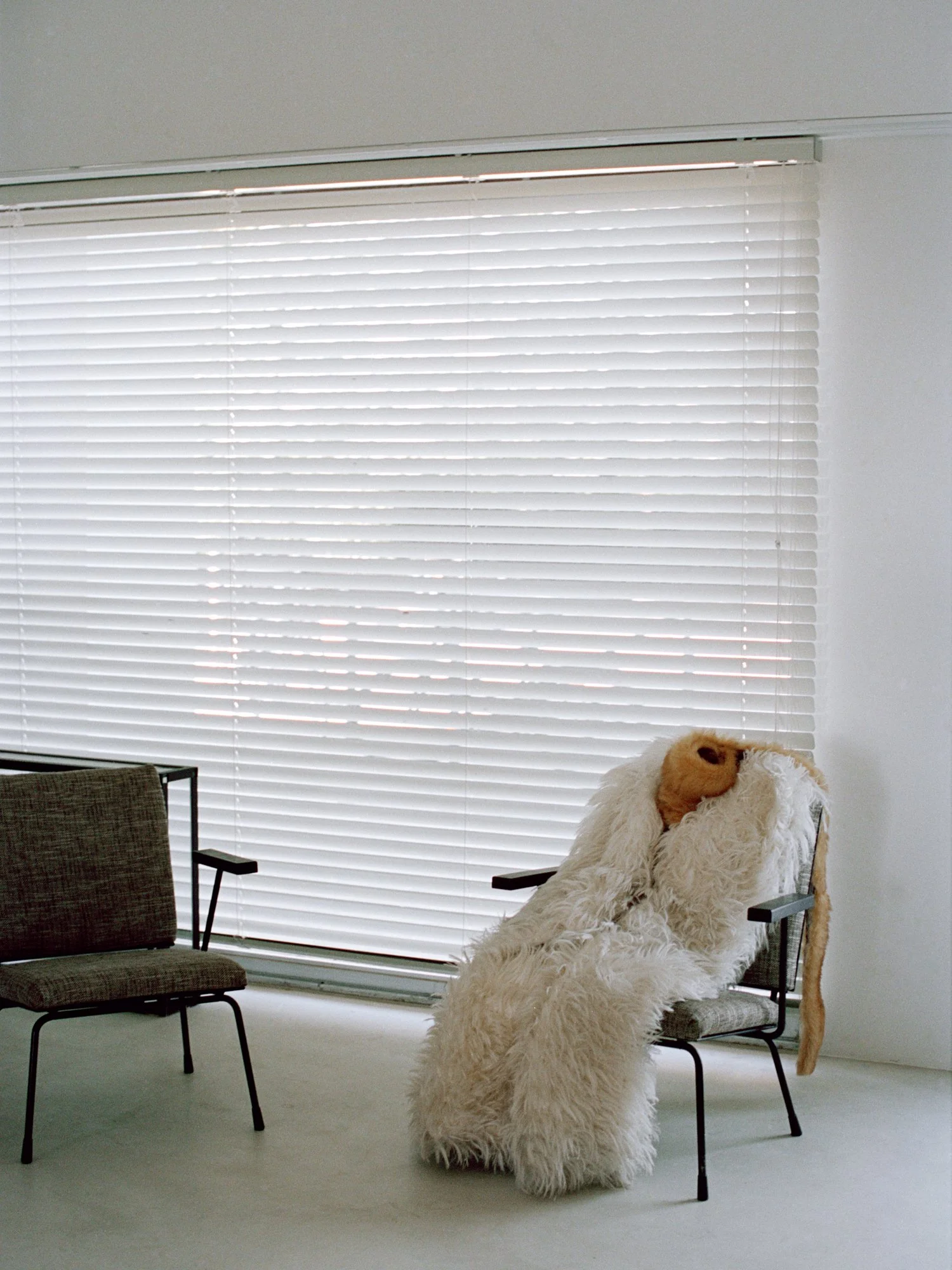
A coat by BOTTEGA VENETA in Edith Dekyndt’s studio.
The exhibition brings together experiences and materials from Fogo Island and Ibiza, two very different places. What drew you to each of them, and how did they come to meet in this exhibition?
ED: On Fogo Island, off the coast of Newfoundland, a community is seeking to invent new forms of coexistence between a territory, its inhabitants and artistic creation. It is an attempt to restore connections, to imagine an economy based on reciprocity rather than extraction.
In Ibiza, insularity takes on a different dimension. The island seems to exert an almost magnetic pull, both geological and symbolic. For centuries, artists, musicians and alternative communities have projected their desires, their dreams of freedom and their utopias onto it. These different layers accumulate, one upon another, as though the landscape and its materials retained something of all the lives that have passed through the island.
I don’t think we should speak of a unified whole, but rather of singular dialogues between forms originating on two islands and meeting on another island. Their conversation began when they came to occupy that place, at that particular moment, for a time. It is a unique moment, for them and for us.
Your work often brings together materials, experiences and research accumulated over long periods of time, yet what the viewer encounters can be remarkably spare. How do you know what to retain and what to leave behind?
ED: It is impossible to define. I can work for a long time around a particular situation, conduct extensive research, accumulate materials, information and experiences, and ultimately, almost nothing remains—just a few traces, barely visible. And yet, what remains contains a narrative, embodied by the objects and the dialogues that unfold between them.
I am very drawn to the idea of working for a long time to arrive at something that appears very simple, the result of a lengthy process of subtraction. The journey we make with things matters more to me than the final outcome. Perhaps this is what gives the atmospheres I create their suspended, latent quality.
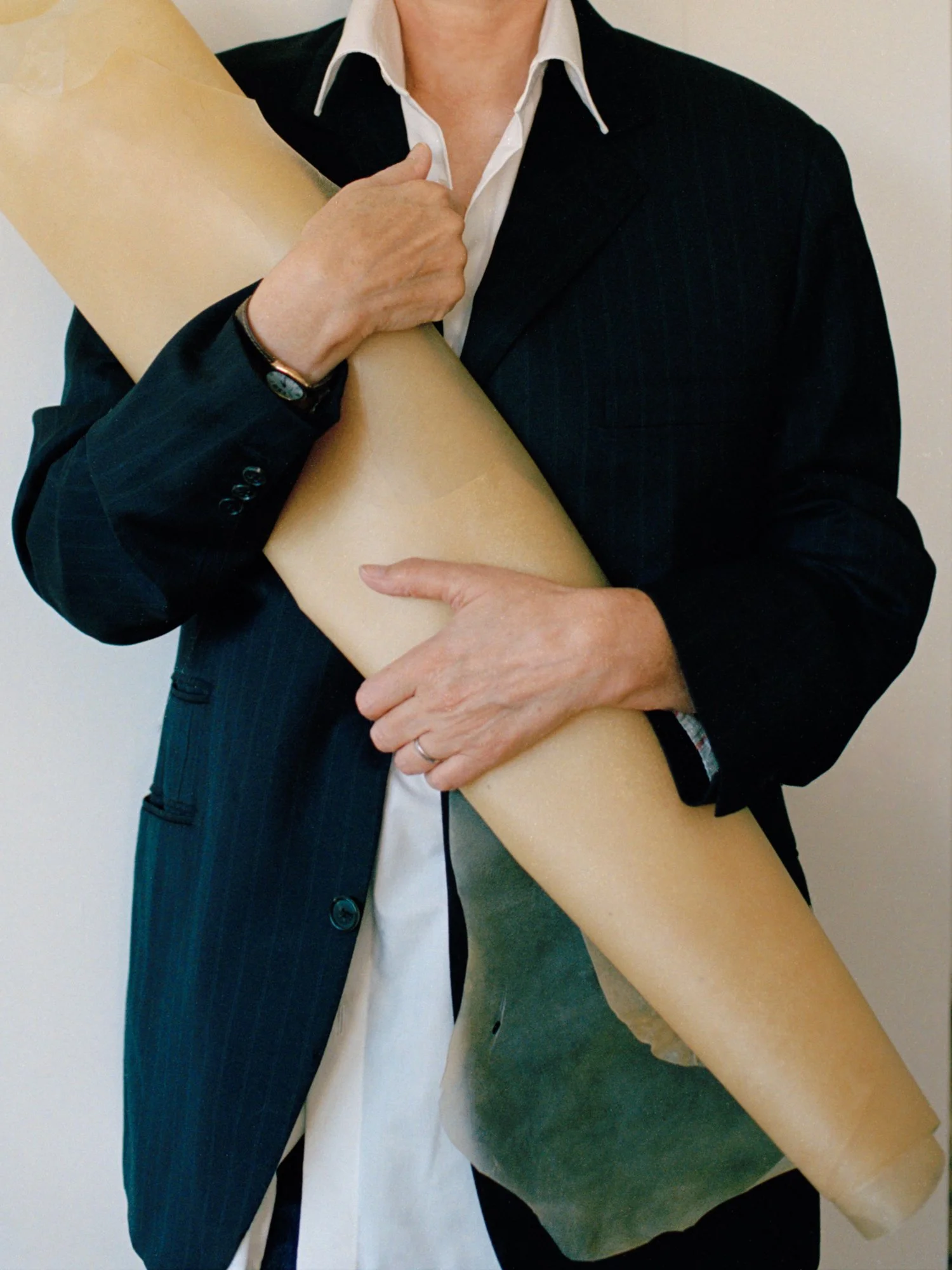
Edith Dekyndt wears a vintage blazer by HERMÈS, a shirt by LEMAIRE, and a watch by CARTIER.
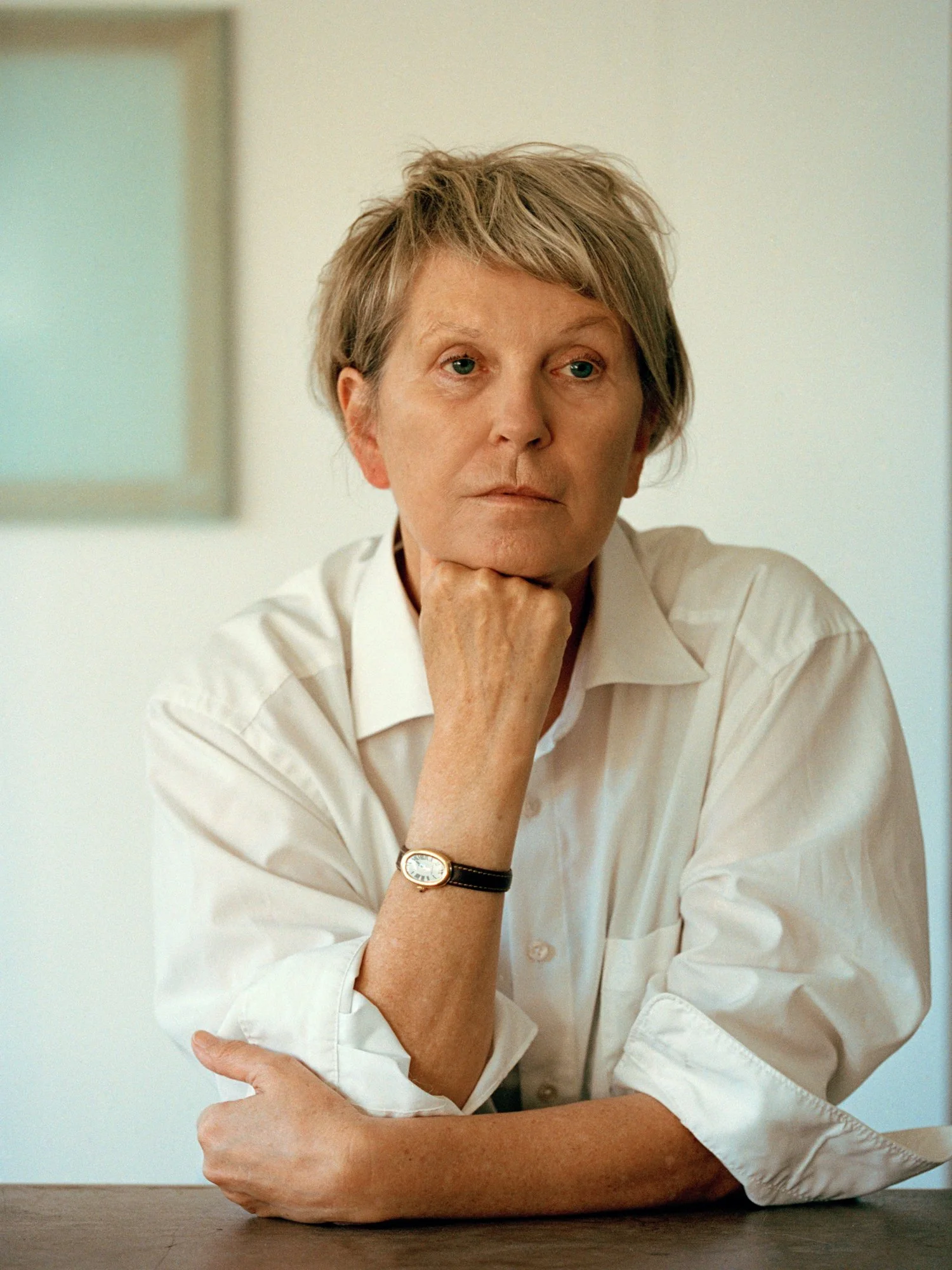
Edith Dekyndt wears a shirt by LEMAIRE, and a watch by CARTIER.
The exhibition takes its title, Notes on What Is What, from Aldous Huxley’s Island. It sounds almost like an attempt to identify things as they are, yet much of your work seems to make familiar things become uncertain again. What does “what is what” mean to you?
ED: In the narrative of Island, Notes on What Is What is a book within the book, written by the island’s founder several decades before the arrival of the visitor whose journey we follow throughout the story.
This book is a kind of distillation of everything Huxley sought over the course of his life: a holistic wisdom, a deeper awareness of the world, of living beings and of things. He believed that the divine could be found within the material world.
In Island, Huxley has one of his characters explain that what matters in the title Notes on What Is What is the first What. What matters, in fact, is what is there at every moment: every colour, every sound, every phenomenon, every relationship we are able to perceive, one after another.
Some of the island’s birds, the mynahs, are trained to shout, “Here and now, guys, here and now!” From time to time, they remind the inhabitants of the importance of fully experiencing the present moment.
Recordings of mynahs are also played throughout the gallery. They are recordings I have been collecting online over the past few years. Rather than imitating the human voice, or other birds, they prefer to imitate machine-gun fire heard in films, the sounds of household appliances, or those of certain robots in Star Wars.
They make familiar things uncertain again.
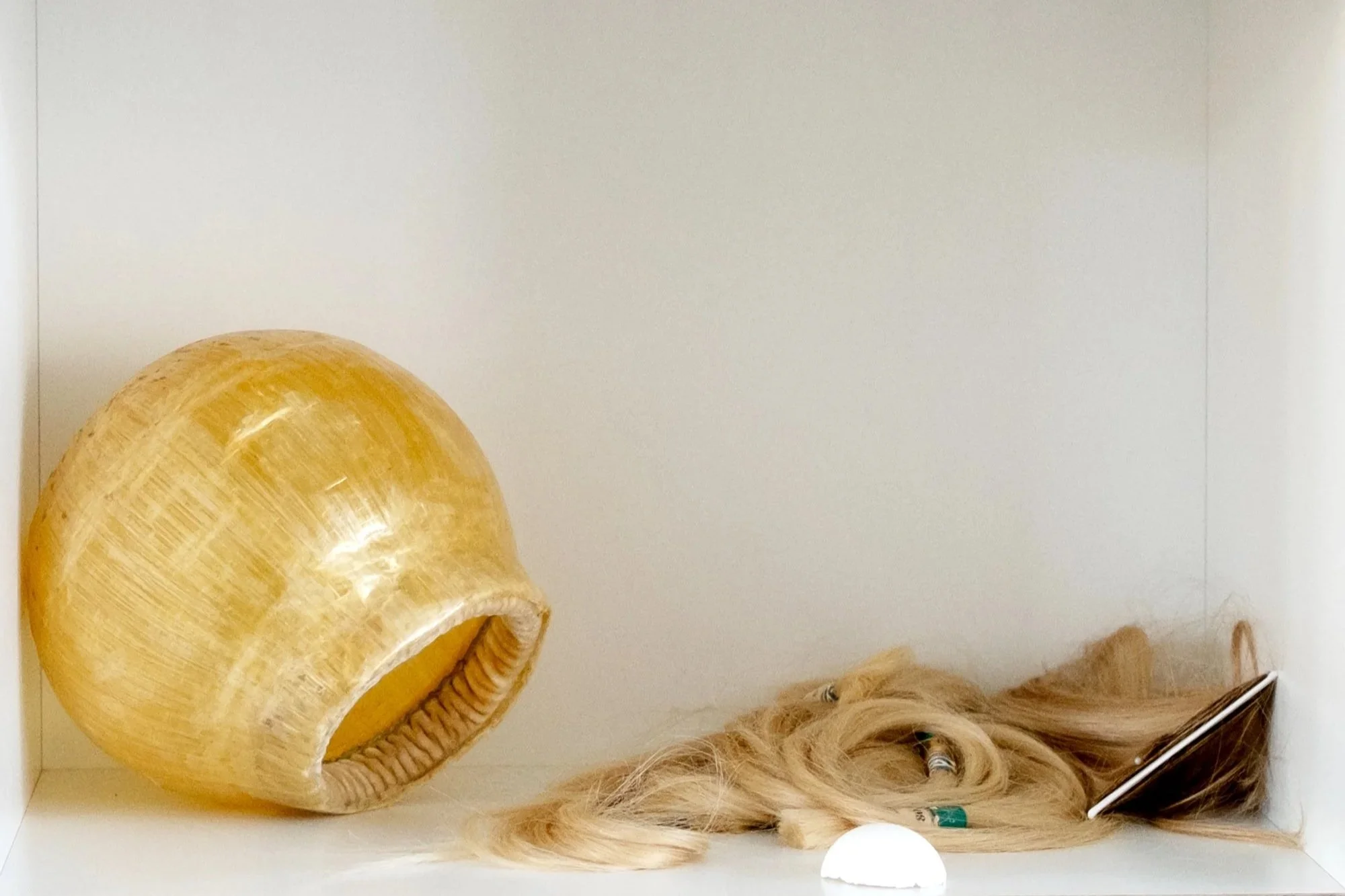
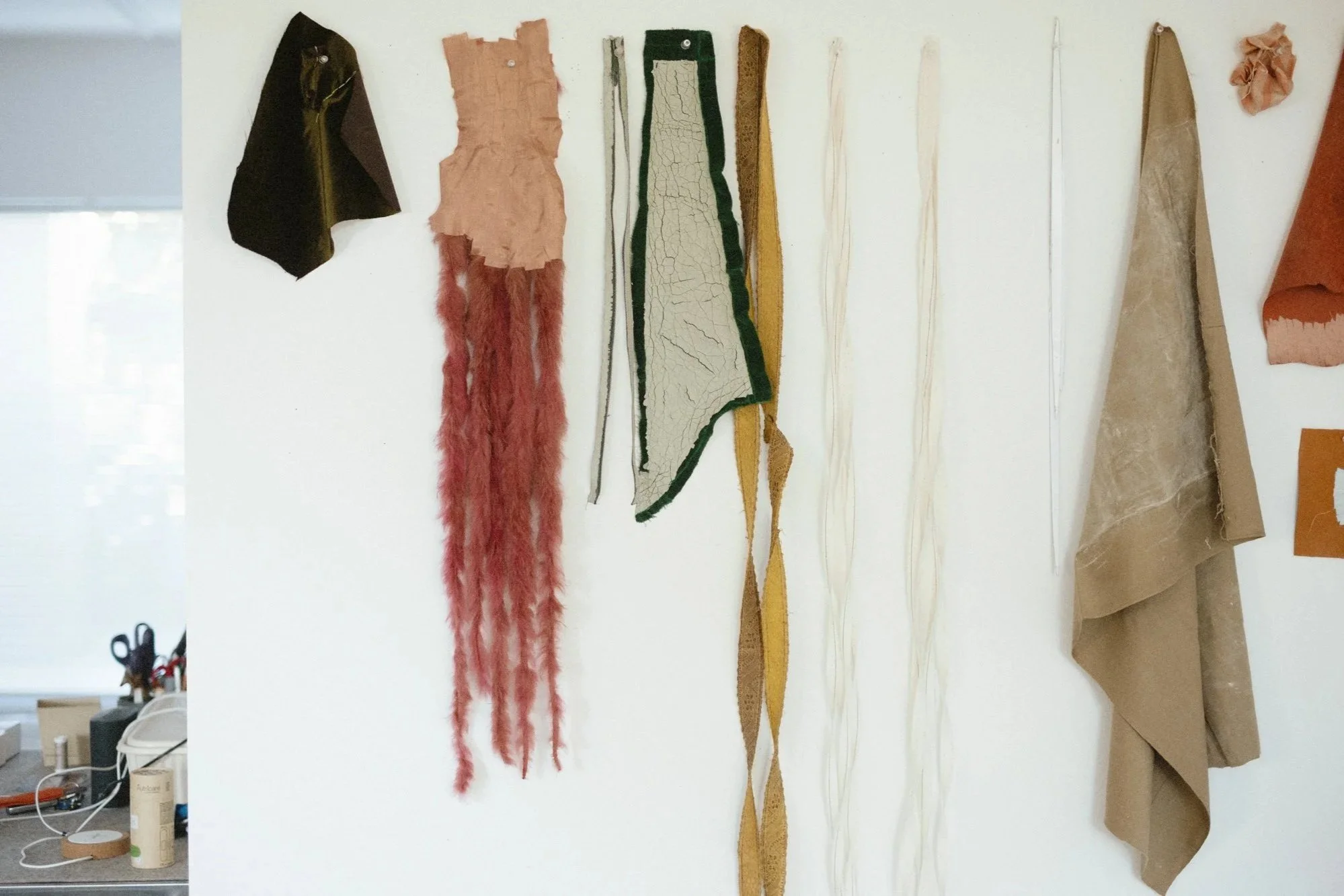
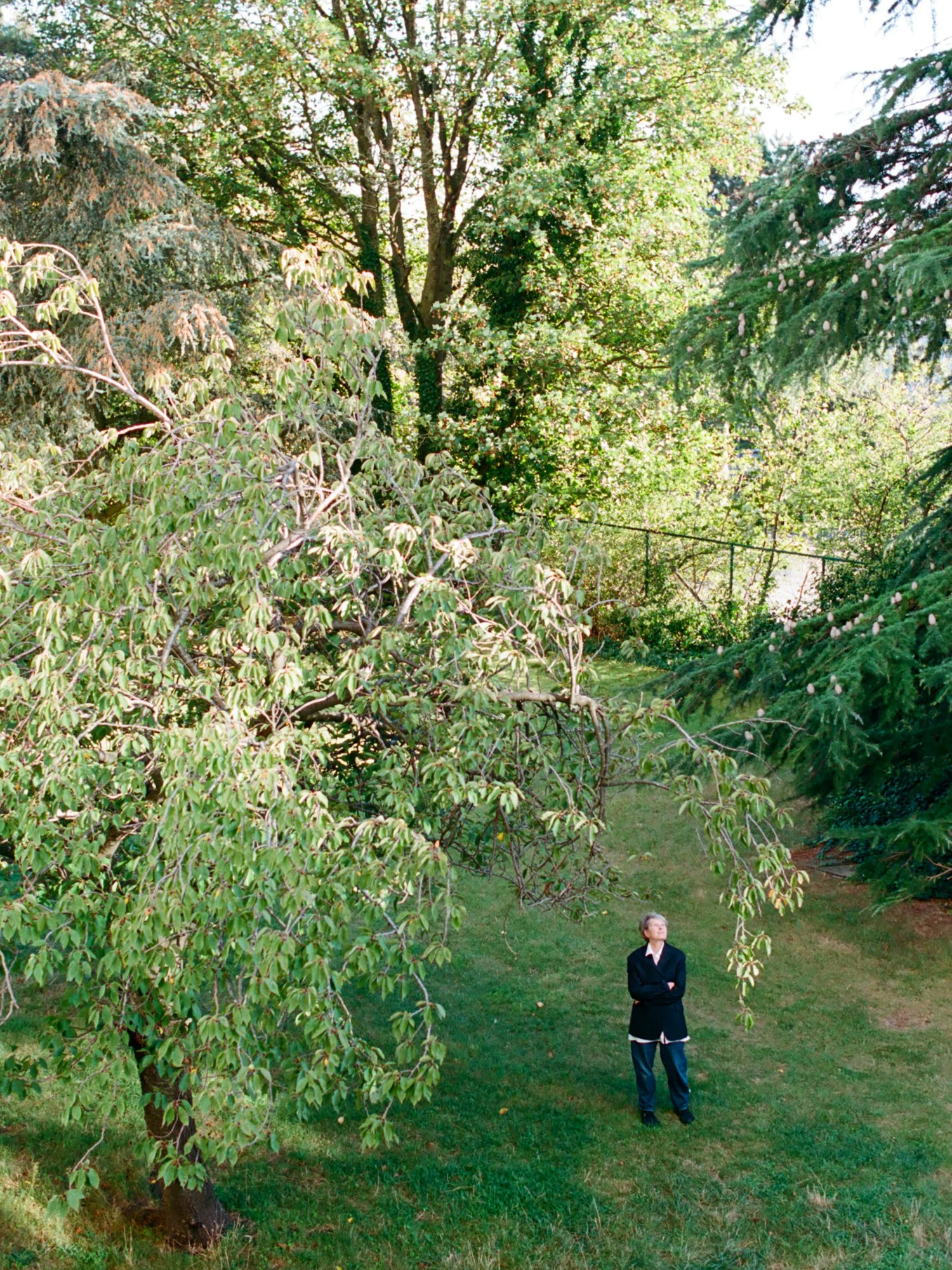
Edith Dekyndt wears a blazer and shirt by BOTTEGA VENETA, jeans and shoes, artist’s own.
Words and interview by Murphy Guo. Photography by Angèle Châtenet. Styling by Matilda Sadeghi.