
Larry Bell | Holding Fragility
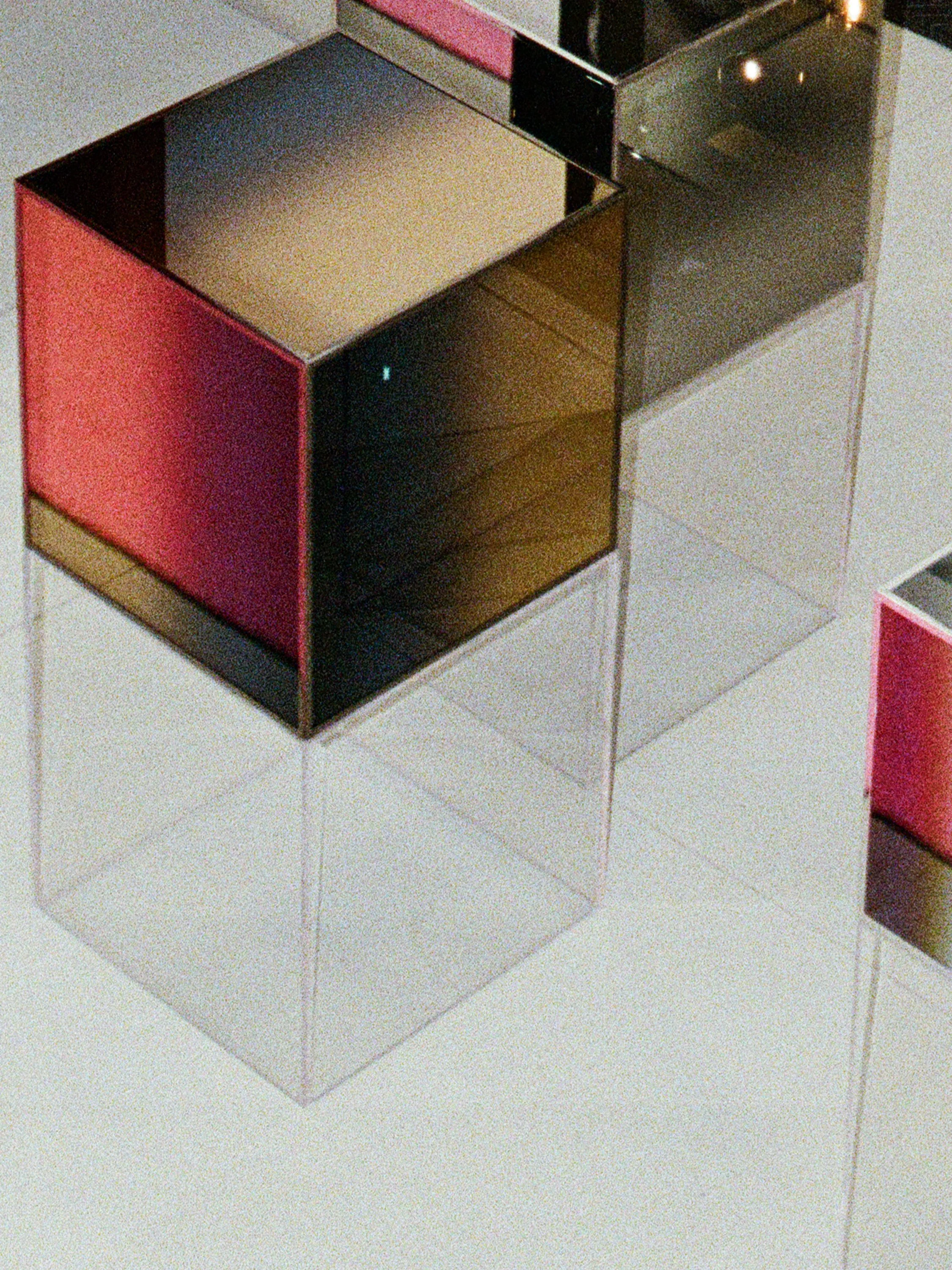
I used to feel distant from Larry Bell’s work. Especially the glass pieces. People often describe them in terms of light and space, the technologies he pioneered, the surfaces he coated. It all sounds important, brilliant, but the conversation stayed focused on material and method. I never quite felt the person behind it.
Until we spent a day with Larry in Taos.
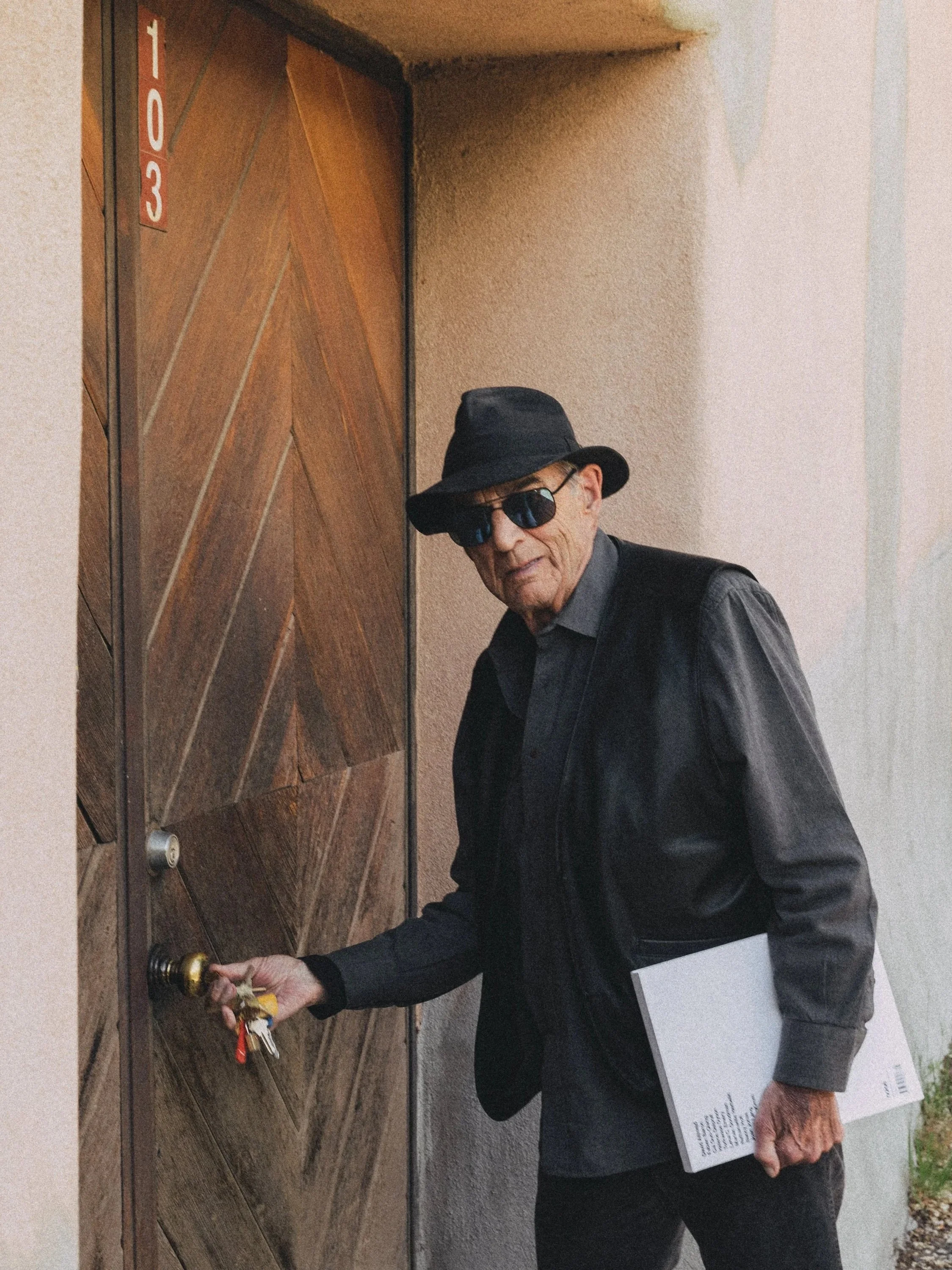
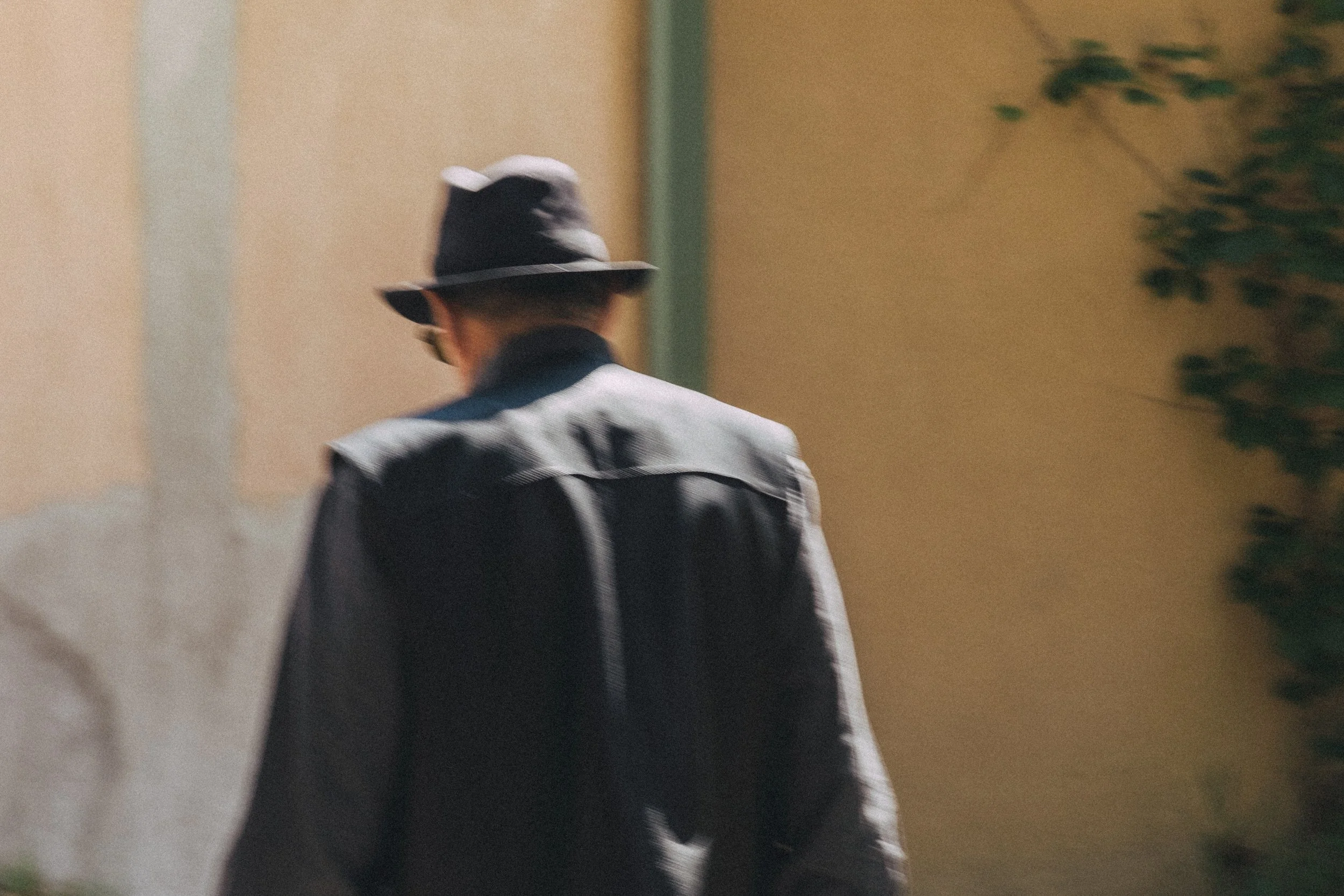
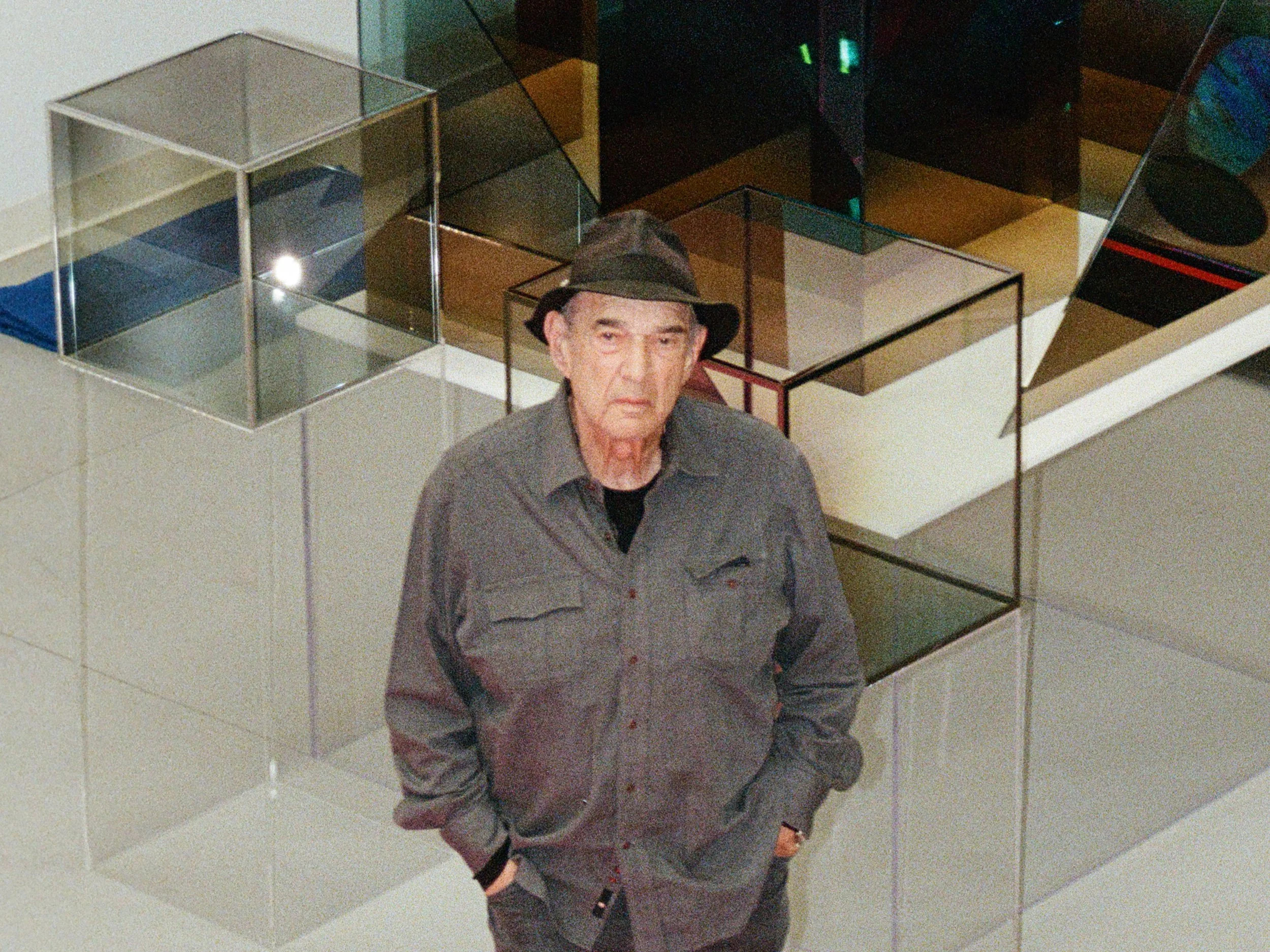
At first glance, he seemed serious, rigid, tough. Not immediately easygoing. He wore exactly what you might imagine: a version of the cowboy uniform. But not raw or rugged, more refined. It was a kind of intellectual cowboy: jeans and shirt in layered shades of grey, a black leather jacket, a black hat, and underneath it all, a plain black T-shirt—effortless, sharp, understated. You couldn’t read his face, was he in the mood to talk? Or maybe later?
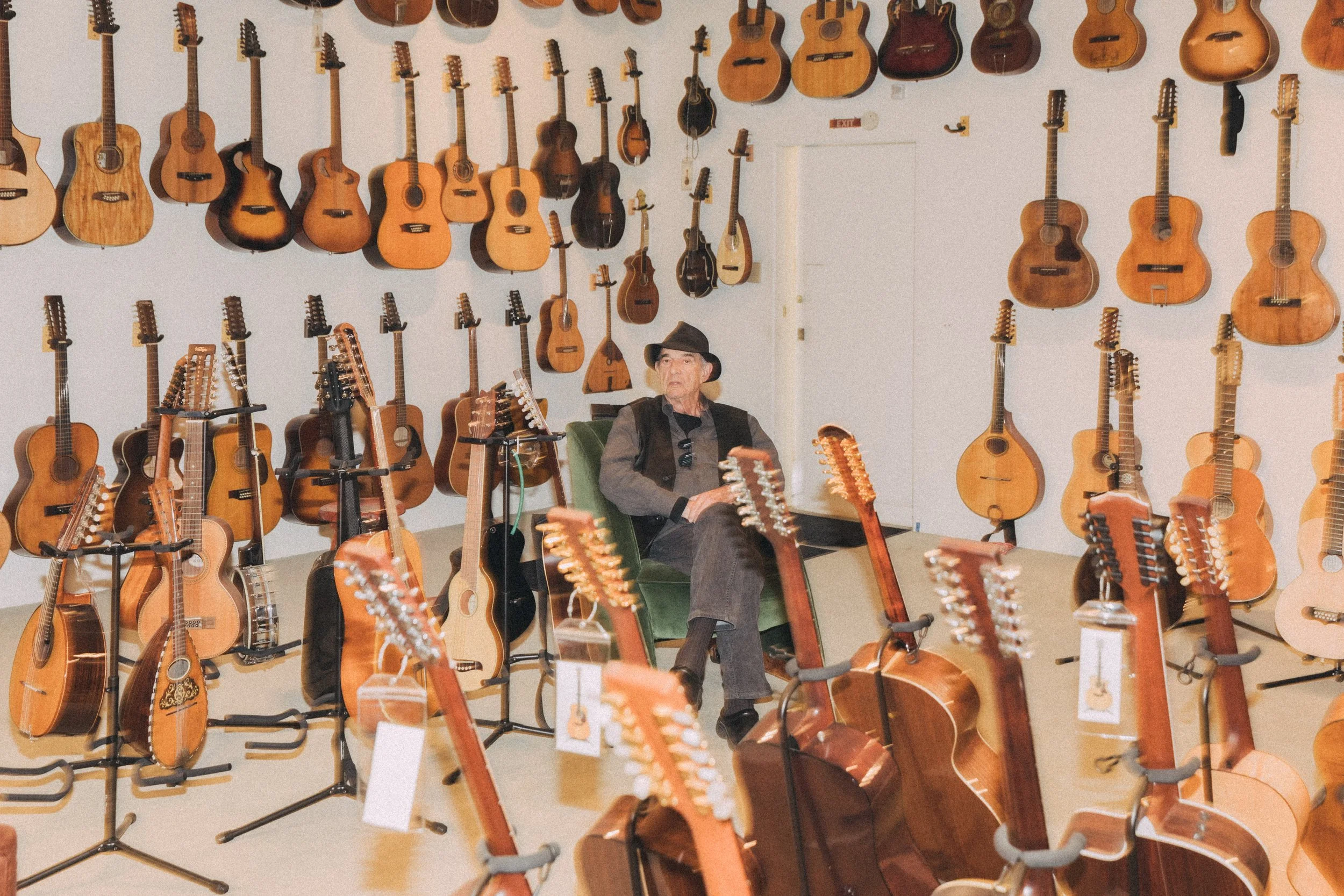
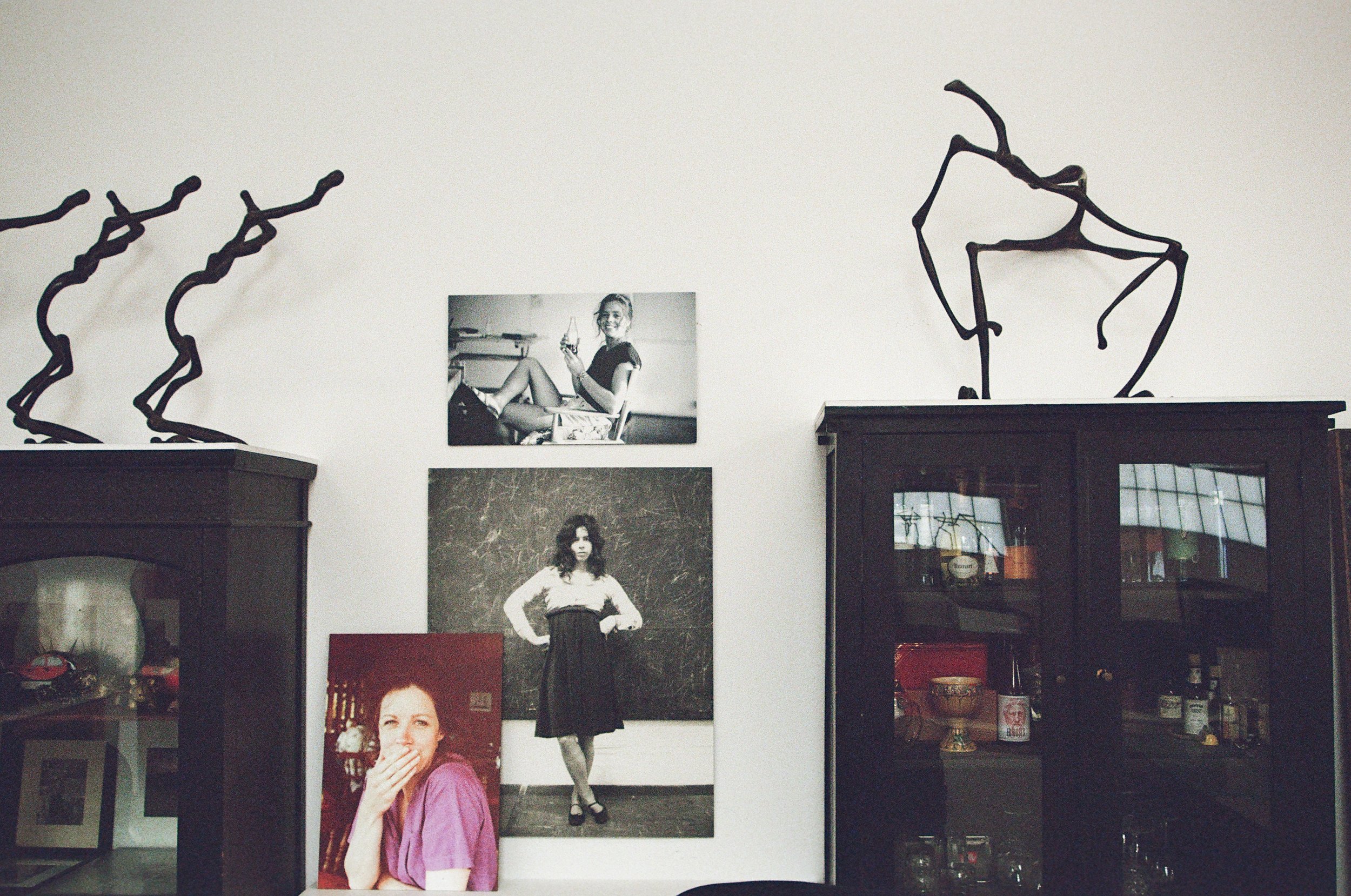
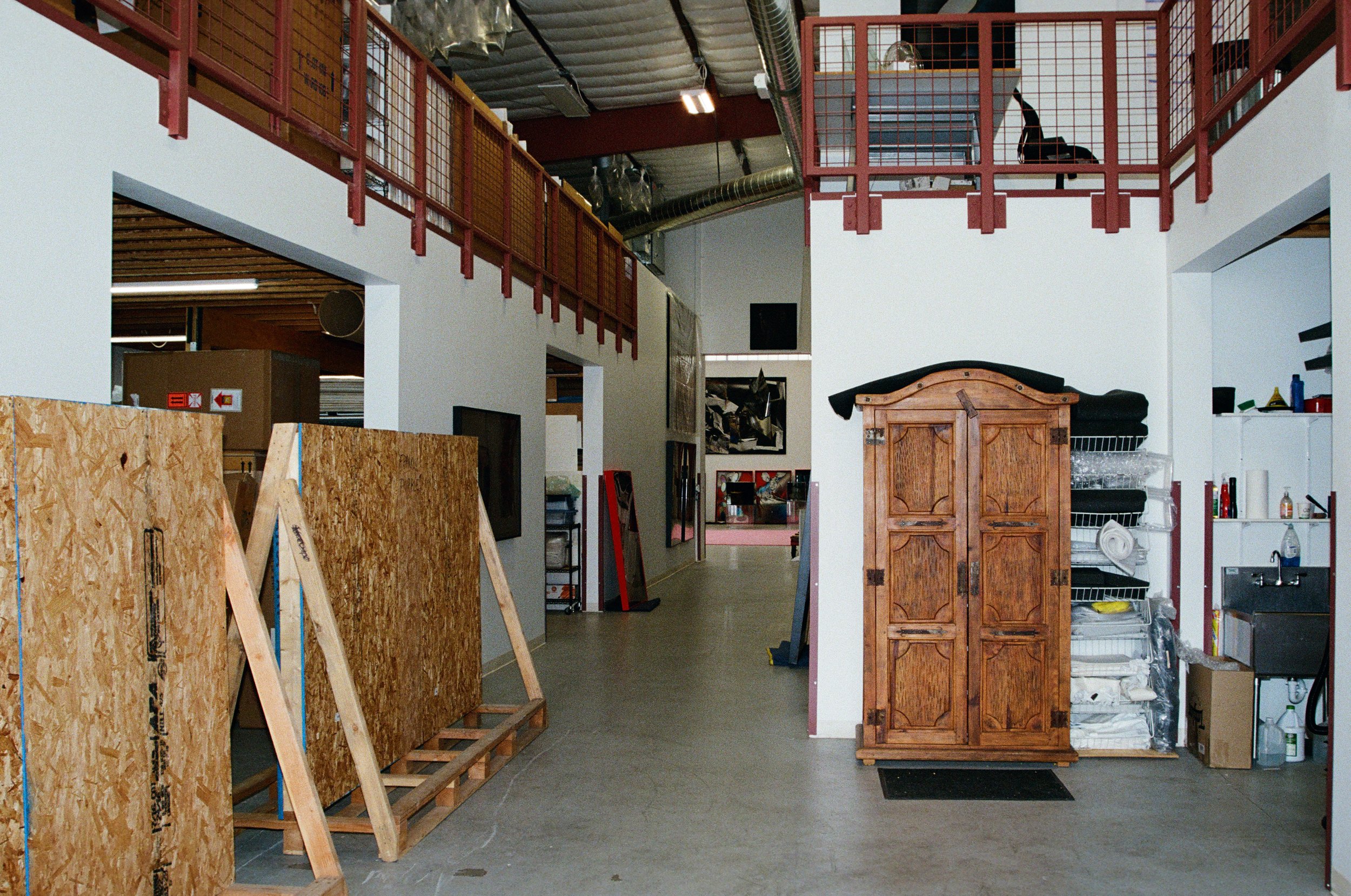
At 85, he drives his Chevrolet Suburban with confident ease, not in the sense of being 85, but in the sense of being a genuinely good driver. He doesn’t play guitar anymore, but he keeps a room full of them, humidifiers humming to protect the wood from Taos’s dry air. His favorite? Always the most recent addition. He took us to dinner with his daughter. He ordered well, had a real appetite, and gave the best recommendation for Mexican food. On the way he drove us back to the hotel, he picked a road just so we could catch the sunset.
We don’t expect an artist so known for formal precision to be this warm, this alive to the everyday. But that’s Larry. He collects hats, guitars, watches, clothes, and art. He doesn’t throw things away. He has impeccable taste—down to the subtle harmony of the shirt he chose when we first met, and he doesn’t wear the same one as the day before. Everything quiet, intentional. And you begin to notice how closely he pays attention, not just to color and line, but to people.
And that’s when something clicked. And I began to understand the work, through him, not through theory.
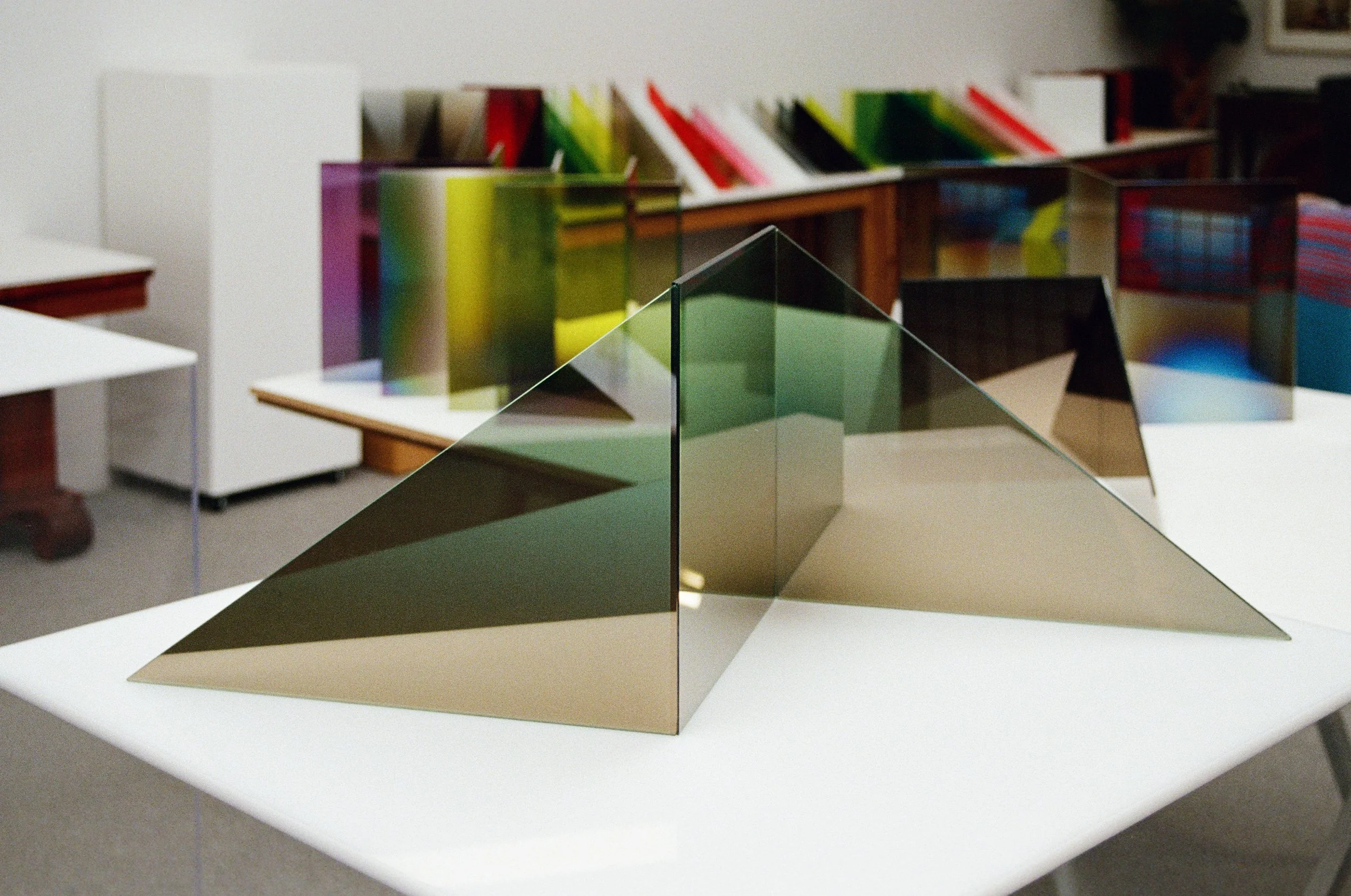
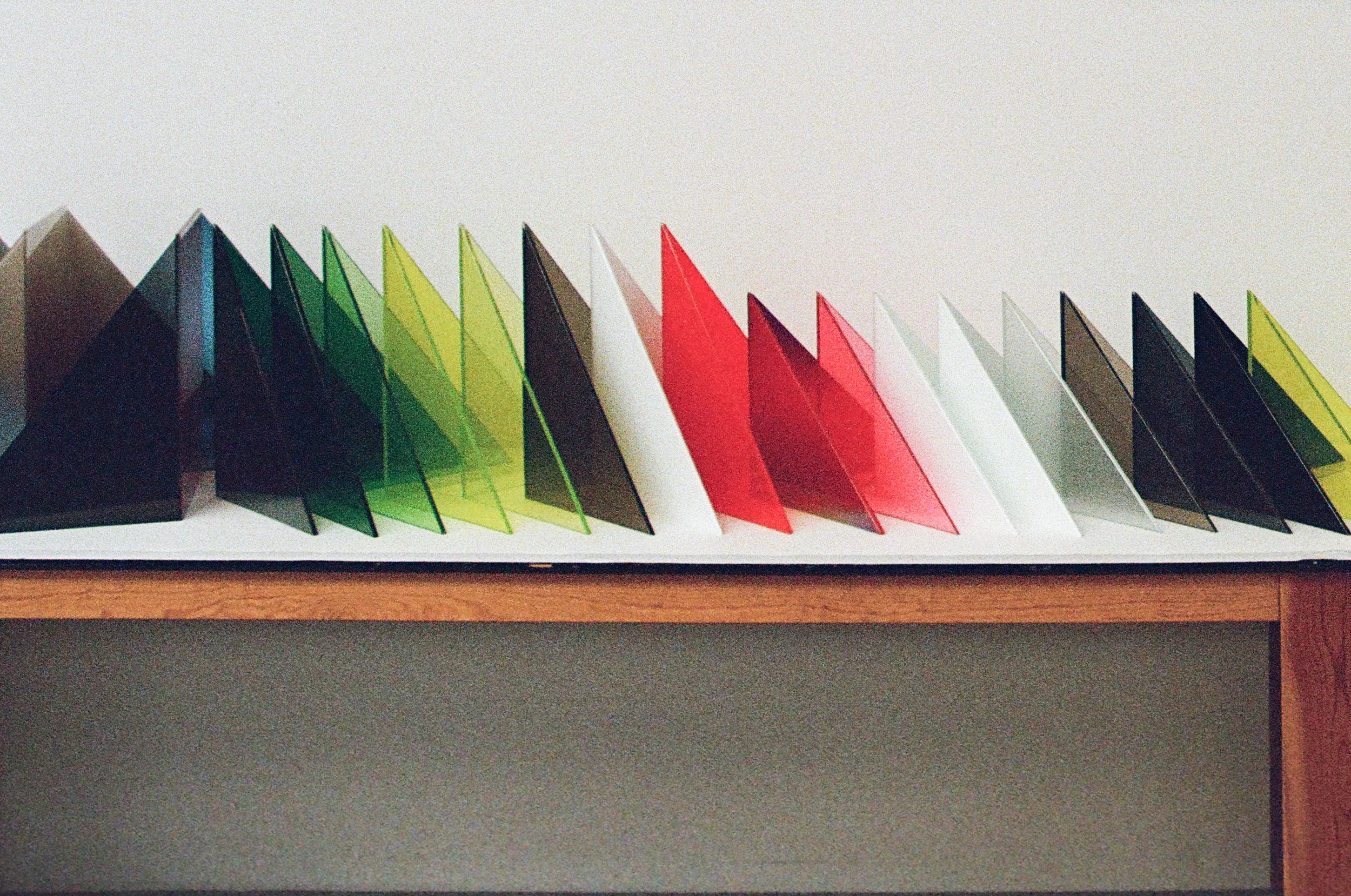
Larry was born with a congenital hearing deficit, only diagnosed in his forties. He grew up not knowing what he wasn’t hearing. But in that absence, maybe another sense stepped forward. Maybe that’s why light became so central, not just visually, but perceptually. If sound didn’t come through cleanly, perhaps the world arrived more vividly through the eyes. That would explain the glass, the sensitivity, the need for precision—less a concept than a form of balance. A way of holding what might break.
Glass isn’t just fragile, it’s a material that demands constant awareness. You have to know when pressure will hold it, and when it will shatter. That’s what I see in his work now. Not coldness. Not distance. But care. Deliberate care. The same care in how he dresses, how he drives, how he walks you out of the studio and shakes your hand firmly without hesitation.
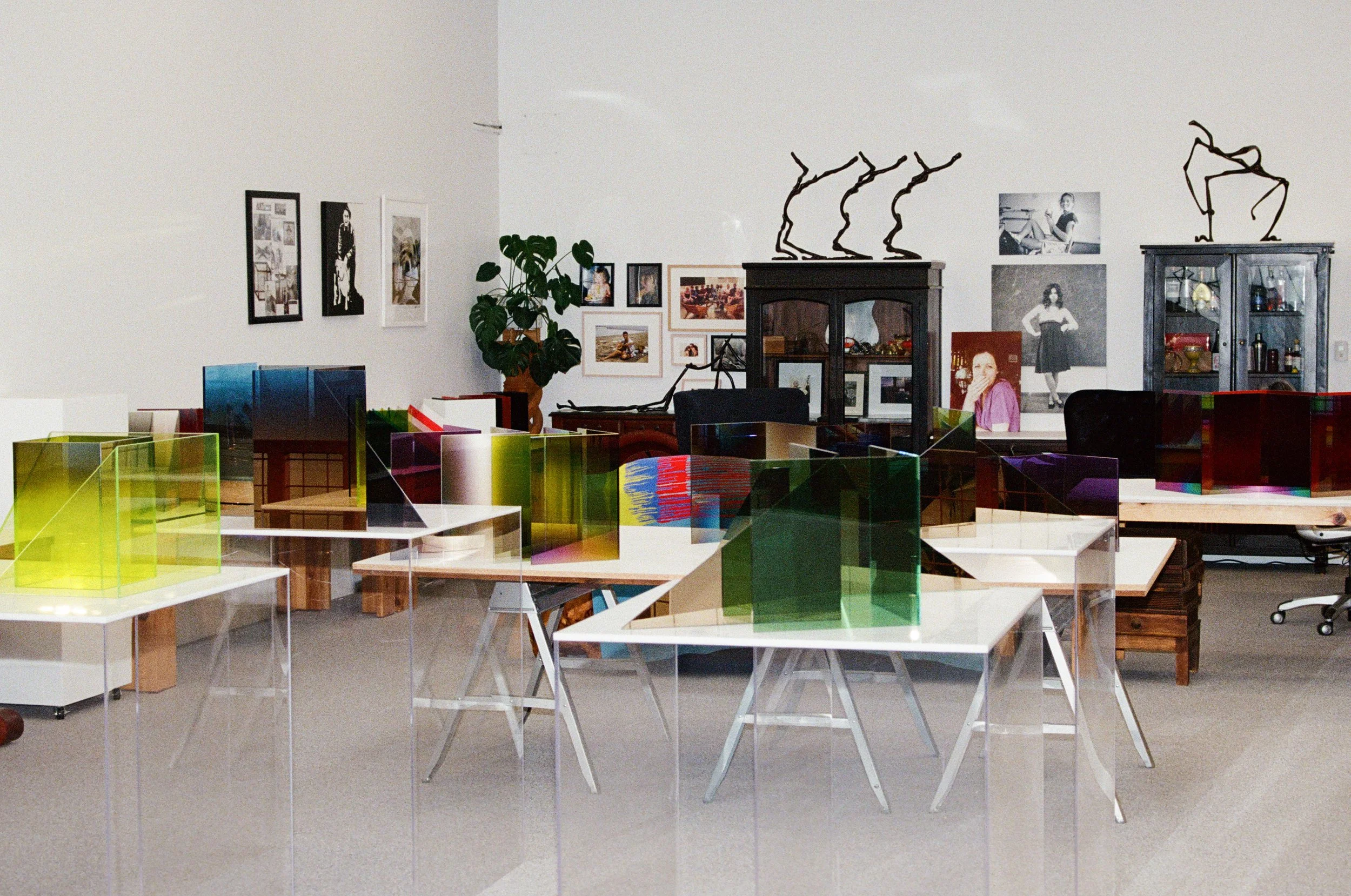
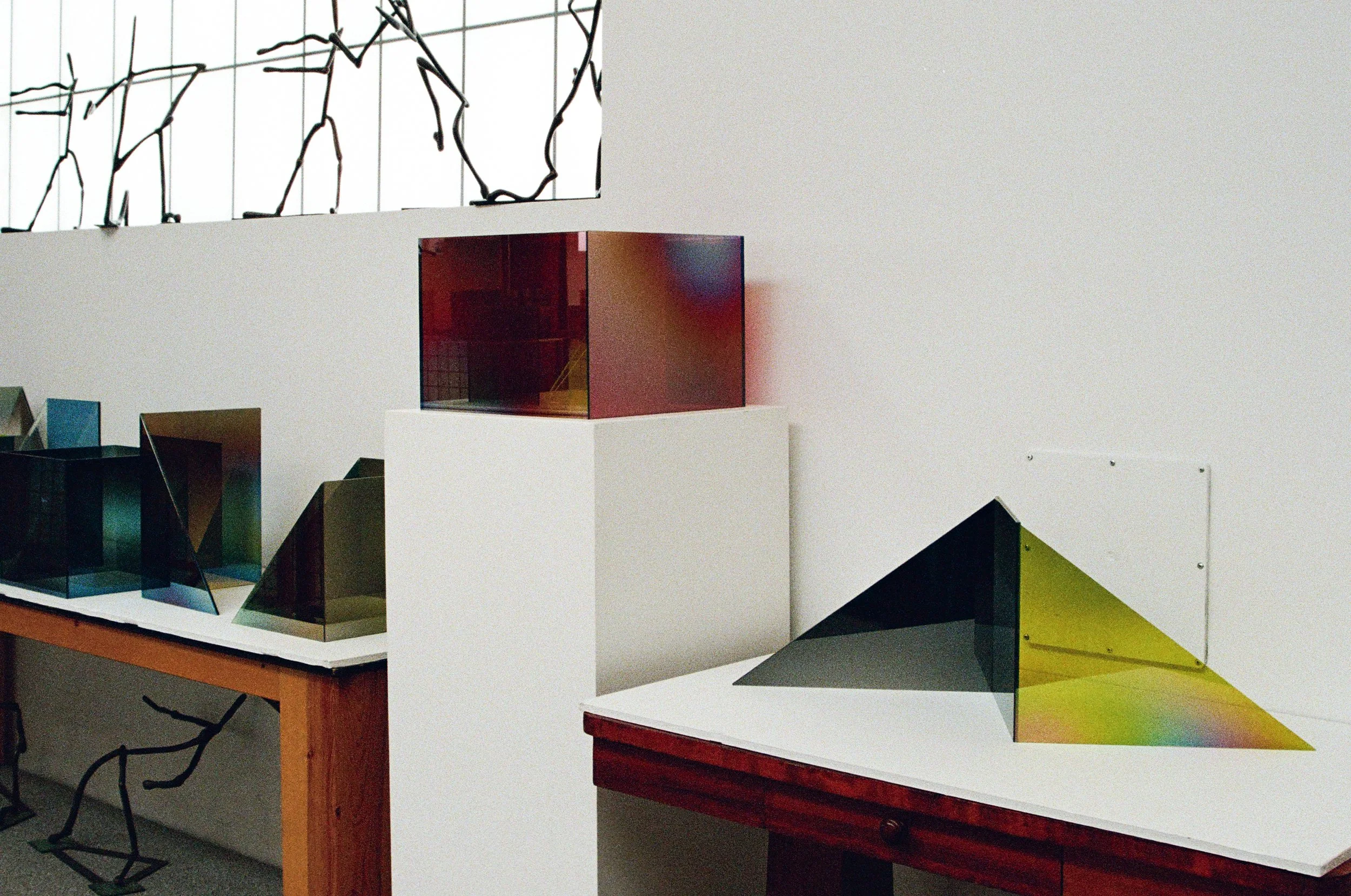
I realize now that I had been looking at the work from the wrong direction. At DIA Beacon, I saw stillness, silence, nothingness. But I missed what was being held just beneath the surface: a boundary, a presence, a refusal to explain. His pieces reflect you, and if you take a step closer, your own reflection feels too near. You step back. The glass stays. Its presence holds just the right amount of its own fragility and precision, an offering meant only for the artist himself.
Larry shows the art of holding fragility—not just in glass, but in life—through honesty, transparency, and care, for every real second we mean to spend fully, for every encounter we hope might last longer.
Q: You’ve lived a long part of your early life without knowing about your hearing deficit, only being diagnosed later on. How did that late discovery, and the experience of living with it, shape you both as a person and as an artist?
A: I was born with a hearing deficit. As I grew into childhood, my parents did not know I was handicapped. The world is what it is for children, they may have a problem but if the parents are not aware of the problem, “it is what it is” for the child. I did not know that I had a problem, and my parents did not know. I recall I never felt anger towards my parents, they were good to me, I felt loved and important as a child, life was what it was! I thought the difficulties I faced as a child were what everyone faced in one way or another? My parents were my biggest fans. I recall their pleasure in my success.
I was diagnosed at the age of 46 with a 40% deficit in my ability to hear—this was not a loss, but a congenital deficiency. I was never able to hear any better than I did that day in the doctor’s office. But on that day, I received hearing aids: it was an amazing experience! I could hear people talking from across a room, from outside I could hear the sound that tires make on the road. I could hear birds sing in trees for the first time! The changes in my immediate environment were novel with the hearing aids. Imagining I was Superman because I could hear things I never could before, the feeling gave me strength to be inventive and trust my feelings, trust being intuitive, spontaneous and improvisational. After about six months with the hearing aids, I started to have very strange depressions. Anger and black rages started happening. I could not stop feeling angry, but I could not understand what I was angry at?
Then I started having memories of frustration and resentment for being inattentive in schools. You see, I did not know what I was missing. I did not know that I was missing anything! I had not known that I had not been paying attention!
With all the new anger and bothersome memories—which acted like hallucinations, I thought I was going insane. My doctor prescribed a medication that ended the hallucinations.
Twenty years earlier I had decided to become an artist. Like anyone who decides to pursue an interest, my focus was on what I was doing. My support as a young adult came from my artist friends and mentors. I was happy in the studio; I was happy with the inventions I was making and felt supported by my associates in the galleries and the studios. The most important element in the mix was not actually art, but humor.
Everyone was very serious about their work, but my energy was fueled by the humor and comradery among my friends who were all young artists trying to be the best at what they did.
Q: Being an artist for over six decades, what still motivates you to create?
A: I have been an artist for six decades. What keeps me motivated is to find out what happens from my interventions with the materials. I don’t think of art as a thing. Art is a teacher. I am not sure that what I do can be called art, that is not for me to decide.
Q: Do you ever grow tired of a medium—glass, light, surface—or does your relationship with it just change form?
A: I work with various materials as necessary depending on what the work requires.
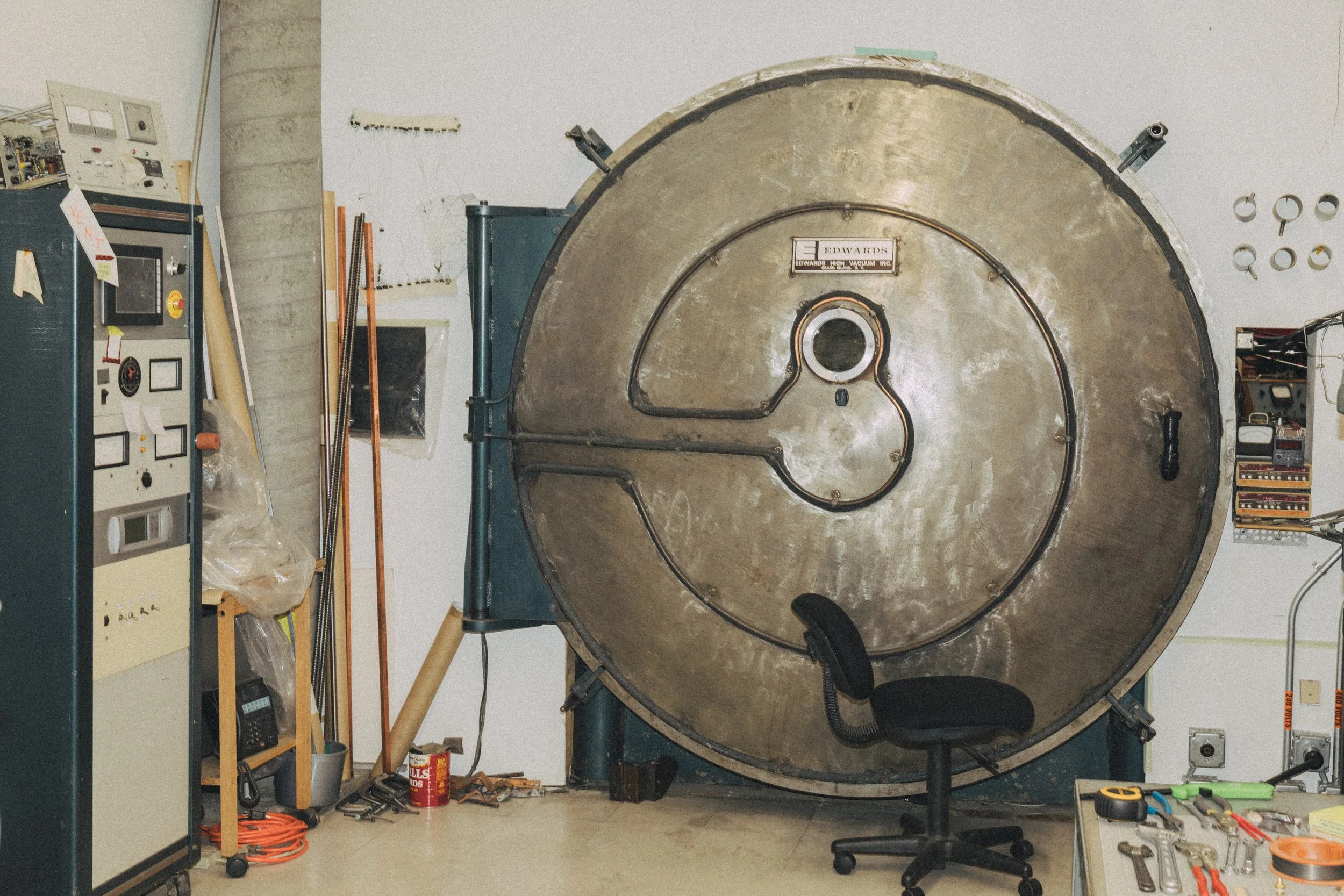
Q: When you developed the vacuum chamber, what was the biggest challenge that led you to invent your own method? Was it practical, or philosophical?
A: I developed a vacuum chamber in 1969 as a practical solution to accommodate larger sized materials.
It is a larger version of a machine I had been using since roughly 1965. It is in fact not my own method, but a very old and commonly used procedure that has long been used to apply exquisitely thin coatings of metals to ordinary materials such as cell phone components and potato chip bags. These coating are so universal to modern products that you won’t go a day without encountering something in your daily life with a thin film coating on it.
Q: The coating process sounds like controlled science, but the outcome often feels delicate and unstable. How do you strike that balance between precision and surrender?
A: It is a controlled science. And I have been using and learning from it for more than 50 years. There are various rules: materials must be impeccably clean, for example, or the coatings will be unstable. Over time, I have learned to work with the materials in the ways that the materials want to be worked with, and in this way, the process can be spontaneous and intuitive.
Q: People often see natural light as unpredictable, even difficult. But you seem to welcome it. How do you know when the light is “right”?
A: I moved to New Mexico in 1973 because I fell in love with the quality of the light here. It is always changing and there is nothing I can do—nor do I wish to do anything—to change this. It is always “right.” The result, in my work, is that the work, lit by this constantly changing light source, is also always changing.
Q: How important is spatial sense in your work? Does it come first, or arrive later in the process?
A: Regarding Light and Space: without light you can’t see and without space there’s nowhere to put anything down.
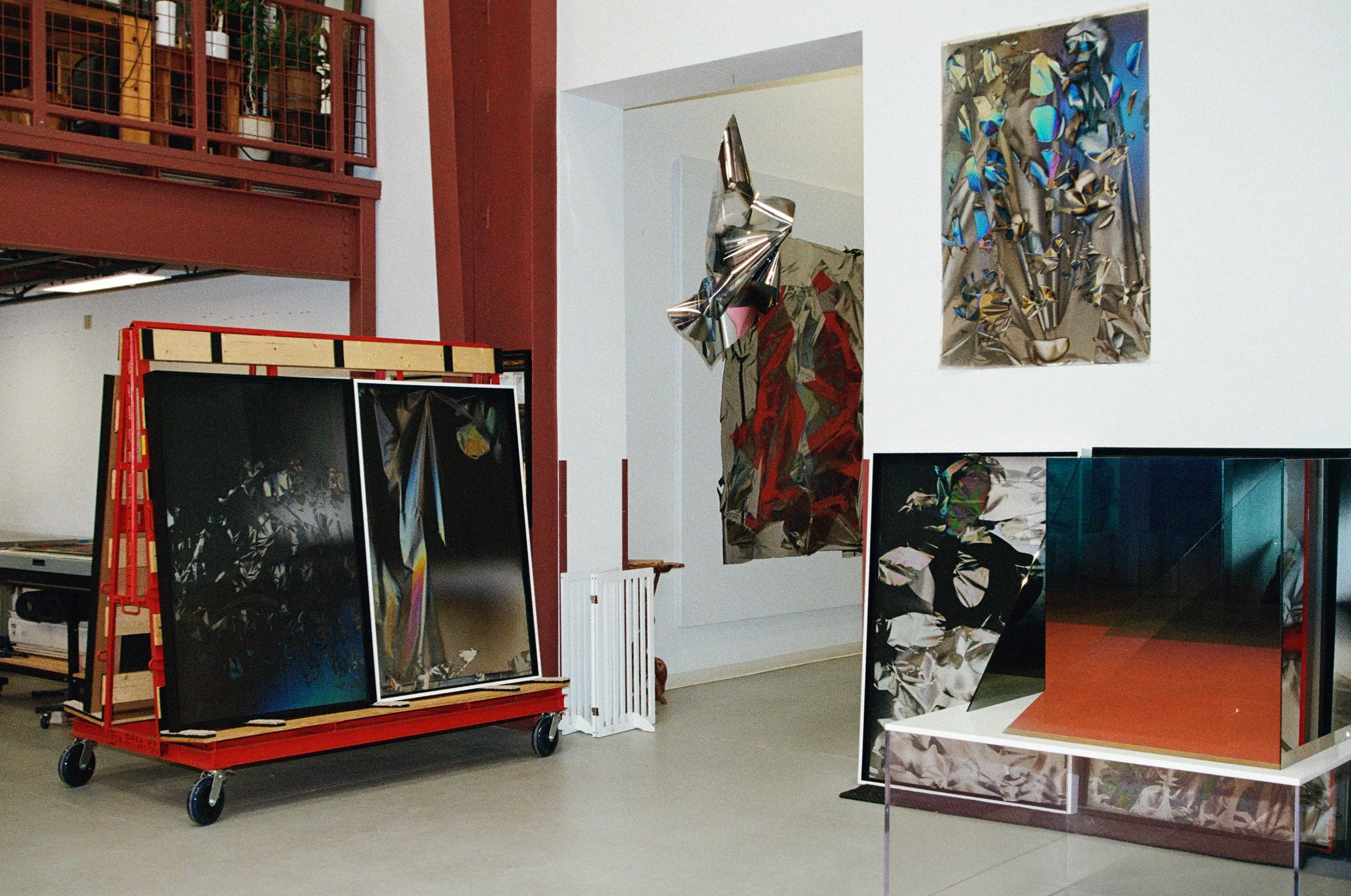
Q: In your paintings and collages, there’s a folded, compressed reflection of space. How should we read the relationship between these newer works and your earlier glass pieces?
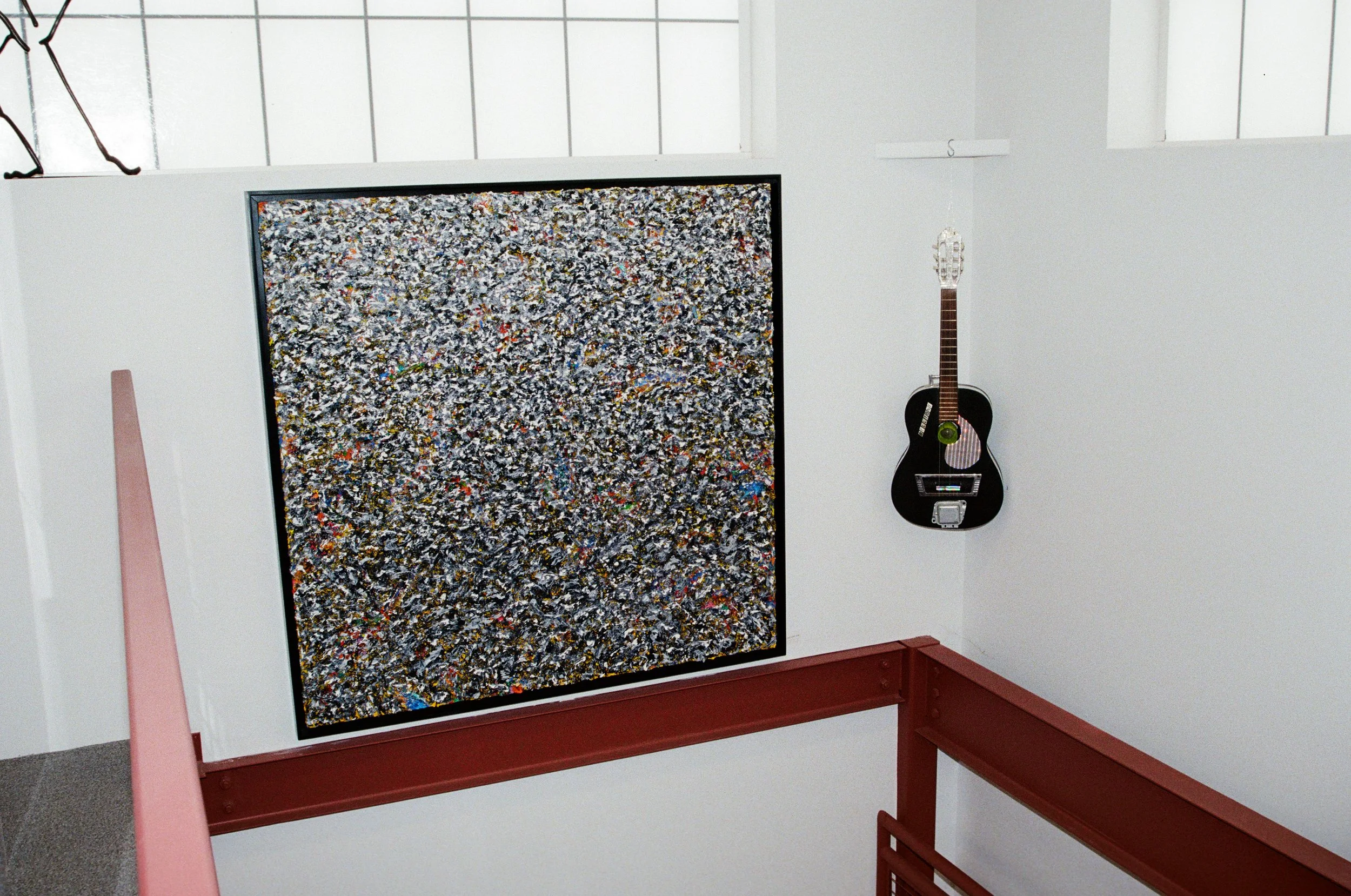
A: The materials used in the newer collage works is coated using the same equipment as is used to coat the older glass works. But the collage materials are flexible and malleable. Once coated, they retain the appearance they had in the position they were in when coated. They may have been folded or compressed, and the coatings reveal that history. What I have done in the collage process is finding a composition that pleases me in some way, but I have no agenda to be “read” between works I made in the recent and distant past.
Q: When was the last time you felt anxious?
A: It may be that anxiety is just a part of the condition of being an artist.
Q: What’s something small or new in your recent life that brings you real contentment?
A: Something small, new and recently arrived into my life is a little dog who was left behind after a freak accident that happened on my property but which I had otherwise nothing to do with. There was a car accident that caused damage to part of my studio building; thankfully no one was injured. After the car had been towed away and the rubble cleared, we found a puppy. No one has come to claim him, so we are keeping him. He is an absolute joy and makes everyone around here feel happy.
Q: Do you think about legacy at all, or is it more about staying curious, staying present?
A: I try not to think about legacy. I am fortunate to have found a team of helpers who keep my studio activities running smoothly and a couple of gallerists who make my work available for the public to see and acquire. I am only interested in the work.
Q: You’ve been called a collector of hats, guitars, art, but maybe what you really collect is experience. What do you look for in what you keep?
A: I collect objects that make me feel good. I don’t throw anything away.
Q: Was there ever a regretful moment in your life or career?
A: I do not try to hold on to regretful moments.
Q: If someone encounters your work a hundred years from now, what would you hope they feel, not think, but feel?
A: I can only hope that someone who encounters my work in a hundred years (or in ten years, or in one year, or one day) feels good.
Words and interview by Murphy Guo. Photography by Tang Siyu.