
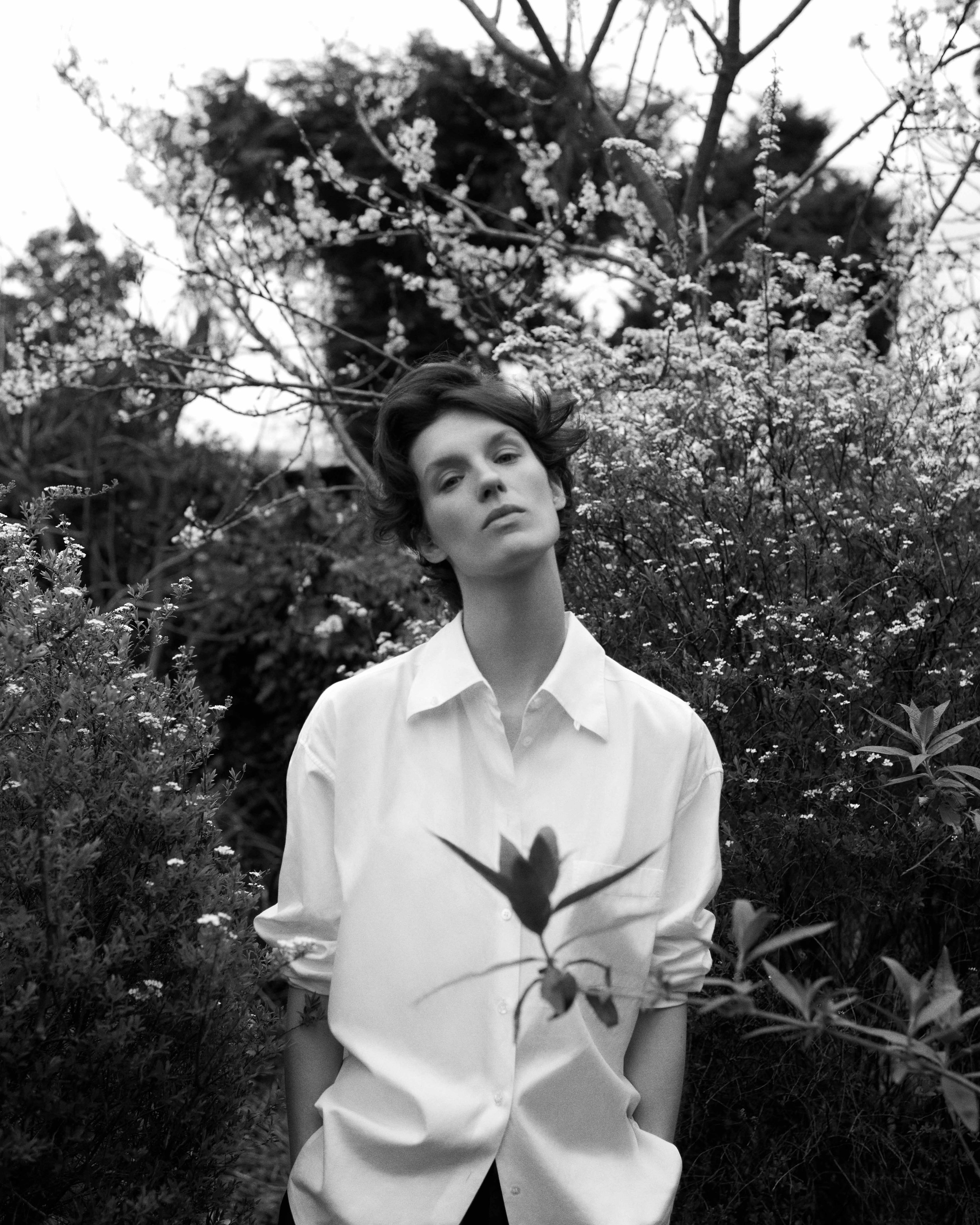
Marte Mei van Haaster’s career spans the realms of art and fashion, marking a journey from her initial artistic pursuits to a notable presence on the global fashion stage. Over 14 years, Marte has graced runways for prestigious fashion houses, yet her journey encompasses more than her impressive modeling career. After completing one-year study of art, Marte’s path took a pivotal turn with a Prada Exclusive in 2011, leading her to walk in over 300 shows for brands like Celine, Louis Vuitton, and Jil Sander, all while completing her studies in fine arts and social design.
Now, Marte divides her time between select modeling assignments and her primary focus, her design studio “Marte Mei.” Here, she explores furniture and spatial design through the lens of Land-Allyship, her method for creating site-specific designs that form an alliance with nature. This philosophy challenges the traditional divide between human-made and naturally grown, advocating for designs that foster a symbiotic relationship with the environment.
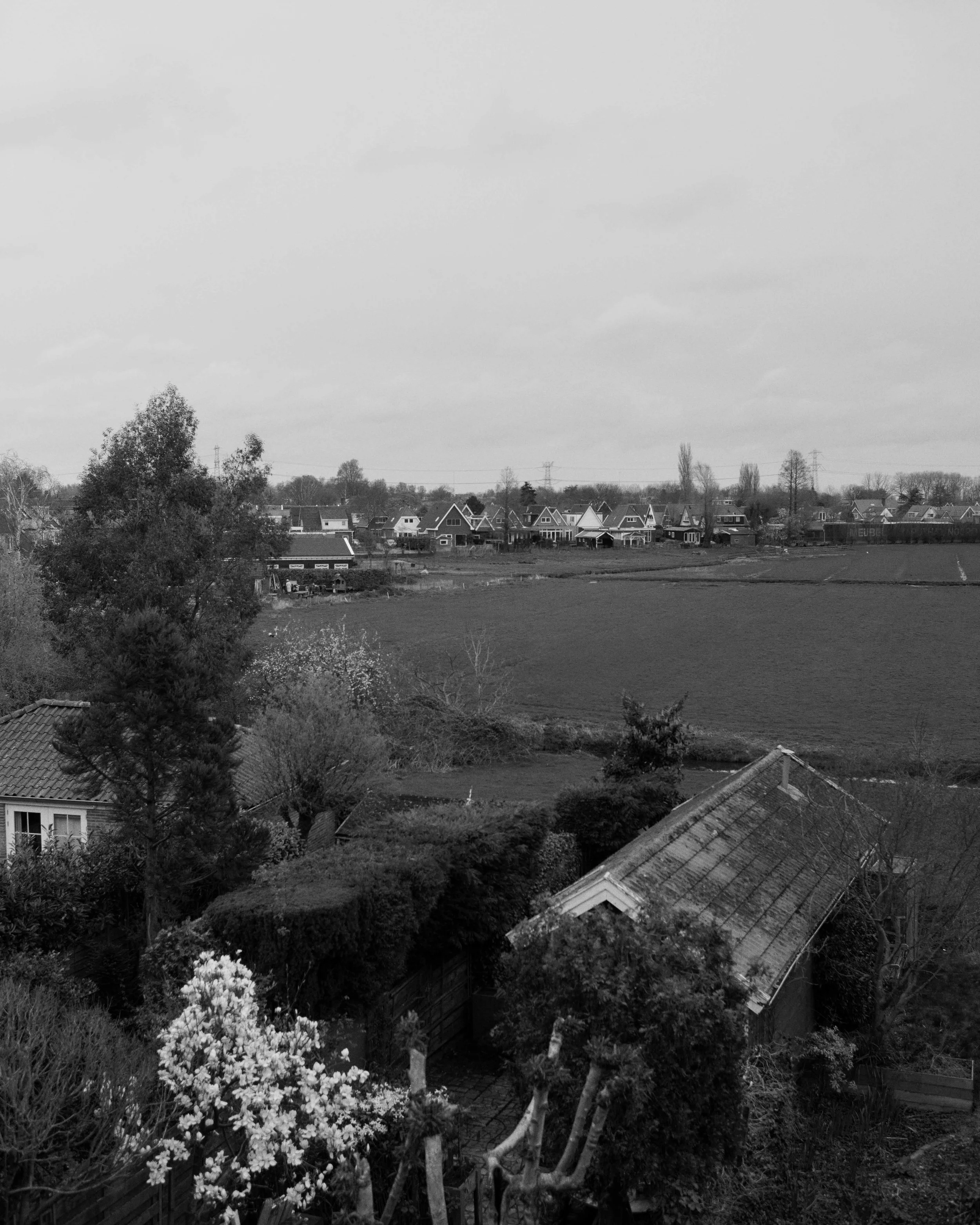
During our visit to her studio in Amsterdam, her cherished hometown, we had the opportunity to delve into her multifaceted identity. Modeling may come naturally to her, but it’s her constant curiosity about the world, her grounded mindset, and her pursuit of a healthy, sustainable connection between humanity and the earth that serve as the pillars of her strength along her creative journey.
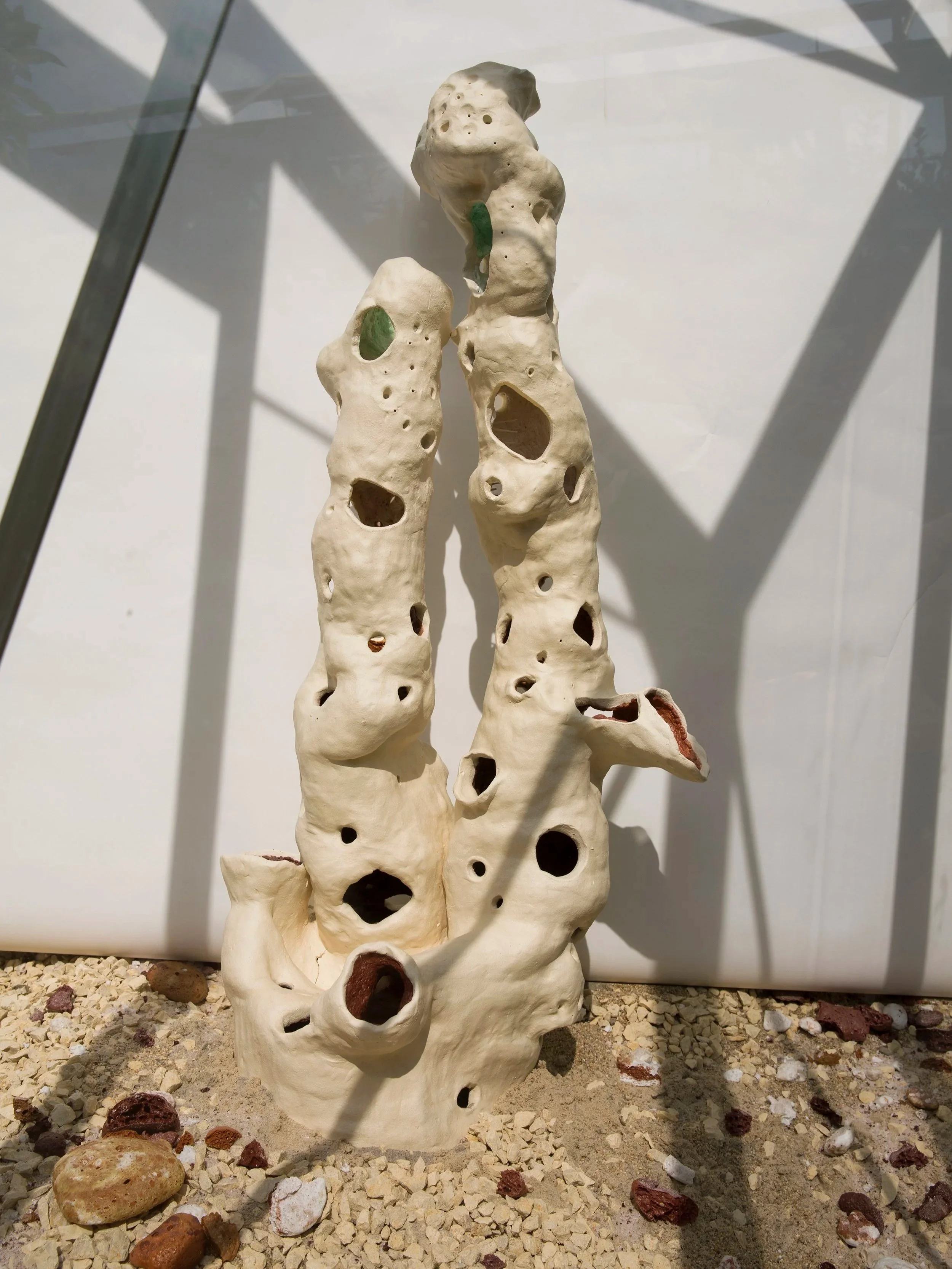
Max/Mei, Now Here, Over There, 2016, ceramics.
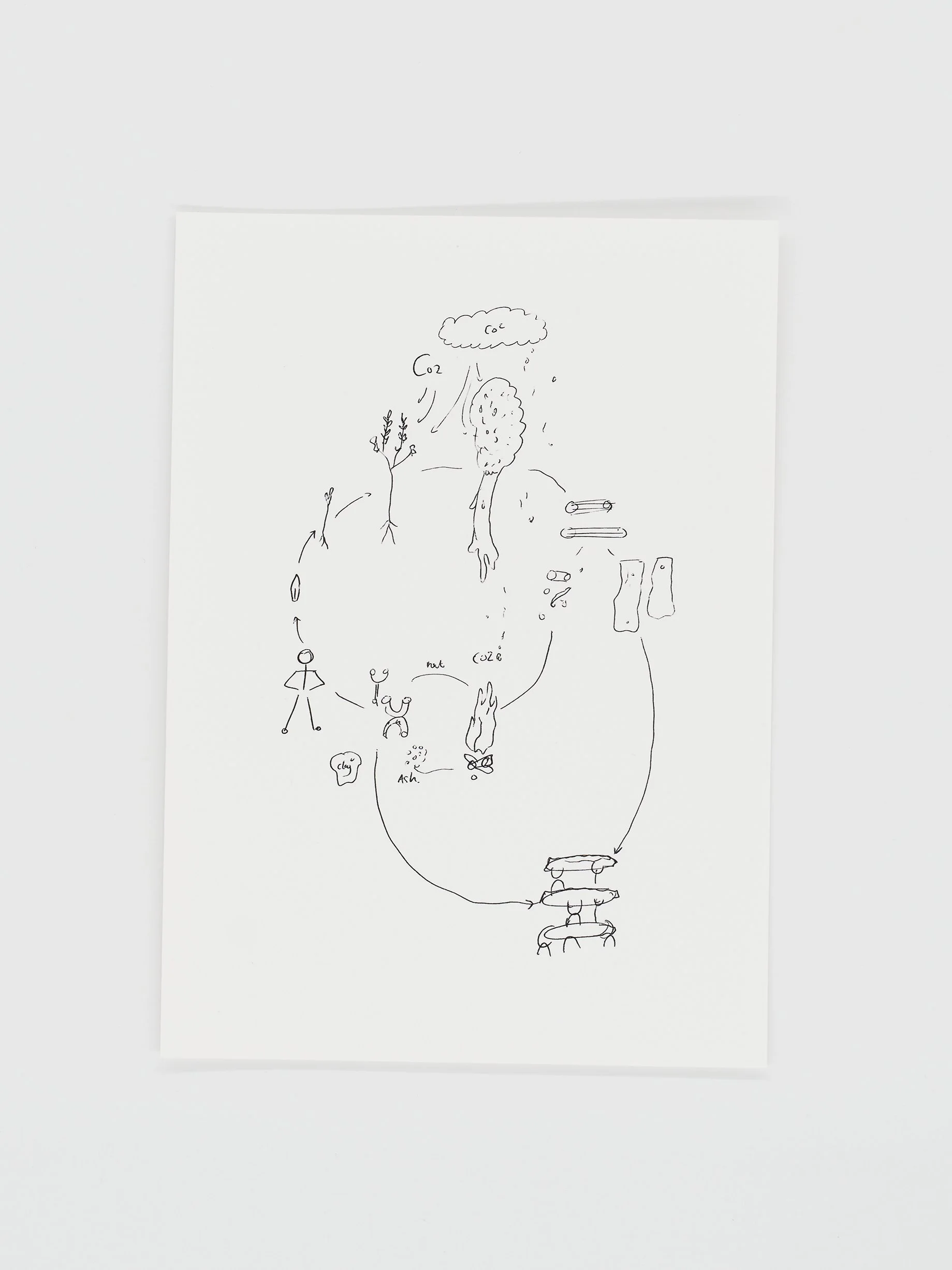
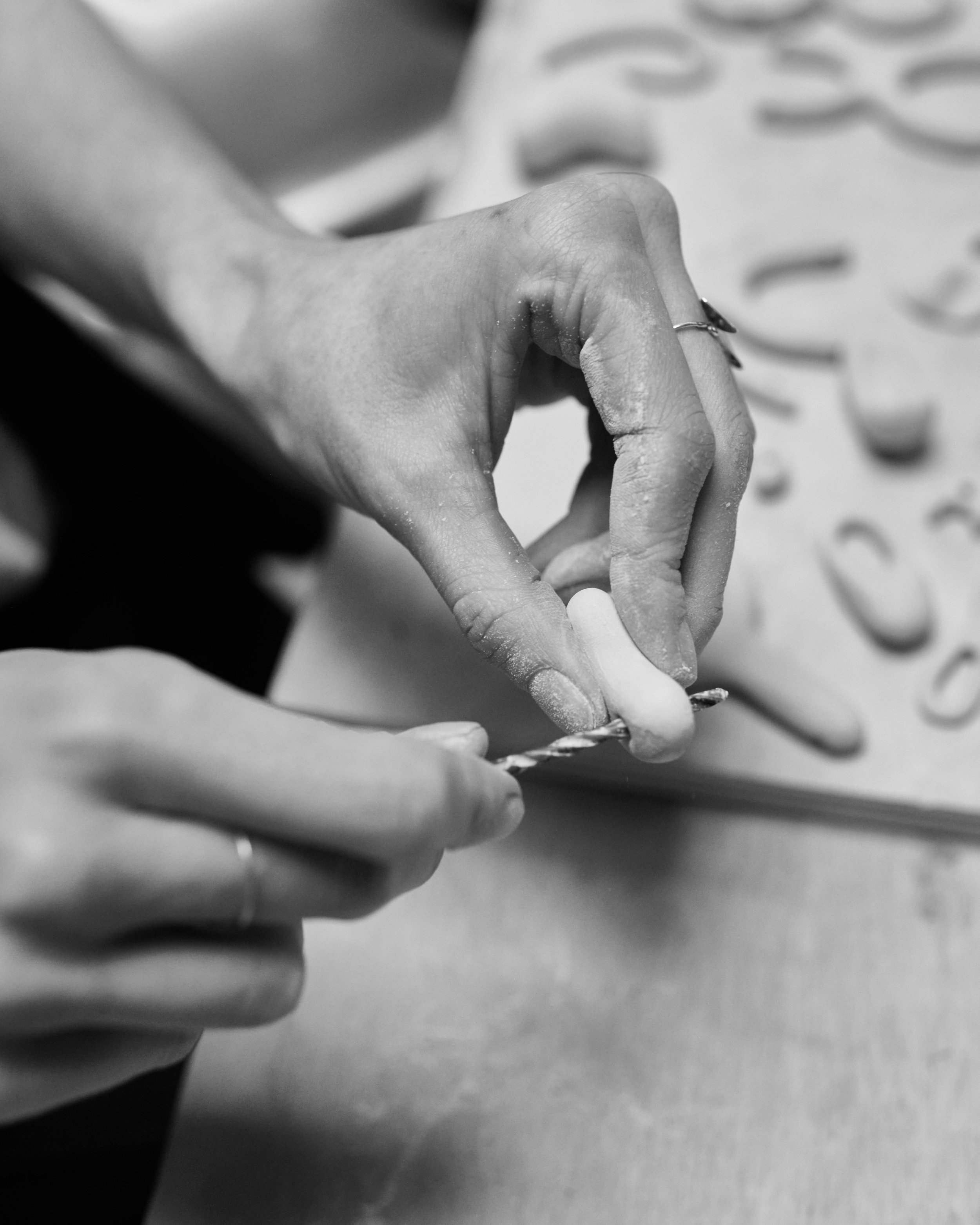
Marte Mei, Process drawing, Companion Species Cabinet, 2024.
What is the earliest memory you have?
Marte Mei van Haaster (MM): For my 2nd birthday, my parents organized a party. They rented a boat and, with their friends, left the city to immerse in nature. We landed on a piece of land filled with sheep and trees, where they set up a treasure hunt for all the older kids and me. I distinctly remember one of their friends dressed as a pirate for the hunt. Saying it out loud, it does sound quite fictional, but I’m convinced it really happened that way.
Could you share with us memories from your childhood in your hometown?
MM: I recently ran into a friend from my childhood, and she asked, “Do you remember how you always wanted to play naked-muddy-nature-people?” While I don’t technically remember that, I can absolutely believe it was something I would have said. I loved being outside, horse riding, lying in the grass, and observing all the non-human life around me.
If you had to choose a color to represent the essence of life in Amsterdam, which color would it be and why?
MM: I’d choose this muted greyish-blue, reminiscent of a glass of blue lemonade diluted with some milk and grey ink. It’s the color of the canals, the rain puddles, and the concrete 40x40 tiles.
Are you a morning person, or a night person?
MM: Totally a morning person. I often wake up naturally before my alarm goes off, I really like the first quiet hours of the day.
Describe your ideal Sunday morning?
MM: It starts with coffee, cookies, and dried fruits and nuts in bed, either reading or chatting. Then, either a late morning yoga class or a big brunch with warm foods and Fip radio playing in the background.
How has your upbringing in Amsterdam influenced your connection with nature? At what moment did you become genuinely concerned about environmental issues like climate change?
MM: My upbringing, especially by my father, instilled a sense of urgency and responsibility towards environmental concerns from a young age. We always opted for trains over planes and followed a mostly vegan diet.
What motivated you to choose your field of study, and what was the pivotal moment that led you back to academia?
MM: After graduating from the Rietveld Art Academy in 2016, I co-founded an art duo named Max/Mei. Over the next four years, we created site-specific works for galleries, museums, and public spaces. Our creations explored the blurry line between artificial creation and natural growth, focusing on the balance between care and control in relation to nature. Eventually, we felt our work contradicted its intended message. The art context seemed overly human-centric, pushing us to directly engage with the eco-centric themes we were passionate about. This shift led Max to pursue landscape architecture, while I embarked on an MA in social design, aiming to understand how design could make a social impact.
What was your favorite class while at Design Academy Eindhoven?
MM: There were a few classes where we were paired with other students to collaborate on a project. Each collaboration made the project more enriching than what I could have achieved alone, while allowing me to stay true to my personal visual identity and concepts. The power of collaboration is what resonated with me the most. I continue to work with other experts or makers in my current design practice all the time.
Did your academic experience meet your expectations? What unexpected insights did you gain?
MM: Pursuing a Master’s degree was about dedicating time to hone a craft that could convey my concepts in an enjoyable form. Art school taught me how to create a narrative, and the master’s provided the language for telling it. Since then, I’ve learned how and where to use this language to ensure it’s heard. The master’s program was crucial in helping me link my work to the real world, moving beyond an elitist bubble of non-reality that fails to engage with its subjects.
What is the last book you read?
MM: Sensing Earth, Cultural Quests Across a Heated Globe—edited by Philipp Dietachmair, Pascal Gielen, and Georgia Nicolau.
How do you balance theoretical knowledge and practical application in your work? Which do you believe plays a more critical role in your field?
MM: I’ve developed a design methodology called Land-Allyship, which is a site-specific approach that incorporates both sensorial experiences and scientific ecological knowledge. I particularly enjoy the tactile aspects of expressing knowledge, but it’s the underlying concepts that motivate me to create. Thus, it’s a balance of both theoretical knowledge and practical application that defines my work.
Your family and pets are completely safe; what sentimental object do you save in case your house catches on fire?
MM: Very practically: my hard drives. Most of my work is stored there. I know I need to start using digital clouds, but there’s something comforting about the tangible storage of all my hard work.
How do you differentiate between collaborative projects and your solo work in terms of process and outcome? How do you ensure that your individuality shines through in both?
MM: My practice divides loosely into two aspects: Interdisciplinary land-ally works, which usually involve larger-scale observations about the landscape expressed through research as well as objects in public spaces, and my Marte Mei studio works, focusing more on the interior and furniture expressions of the same ideals and methodology. I collaborate on both but maintain more autonomy within my studio. This ensures that, even within collaboration, the visual language remains true to my signature. The main priority in both practices is communication—it’s crucial to discuss openly everyone’s needs and motivations within the project to ensure alignment. Part of this involves defining clear roles within large-scale collaborations. Since my role in land-ally projects has always been connected to the design and production of landscape tools, the visual language has consistently aligned with my signature, despite the changing teams I’ve worked with.
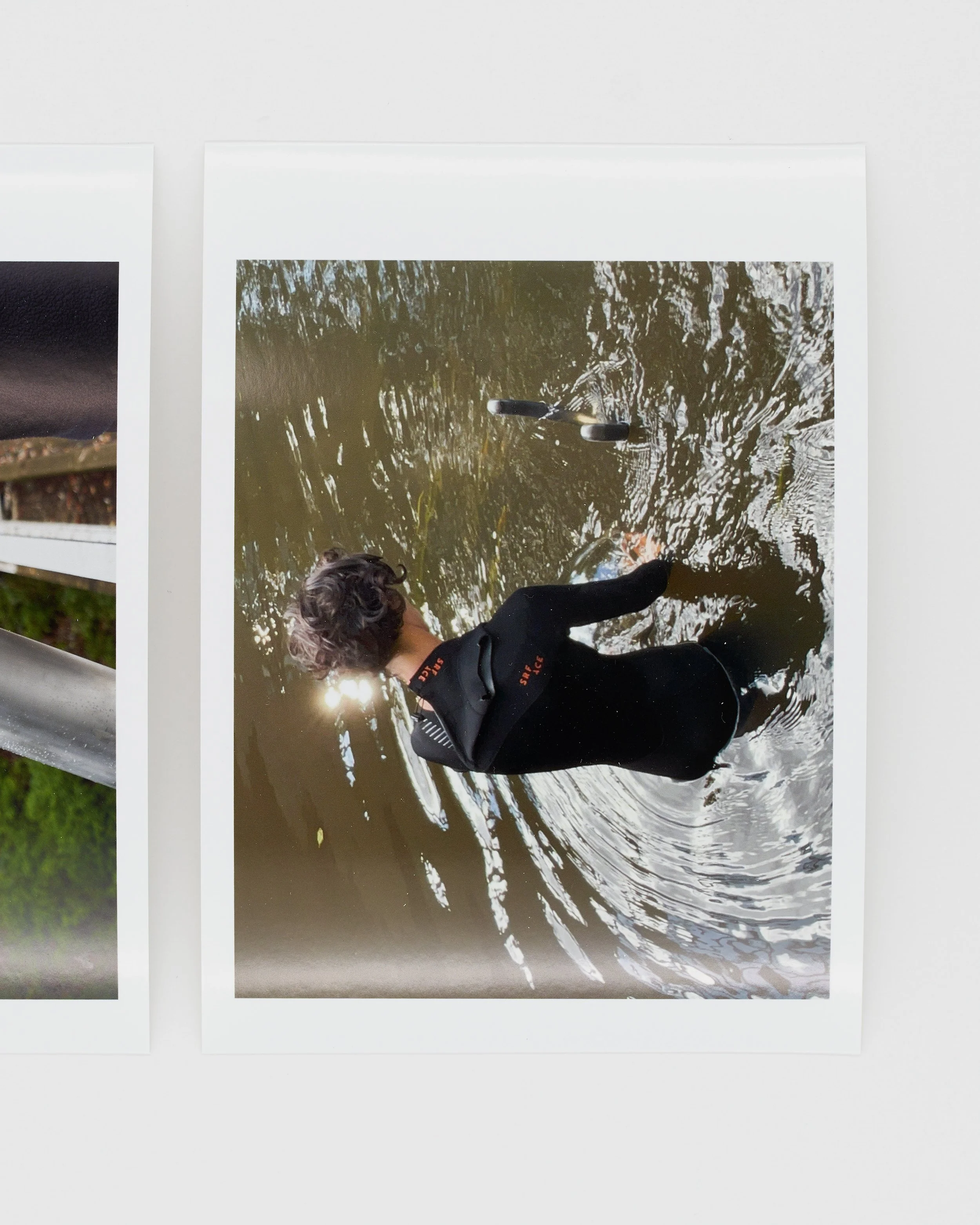
Marte Mei standing in water. Installing, Will Water Want, 2023
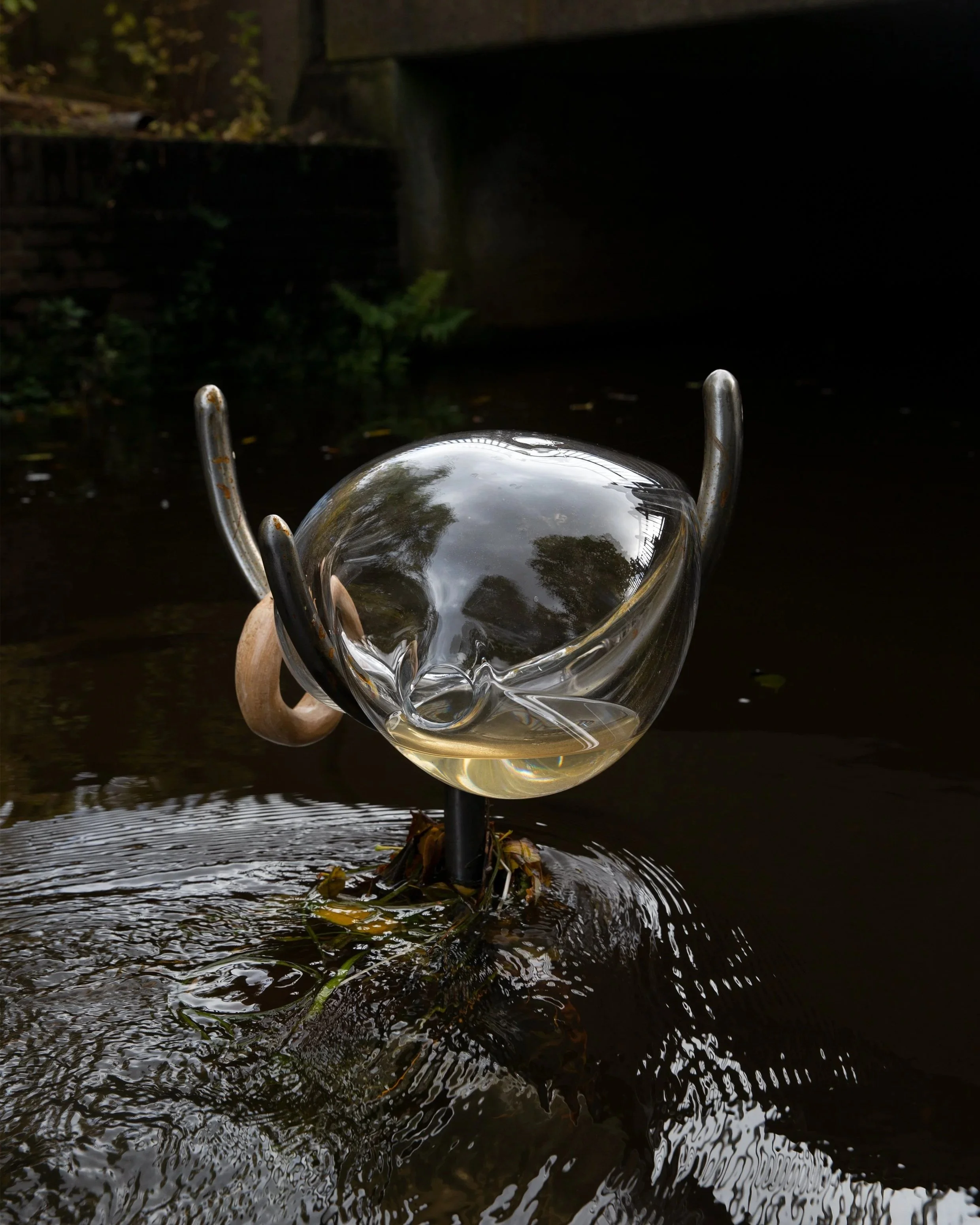
Marte Mei /City of Eindhoven, Will Water Want, 2023, glass, steel, aluminium, ceramics.
When did you first feel compelled to create art, and what was your inaugural piece about?
MM: I’ve been passionate about creating since childhood, attending drawing lessons early on and going to a high school where art was a graduation subject. My first significant memory of creating something for myself was a small clothing collection as part of my application for the Royal Academy of Art at 17. I had a sewing machine and made an entire series, which my boyfriend at the time photographed me wearing in a field outside Amsterdam. I was accepted into the program and from that point, truly learned to create from a concept.
How do you navigate self-doubt and the uncertainties inherent in the creative process?
MM: Oh, I’ll take any advice on that, since I don’t have a clue how to navigate it. It’s a constant rollercoaster of feeling proud of what I’ve accomplished followed by complete imposter syndrome. In my case, combining my design career with modeling has also been a source of insecurity, fearing I’m not enough in either field to be great. Yet, sometimes I feel it’s their symbiosis that allows me to excel. Recently, two thoughts have helped me: realizing I have my whole design career ahead of me, so I might as well enjoy developing at my own pace. The graduation momentum teaches this idea of “this is the moment,” as if you have to shine now or never be noticed. But after two years of that momentum, I’ve found peace in the idea that I can keep working and building success over time.
What’s the best compliment you’ve ever received?
MM: Oof, I tend to forget them out of embarrassment! But it was probably something about my personality, like being a caring friend or a kind helper.
How do you view the role as an artist and an activist within your chosen field? What’s the difference?
MM: For me, identifying as an artist/designer rather than an activist is mainly about my skillset. I’d be terrible at leading a protest but believe I’m good at creating attractive objects that tell a story about the relationship between humans and non-humans. Both roles are necessary and cater to different audiences. The notion of an activist as a disruptor of systems can still be embodied by a designer through the stance taken in their works. I’ve encountered friction with the municipality over projects I’ve made, but for me, the most activist approach was to push these projects forward and find a way to disrupt the system from within rather than opposing it from the outside. This, I suppose, is one of the many reasons I continue to work within the fashion industry.
Among all your projects, which holds a special place for you, and what are you planning next?
MM: The projects dearest to me are those that haven’t received much publicity because they involve private houses I’ve designed the interiors and architectural interventions for. Designing homes is incredibly satisfying for me, as it means creating objects and spaces with which people will develop a very intimate relationship. I love the process of listening to a client’s needs, getting to know them and their habits, and then creating a place they will literally call home. An upcoming project that I’m particularly excited about takes this into a more public realm: I’m discussing co-designing a new restaurant interior using my site-specific methodology with an architect. The idea of creating a space so enchanting that people will crave returning to it excites me. It will also be the first time my interior and public work intersect, which is something I look forward to.
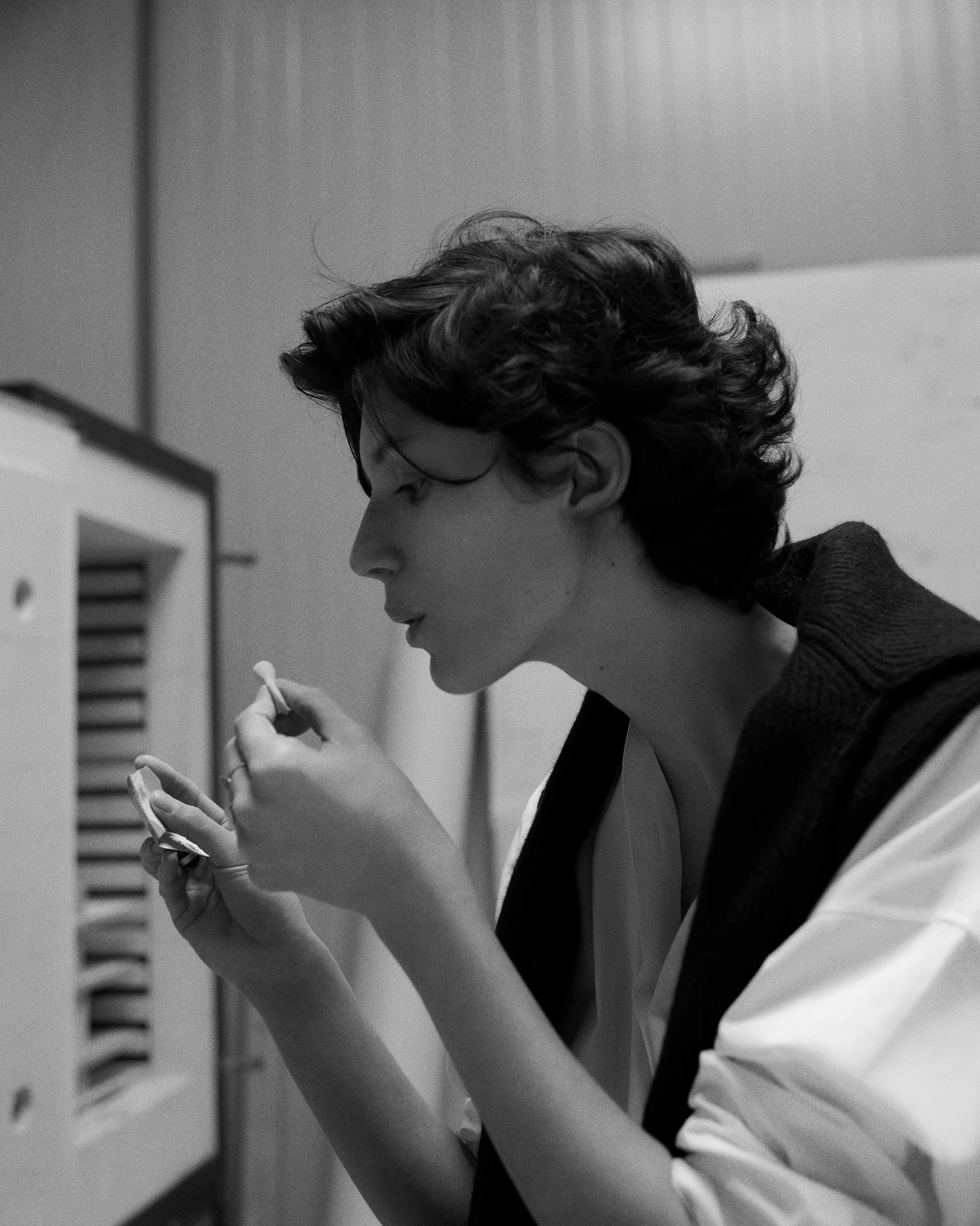
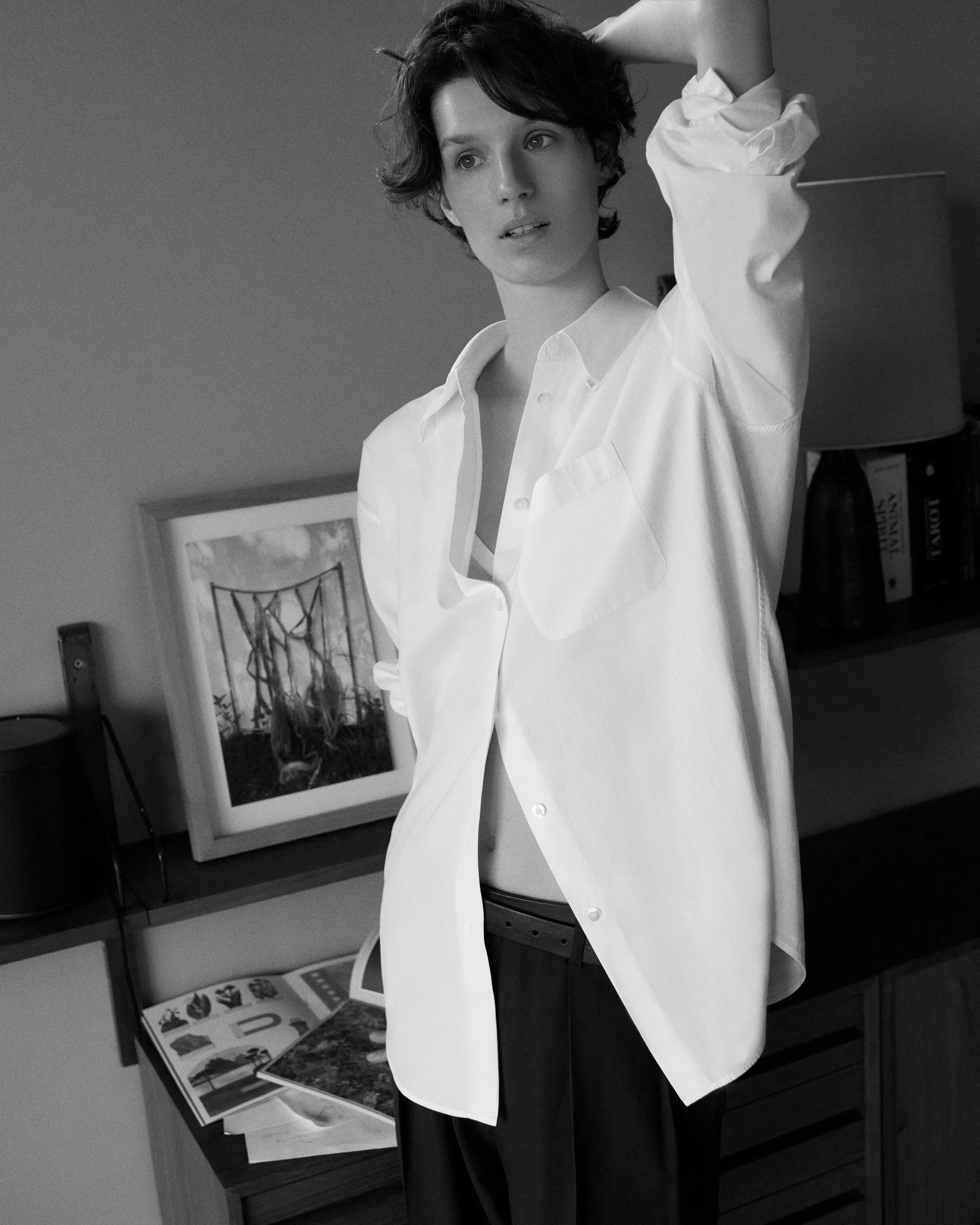
Your initiative, Land-Ally, advocates for a shift towards a more plant/animal-centric perspective. How do you intend to continue this dialogue?
MM: Land-Ally is about designing in alliance with the more-than-human world, employing a design methodology for creating site-specific works used in both my design and landscape works. After founding the foundation during my Masters, I’ve led three large interdisciplinary collaborations under the Land-Ally name. However, I’ve reached a point where I want to run the foundation with others. Land-Ally was always meant to become a collective, inviting a variety of views to take ownership over projects for its expansion. Recently, I’ve been joined by Yoka to run Land-Ally with me, and together with approximately 20 other “allies,” we are now starting up future collaborations in “land-ally” teams. My design practice includes interior and design work and being part of Land-Ally collaborations, ensuring the quality standard of work we produce. We currently have four projects in the pipeline, ranging from a pop-up at the Ceuvel, a circular public space in Amsterdam-North, to a long-term project starting an Amsterdam-Based public Land-Ally space.
What makes you anxious?
MM: The lack of collective response to the climate catastrophe.
How do you view the irreversible pace of globalization? Do you consider yourself an optimist or a pessimist regarding the future?
MM: Generally, I’m an optimist, but that doesn’t mean I have a lot of faith in humanity. Some systems have shaped our society to be capital-driven and selfish. The global, collective shift needed to live in alignment with the natural systems we depend on seems in contradiction with individualism and rather requires a collective response. This is the only thing that discourages me.
How did you begin your career as a model, and what has changed for you personally and professionally after reaching significant milestones in your career?
MM: I was signed by Mo at a very young age but didn’t start working until I had finished my first year at the Royal Academy of Arts in Den Haag. Switching to the Rietveld Academy, they accepted me but said I was too young to start in the second year. That “forced” break from school gave me space to travel and explore the world through modeling. Two months later, I had a Prada exclusive, and that’s how it all started.
You’ve previously expressed reservations about the modeling industry and its conflicts with your personal values. Is this still a concern, and how have you reconciled these differences?
MM: The wasteful, high-paced production and consumption of goods in any industry concern me, in fashion as well as design. I contemplated exiting the fashion industry to deal with the guilt of contributing to that. However, after working less and distancing myself for a few years, I realized my exit wouldn’t be a courageous act of protest but a scream into an empty space. The fashion world moves so fast that my departure would be forgotten in a month. Yet, the connections, inspiration, collaborators, and financial freedom that feed into my design career are invaluable. This interview, for instance, showcases the benefit. A naive part of me also hopes that staying within an industry that pollutes while upholding your values might create internal shifts through conversations and collaborations that wouldn’t happen by distancing yourself. Eventually, if I take space from modeling, it will likely be because my design career demands too much time and space. I can see that happening now. Most times I say no to a job, it’s not because I don’t want to do it, but because I already have something scheduled for my design career.
If you could switch lives with one person for a day, who would it be?
MM: I’d be curious to experience the mindset of a truly enlightened monk. I wonder, is it really that different inside their head?
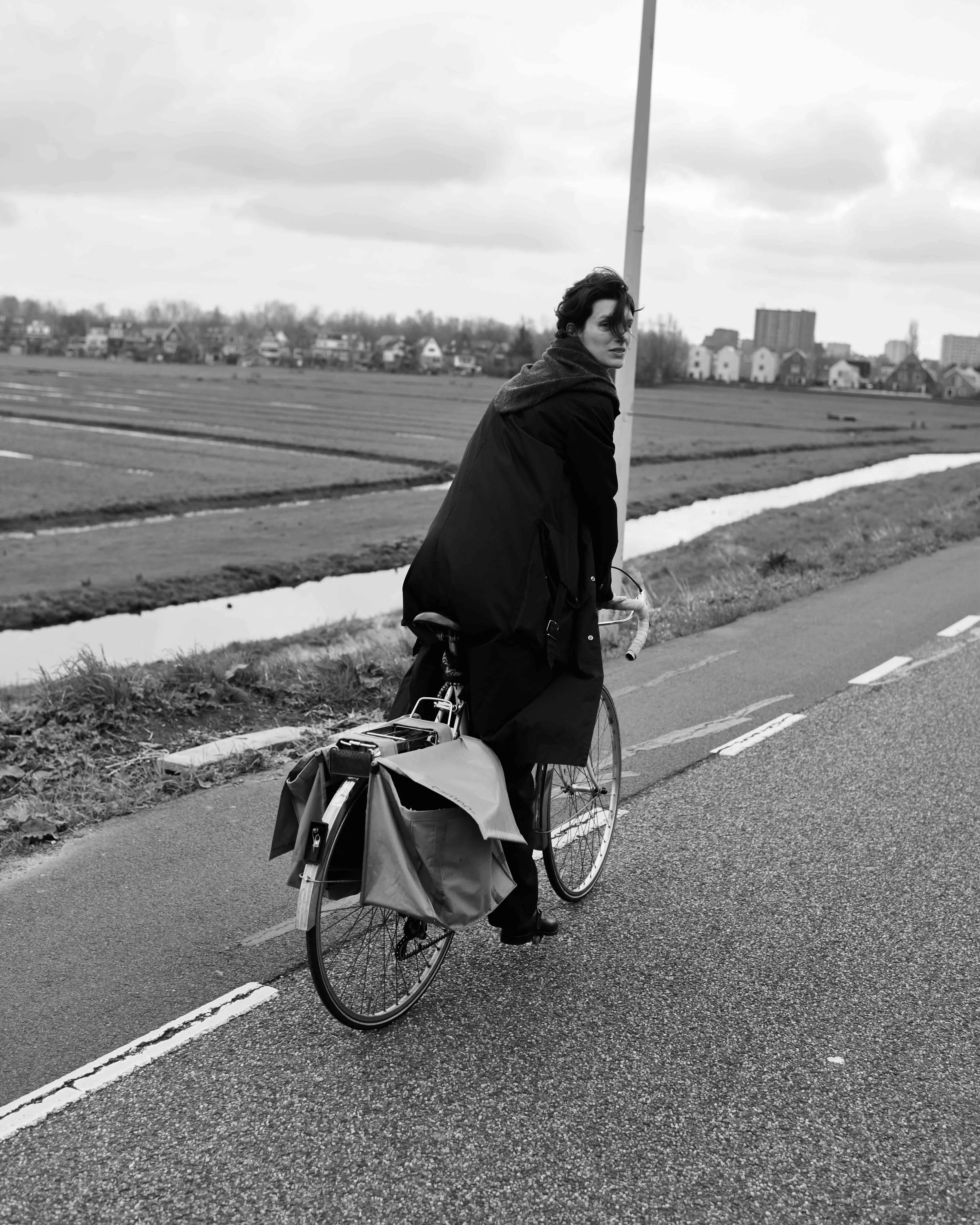
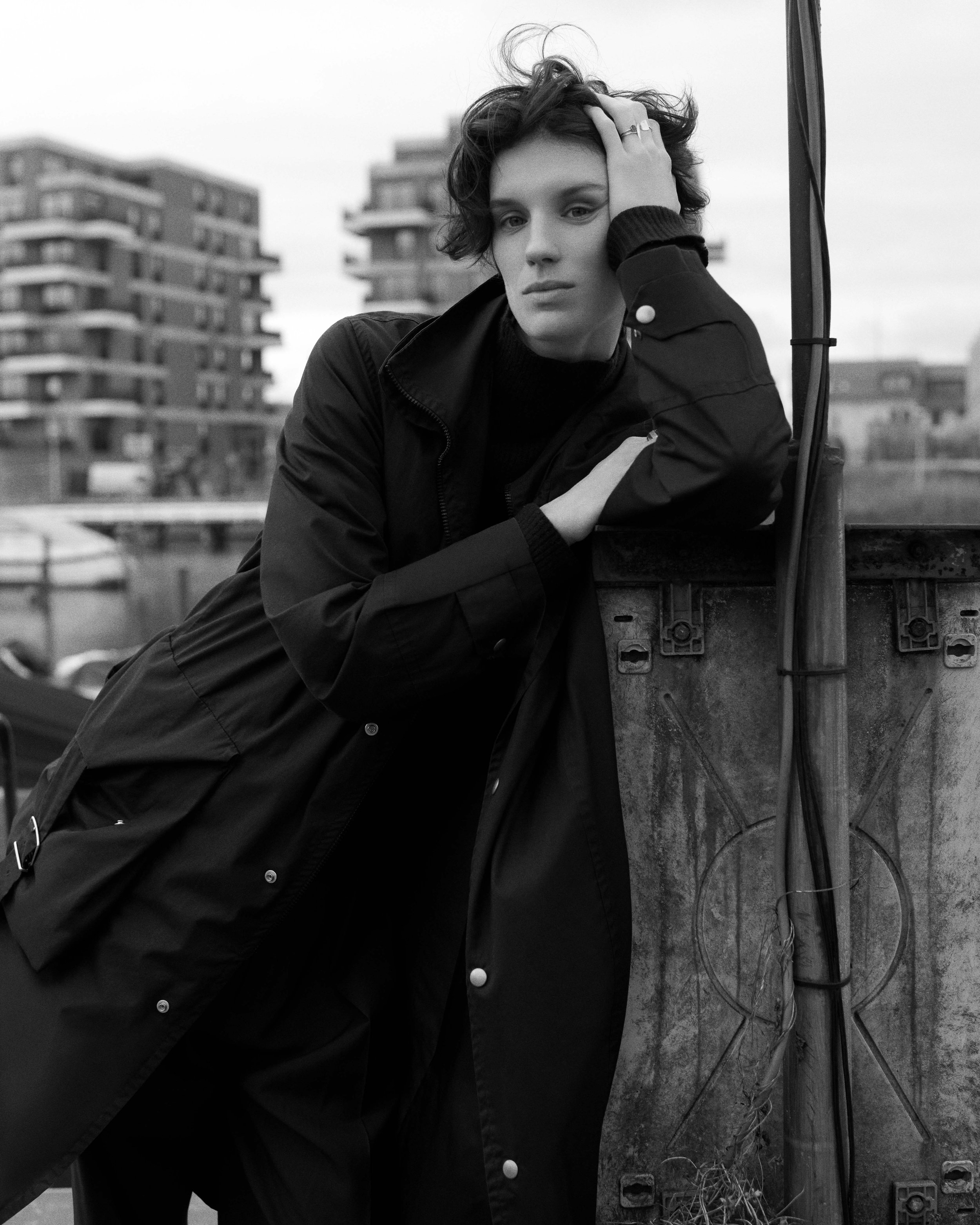
Reflecting on your experiences in the high fashion industry, is there a moment you’d relive? What aspects of your growth can you attribute to your time in the industry?
MM: Working closely with creatives during shows and shoots has taught me a lot about creative intuition and image-making. I’m particularly nostalgic about my exclusive work with Nicolas Ghesquière at LV. I felt very involved in the creative process of the team, as we would spend a lot of time together fitting and experimenting in preparation for a collection.
Looking ahead, where do you see yourself and the world in 10 or 20 years?
MM: Optimistically, I would run a design studio with two or three others, designing interiors and exteriors in harmony with natural surroundings. The studio would intersect design, architecture, and ecological well-being. I still want to get my hands dirty, create with clay and stone, and be a maker, using my intuition and not just sitting behind a drafting table. Meanwhile, I’d love to continue working with inspiring photographers and designers on fashion projects from time to time. I hope these two aspects of my life will have a less rigid separation and interact more, maybe designing show spaces with a more ecologically-centric approach, consulting on collections with a sustainable vision, or collaborating on architectural pieces for stores.
What is your timeless, tested and true, favorite song of all time?
MM: After the Rain by Little Dragon.
Creative Direction Tang Siyu. Words & interview Murphy Guo. Photography Thomas Slack. Styling Kristine Halken @Linkdetails. Beauty Irena Ruben. Casting Clare Rhodes @Casting By Us. Production Leslieann Santiago. Photo Assistant Lou-Lou van Staaveren. Digital Tech Matthew Miziolek. Fashion Assistant Linnea Viser.